GPU Laptop: The Ultimate Guide to Portable Powerhouses
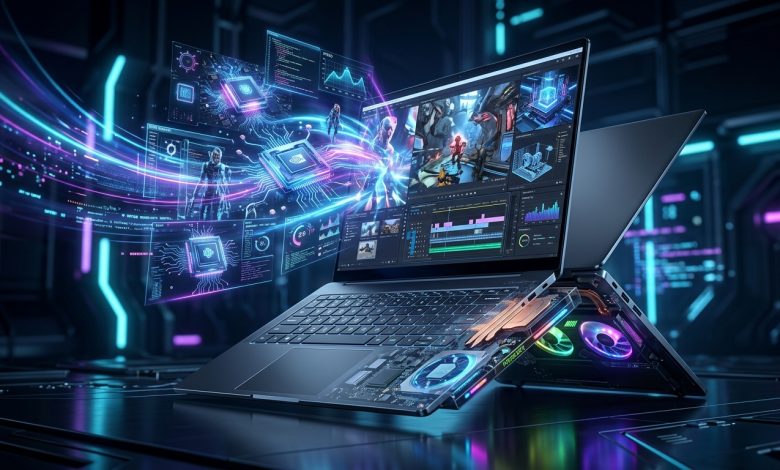
Table of Contents
GPU laptop, or Graphics Processing Unit laptop, represents a pinnacle of portable computing power, fundamentally changing how professionals and enthusiasts approach demanding tasks. Unlike conventional laptops that primarily rely on integrated graphics within the central processing unit (CPU), a GPU laptop features a dedicated, discrete graphics card designed specifically for accelerating complex visual computations and parallel processing tasks. This specialized hardware enables these machines to deliver exceptional performance in areas ranging from high-fidelity gaming to intricate 3D rendering, video editing, and advanced artificial intelligence workloads. The integration of a powerful GPU transforms a standard portable computer into a mobile workstation or a high-performance gaming rig, capable of handling applications that would typically require a desktop system.
What is a GPU Laptop?
At its core, a GPU laptop distinguishes itself through the inclusion of a dedicated graphics processing unit. This dedicated GPU is a separate chip, often from manufacturers like NVIDIA (GeForce RTX series) or AMD (Radeon RX series), equipped with its own dedicated high-speed video memory (VRAM). This setup offers significant advantages over integrated graphics (iGPUs), which share system memory (RAM) with the CPU and are less powerful.
The primary function of a GPU is to rapidly process and render images, videos, and animations for display. Modern GPUs, however, have evolved far beyond simple graphics rendering. Their highly parallel architecture, comprising hundreds or even thousands of computational units, makes them exceptionally efficient at handling tasks that can be broken down into many smaller, simultaneous computations. This parallel processing capability is what unlocks the true potential of a GPU laptop for various demanding applications. The dedicated nature ensures that the CPU is not burdened with graphics tasks, allowing it to dedicate its resources to other computational processes, thereby boosting overall system performance.
The Evolution of Mobile Graphics Processing
The journey of mobile GPUs has been one of continuous innovation, driven by the increasing demand for portable performance. Early laptops relied heavily on integrated graphics, which were sufficient for basic tasks but struggled with anything graphically intensive. The late 1990s saw the emergence of rudimentary 3D graphics capabilities on PCs, which then gradually made their way into portable form factors.
Over the past two decades, advancements in chip manufacturing and architectural design have allowed for increasingly powerful GPUs to be packed into laptop chassis. NVIDIA’s GeForce series and AMD’s Radeon series have consistently pushed boundaries, introducing technologies like dedicated ray tracing cores and AI-accelerated upscaling (e.g., NVIDIA DLSS, AMD FSR) that bring desktop-class visual fidelity and performance to mobile platforms.
More recently, Intel has also entered the dedicated GPU market with its Arc A-series graphics processors, complementing its integrated Xe graphics found in Core Ultra CPUs. The latest generations, such as NVIDIA’s RTX 40 Series (Ada Lovelace architecture) and the newer RTX 50 Series (Blackwell architecture), alongside AMD’s Radeon RX 7000 Series (RDNA 3 architecture) and upcoming releases, showcase significant leaps in energy efficiency, raw performance, and AI capabilities. These advancements are crucial, enabling thinner and lighter GPU laptops to deliver performance levels previously only achievable by bulkier desktop systems.
Key Components: Beyond the Dedicated GPU
While the GPU is the star of a GPU laptop, its performance is intrinsically linked to other critical components that form a balanced ecosystem. A powerful GPU requires an equally capable supporting cast to realize its full potential:
- Central Processing Unit (CPU): Modern GPU laptops are typically paired with high-performance CPUs from Intel (e.g., Core Ultra 5, 7, 9 series, including the latest Panther Lake processors) or AMD (e.g., Ryzen AI 8000 series). These CPUs are essential for handling game logic, AI behaviors, physics calculations, and general system operations, ensuring the GPU always has data to process.
- Random Access Memory (RAM): Sufficient RAM (16GB, 32GB, or even 64GB are common in high-end models) is crucial for multitasking and running memory-intensive applications alongside GPU workloads.
- Storage: Fast NVMe SSDs are standard, significantly reducing load times for games and large project files.
- Display: High-refresh-rate displays (120Hz, 144Hz, 240Hz, or higher) with resolutions up to QHD+ or 4K are common, allowing users to fully experience the visual fidelity the GPU can produce. OLED panels are also becoming more prevalent, offering superior contrast and color accuracy.
- Cooling System: Perhaps one of the most vital, yet often overlooked, components in a GPU laptop is its cooling system. High-performance GPUs and CPUs generate substantial heat, and effective dissipation is paramount to prevent thermal throttling, which can significantly reduce performance and potentially damage components over time. Advanced cooling solutions often involve multiple fans, numerous heat pipes, vapor chambers, and even liquid metal thermal compounds to efficiently transfer heat away from the core components.
Who Benefits Most from a GPU Laptop?
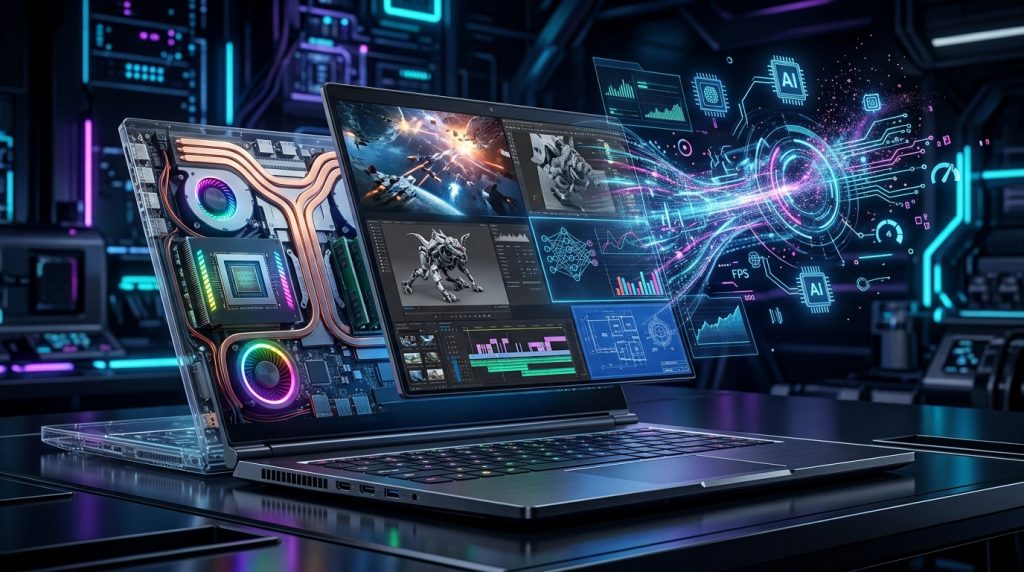
The specialized capabilities of a GPU laptop cater to a diverse range of users who require significant computational muscle on the go.
Gamers
This is arguably the largest demographic for GPU laptops. Dedicated graphics cards are indispensable for modern gaming, enabling high frame rates, crisp visuals at high resolutions (1080p, 1440p, 4K), and advanced graphical settings like ray tracing. Technologies like NVIDIA’s DLSS and AMD’s FSR further enhance gaming performance by intelligently upscaling lower-resolution images, providing smoother gameplay even on demanding titles. For gamers, a GPU laptop translates directly into a more immersive and responsive gaming experience, whether playing competitive esports titles or graphically intensive AAA games.
Content Creators and Professionals
For video editors, 3D artists, graphic designers, and animators, a GPU laptop is a powerful tool. Applications like Adobe Premiere Pro, DaVinci Resolve, Blender, and Autodesk Maya leverage GPU acceleration to speed up rendering times, improve preview speeds, and enable real-time effects and complex simulations. The dedicated VRAM and processing power significantly reduce bottlenecks, allowing creators to work more efficiently with high-resolution assets and intricate projects.
AI/ML and Scientific Computing
The parallel processing capabilities of GPUs make them ideal for artificial intelligence (AI), machine learning (ML), and scientific simulations. Training neural networks, running complex data analyses, and performing scientific computations can be dramatically accelerated by dedicated GPUs. Modern GPUs from NVIDIA (with CUDA cores and Tensor Cores) and AMD (with Stream Processors and AI accelerators) are specifically designed to handle these computationally intensive tasks, making GPU laptops valuable for researchers and developers in these fields. For instance, running local Large Language Models (LLMs) requires specific amounts of VRAM: 8GB for 7B models, 12-16GB for 14B-32B models, and 40-48GB for 70B models, underscoring the necessity of a robust GPU.
Navigating the Market: Choosing the Right GPU Laptop
Selecting the ideal GPU laptop involves more than just picking the most expensive model. A nuanced understanding of various specifications and their impact on real-world performance is essential.
When comparing GPU laptops, consider the following:
| Feature | Description & Importance |
|---|---|
| GPU Model (e.g., RTX 4070, RX 7800M) | The generational leap and tier (e.g., 4050 vs. 4090) directly impact performance. Higher-tier GPUs offer more CUDA cores/Stream Processors, VRAM, and overall processing power. |
| Total Graphics Power (TGP) | Crucial for laptop GPUs. TGP (measured in watts) indicates the maximum power the GPU can draw. A higher TGP for the same GPU model generally means better performance, as it allows the GPU to run at higher clock speeds. For example, a 100W RTX 5070 can outperform a power-starved RTX 5070 Ti. |
| Video RAM (VRAM) | Dedicated memory for the GPU. More VRAM is beneficial for higher resolutions, detailed textures, and demanding professional applications, including AI/ML workloads. For AI, 16GB is considered a sweet spot for many serious local AI users in 2026, while 24GB or more is needed for larger models and professional workflows. |
| CPU Pairing | A powerful GPU needs a strong CPU to avoid bottlenecks. Ensure a balanced combination of the latest Intel Core Ultra or AMD Ryzen AI processors. |
| Display Specifications | Resolution (1080p, 1440p, 4K), refresh rate (120Hz+), and panel technology (IPS, OLED) affect the visual experience. A high-refresh-rate panel requires a capable GPU to drive those frames. |
| Cooling System Design | Effective cooling is paramount for sustained performance. Look for robust solutions with multiple fans, heat pipes, vapor chambers, and good airflow to prevent thermal throttling. |
| Battery Life and Portability | While performance is key, consider how long the laptop lasts on a charge and its weight if portability is a priority. Higher TGP often means shorter battery life. |
| Price | GPU laptops span a wide price range. Define your budget and prioritize the features most important for your primary use case. |
The “GPU badge tells you the family; the TGP tells you the performance.” This highlights that even two laptops with the “exact same GPU” can have a significant performance difference (25% or more) due to varying TGP settings. Therefore, always verify the TGP specified by the manufacturer.
Understanding Key GPU Specifications
Delving deeper into GPU specifications helps in making an informed choice:
- CUDA Cores (NVIDIA) / Stream Processors (AMD): These are the parallel processing units within the GPU that perform computations. More cores generally translate to more raw processing power. While functionally similar, they are not directly comparable across NVIDIA and AMD due to architectural differences.
- VRAM (Video Random Access Memory): This is the dedicated high-speed memory for the GPU. GDDR6 is common, with newer generations like GDDR7 emerging. Higher VRAM capacity allows for processing larger textures, more complex scenes, and bigger datasets in professional applications. For AI and LLMs in 2026, VRAM is a critical factor, with needs ranging from 8GB for entry-level models to 40GB+ for advanced ones.
- Clock Speed (Boost Clock): This indicates how fast the GPU cores operate. Higher clock speeds generally mean faster performance, but sustained clock speeds are more important, which ties back to effective cooling.
- TGP (Total Graphics Power): As previously discussed, TGP is the maximum power (in watts) the graphics card is allowed to consume. This figure includes power for the GPU core, memory, and associated circuits. A higher TGP enables the GPU to maintain higher clock speeds, delivering better frame rates and smoother performance. It’s important to differentiate TGP from TDP (Thermal Design Power), which refers to the maximum heat generated and the cooling system’s capacity to dissipate it.
- Ray Tracing and AI Accelerators: Modern GPUs incorporate specialized hardware for real-time ray tracing (for realistic lighting, shadows, and reflections) and AI acceleration (for features like DLSS, FSR, and other AI workloads). These features significantly enhance visual quality and can boost performance in supported applications.
Advanced Cooling Technologies in GPU Laptops
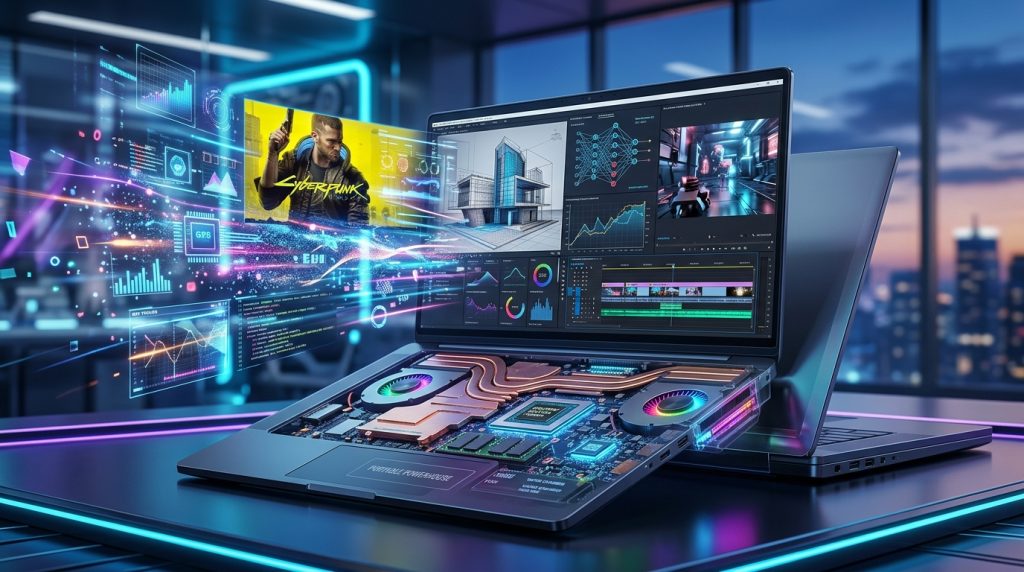
The miniaturization of powerful components within a laptop chassis creates significant thermal challenges. Effective cooling is not merely a feature but a necessity for any high-performance GPU laptop to operate at its peak without succumbing to thermal throttling. Thermal throttling occurs when components get too hot, forcing them to reduce their clock speeds and performance to prevent damage.
Modern GPU laptops employ sophisticated cooling solutions that go beyond simple fans:
- Heat Pipes: These thermally conductive metal tubes contain a small amount of liquid coolant that vaporizes at hot spots (CPU/GPU) and condenses at cooler spots (fins), transferring heat efficiently.
- Vapor Chambers: A more robust solution than heat pipes, vapor chambers are larger, sealed metal chambers filled with liquid coolant. They transfer heat away from key components via high-pressure vapor, similar to heat pipes but with greater efficiency over a larger area.
- Multiple Fans and Airflow Optimization: GPU laptops often feature multiple fans (sometimes with varying blade designs) and strategically placed vents to maximize airflow, drawing in cool air and expelling hot air from the chassis.
- Liquid Metal Thermal Compound: Replacing traditional thermal paste, liquid metal offers superior thermal conductivity, further enhancing heat transfer from the CPU and GPU to the cooling system. Some systems even use machine-applied liquid metal for precision.
- Software Control and Modes: Manufacturers provide software utilities that allow users to switch between different performance and fan profiles (e.g., Silent, Performance, Turbo modes), balancing noise, temperature, and performance.
A well-designed cooling system is paramount, ensuring that the GPU and CPU can sustain their high performance during intense workloads, thereby providing a consistent and stable user experience. Overlooking cooling design can lead to reduced performance and potential long-term hardware degradation.
The Future Landscape of GPU Laptops
The trajectory for GPU laptops points towards even greater performance, efficiency, and integration. With each passing year, the gap between desktop and mobile performance continues to narrow, albeit with desktops still holding an inherent advantage due to power and thermal headroom.
Key trends and upcoming developments include:
- Next-Generation GPUs: NVIDIA’s RTX 50 Series (Blackwell) and subsequent architectures are expected to further refine performance-per-watt, introduce more advanced AI capabilities, and push the boundaries of ray tracing. AMD’s RDNA 3 and future RDNA architectures will continue to compete fiercely, offering compelling performance for both gaming and content creation.
- Advanced CPUs with Enhanced Integrated Graphics and NPUs: Intel’s Core Ultra processors, with their integrated Arc GPUs and Neural Processing Units (NPUs), are becoming increasingly capable, particularly for thin-and-light designs and AI acceleration. Upcoming generations like Intel’s Panther Lake (Core Ultra Series 3, launched January 2026) promise even higher graphics performance from integrated solutions and stronger NPU capabilities for on-device AI. AMD’s Ryzen AI processors also integrate powerful graphics and AI engines.
- Improved Power Management and Efficiency: Technologies like NVIDIA’s Max-Q suite continue to optimize system performance, power consumption, and acoustics for thin and light form factors. Future developments will likely focus on maximizing performance within strict power envelopes, extending battery life without sacrificing power.
- Evolution of Cooling: As components become more powerful, cooling solutions will continue to innovate, potentially seeing more widespread adoption of vapor chambers, more efficient fan designs, and advanced thermal interface materials.
- AI Integration: With dedicated AI accelerators in both GPUs and CPUs (NPUs), GPU laptops will become even more adept at handling AI-driven tasks, from smart image processing and video enhancement to advanced generative AI applications.
The future of GPU laptops is bright, promising even more formidable portable powerhouses that can tackle virtually any computational challenge with increasing efficiency and sophistication. For a more detailed understanding of the underlying principles of graphics processing, one can refer to the Wikipedia article on Graphics Processing Units.
Conclusion
The GPU laptop stands as a testament to modern engineering, offering an unparalleled blend of portability and raw computational power. From hardcore gamers seeking immersive experiences to professional content creators demanding rapid rendering and engineers running complex simulations, the dedicated graphics card is the heart of these machines, enabling tasks that were once confined to static desktop setups. Understanding the interplay between the GPU, CPU, VRAM, and critically, the cooling system, is key to selecting a machine that perfectly aligns with one’s needs. As technology continues to evolve, with increasingly powerful and efficient GPUs and AI-accelerated processors, GPU laptops will only become more indispensable, pushing the boundaries of what is possible in a portable form factor. For anyone requiring serious performance on the go, a GPU laptop is not just an option but a necessity, ready to tackle the most demanding challenges of today and tomorrow.