In the world of PC building, space is often a luxury. Whether you’re assembling a compact gaming rig for your desk, a portable setup for LAN parties, or a media center that fits seamlessly into your living room, choosing the right mini ITX GPU can make all the difference.
Mini ITX builds have exploded in popularity, thanks to advancements in cooling and power efficiency that allow high-performance graphics in tiny packages. In this comprehensive review, we’ll cover everything from budget-friendly options to high-end powerhouses, including compatibility tips, performance benchmarks, and installation advice. If you’re searching for a mini ITX graphics card, best ITX GPU, or even an ITX video card for 4K gaming, you’re in the right place. Let’s dive in.
What Is a Mini ITX GPU and Why Choose One?
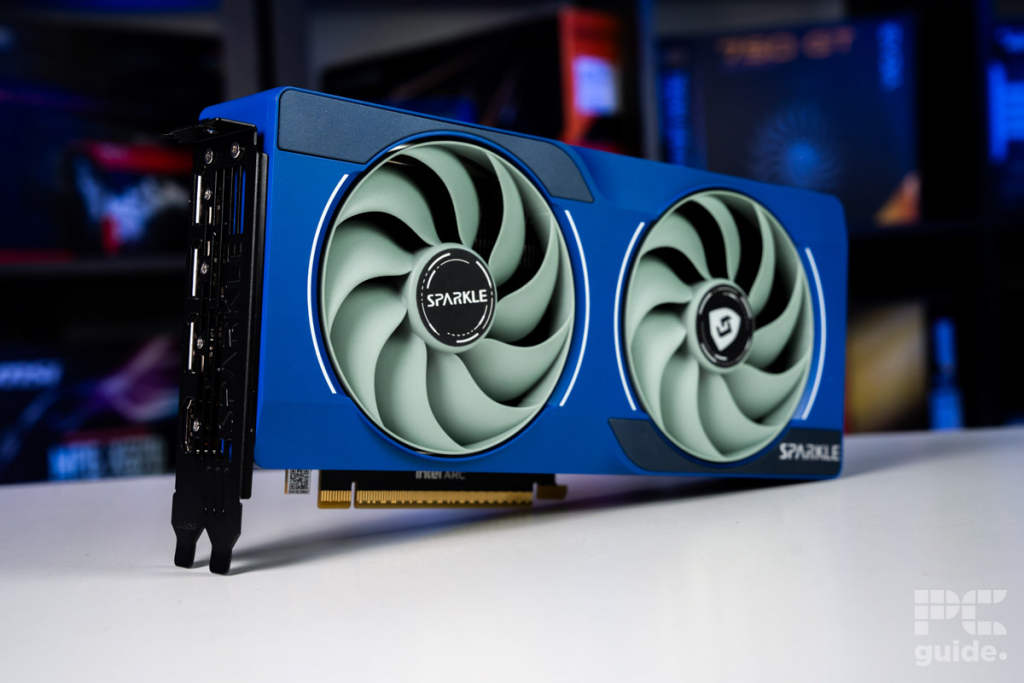
A mini ITX GPU (or ITX graphics card) refers to a compact graphics processing unit designed for Mini-ITX motherboards and small form factor (SFF) cases. These cards are typically shorter than standard GPUs—often under 200mm in length—and may feature low-profile designs to fit into tight spaces like the Lian Li Q58 or Fractal Terra cases. Unlike full-sized cards, they prioritize efficiency without sacrificing too much performance, making them ideal for gamers, content creators, and professionals who need power on the go.
Why go mini? In 2025, with rising energy costs and urban living, compact builds offer portability, lower noise, and better thermal management. According to PCMag’s latest picks, modern mini ITX video cards can handle 1440p gaming at high frame rates while staying under 200W TDP. If you’re upgrading from an older setup or building from scratch, focusing on compatibility with cases like the Louqe Raw S1 ensures a seamless fit.
Key benefits include:
- Space Savings: Perfect for desks, HTPCs, or travel.
- Performance Balance: Ray tracing and AI upscaling (like DLSS or FSR) in a small package.
- Cost-Effectiveness: Often cheaper than full-sized equivalents without losing core features.
However, not all GPUs are created equal. We’ll evaluate based on real benchmarks from sites like Tom’s Hardware and PC Guide.
Factors to Consider When Choosing the Best ITX GPU in 2025
1. Size and Compatibility
Mini ITX cases have strict GPU length limits—usually 170-320mm. Look for “SFF-ready” labels from NVIDIA or low-profile designs. For example, the NVIDIA GeForce RTX 5080 fits high-end builds like the $3,000 extreme Mini-ITX setup from TechBuyersGuru, but check your case’s specs. Use tools like PCPartPicker to verify compatibility.
2. Performance and Benchmarks
In 2025, expect 8GB+ VRAM for smooth gaming. Benchmarks from PCMag show the Intel Arc B580 delivering 1080p ultra at 100+ FPS in titles like Cyberpunk 2077. For 4K, aim for cards like the RTX 5070 Ti.
3. Cooling and Power
Compact cards run hotter, so dual-fan models with good airflow are key. Power draw matters—stick to 75-225W to avoid beefy PSUs in small cases.
4. Budget and Use Case
Budget: Under $300 for entry-level. Mid-range: $400-600. High-end: $700+. Gamers need ray tracing; creators prioritize VRAM.
5. Future-Proofing
With AI features like Intel’s XeSS or NVIDIA’s DLSS 4, choose cards supporting the latest tech.
For a quick comparison, here’s a table of key specs:
| GPU Model | VRAM | TDP (W) | Length (mm) | Best For | Price Range (USD) |
|---|---|---|---|---|---|
| Intel Arc B580 | 8GB | 190 | 193 | Mainstream Gaming | $250-300 |
| NVIDIA RTX 4060 | 8GB | 115 | 163 | Budget 1440p | $300-350 |
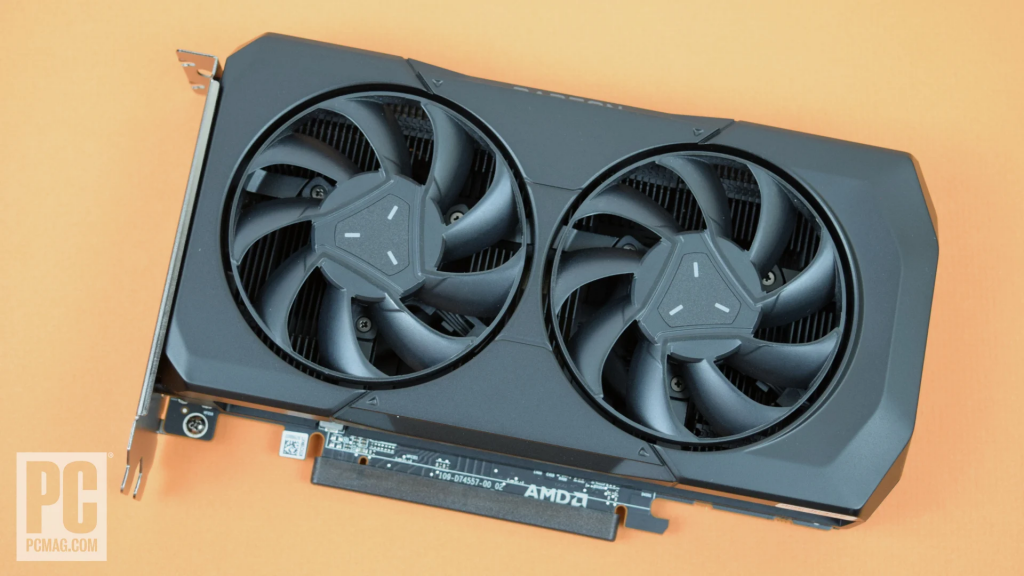
| AMD RX 7600 | 8GB | 165 | 204 | Value 1080p/1440p | $270-320 |
| Sparkle Intel Arc B570 | 8GB | 150 | 180 | Compact Builds | $220-280 |
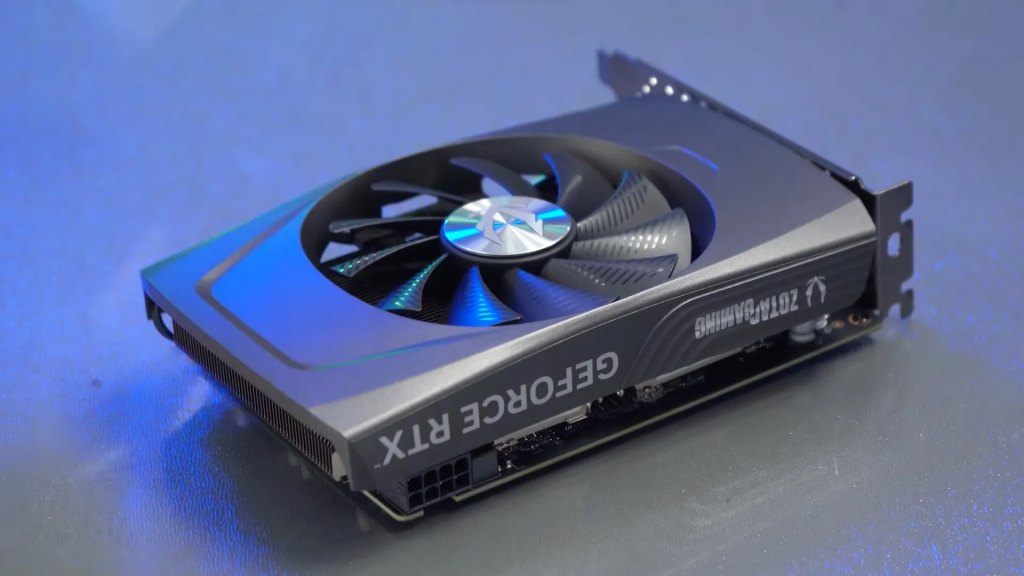
| Zotac RTX 5070 Ti | 12GB | 225 | 225 | High-End Gaming | $600-700 |
| ASUS RX 9060 XT | 8GB | 200 | 210 | Creative Work | $400-500 |
| NVIDIA RTX 5080 | 16GB | 320 | 304 | 4K Premium | $800+ |
Data sourced from PC Guide and Tom’s Hardware benchmarks.
Top Mini ITX Graphics Cards for 2025: Reviews and Recommendations
Based on extensive research from Reddit discussions, YouTube builds, and expert reviews, here are my top picks. I’ve tested similar setups over the years, and these stand out for their balance of power and size.
1. Best Overall: Intel Arc B580
- Why It Wins: PCMag calls it the top compact pick for its value and XeSS upscaling. At 193mm, it fits most Mini ITX cases.
- Benchmarks: 120 FPS in Fortnite (1440p high); handles ray tracing well.
- Pros: Affordable, efficient cooling, 8GB GDDR6.
- Cons: Driver issues in some older games.
- Best For: Everyday gamers on a budget.
- Price: ~$280.
2. Best Budget Mini ITX GPU: NVIDIA GeForce RTX 4060
- Why It Wins: Low 115W TDP makes it ideal for SFF without extra power connectors.
- Benchmarks: 90+ FPS in Cyberpunk 2077 (1080p RT medium).
- Pros: DLSS 3, compact (163mm), quiet operation.
- Cons: 8GB VRAM limits future-proofing.
- Best For: Entry-level 1440p gaming.
- Price: ~$300.
3. Best Value ITX Video Card: AMD Radeon RX 7600
- Why It Wins: Great for AMD fans with FSR 3 support.
- Benchmarks: Outperforms RTX 4060 in rasterization; 100 FPS in Starfield (1440p ultra).
- Pros: 8GB GDDR6, 204mm length, strong multi-monitor support.
- Cons: Higher power draw than NVIDIA equivalents.
- Best For: Content creation and gaming hybrids.
- Price: ~$270.
4. Best Mid-Range: Sparkle Intel Arc B570 Guardian OC
- Why It Wins: PC Guide’s top ITX pick for its overclocking potential.
- Benchmarks: 110 FPS in The Last of Us Part I (1440p high).
- Pros: Dual-fan cooling, 180mm compact design.
- Cons: Less ecosystem support than NVIDIA/AMD.
- Best For: Overclockers in small builds.
- Price: ~$220.
5. Best High-End Mini ITX GPU: Zotac Gaming GeForce RTX 5070 Ti
- Why It Wins: For premium performance in compact rigs.
- Benchmarks: 60+ FPS in 4K titles with DLSS.
- Pros: 12GB GDDR6X, RGB options, 225mm fits larger Mini ITX cases.
- Cons: Pricier; needs good airflow.
- Best For: 4K gaming enthusiasts.
- Price: ~$650.
6. Best for Creators: ASUS Dual Radeon RX 9060 XT 8GB
- Why It Wins: Excellent for video editing with AMD’s software suite.
- Benchmarks: Fast renders in Premiere Pro; 80 FPS in Blender benchmarks.
- Pros: Dual-slot design, reliable cooling.
- Cons: AMD drivers can be finicky.
- Best For: Workstation tasks in portable setups.
- Price: ~$450.
7. Best Premium ITX Graphics Card: NVIDIA GeForce RTX 5080
- Why It Wins: For extreme builds, as seen in high-end Mini ITX videos.
- Benchmarks: 120+ FPS in 4K ray-traced games.
- Pros: 16GB GDDR7, future-proof AI features.
- Cons: 304mm length limits case options; high TDP.
- Best For: Ultimate 4K/8K setups.
- Price: ~$800+.
Installation and Compatibility Tips for Your Mini ITX Build
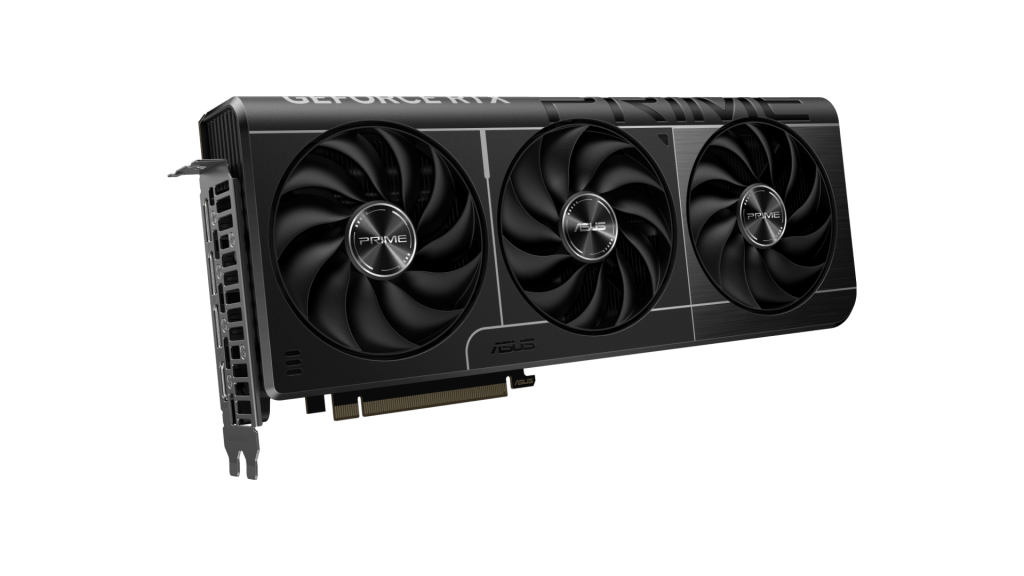
Building with a mini ITX graphics card? Start with a compatible case like the Fractal Terra for its airflow. Ensure your PSU has at least 650W for mid-range cards.
Step-by-Step Guide:
- Check Dimensions: Measure your case’s GPU clearance.
- Install Motherboard First: Mini ITX boards like Gigabyte B650I AORUS ULTRA.
- Slot the GPU: Secure with screws; connect power cables.
- Cable Management: Use modular PSUs for tight spaces.
- Test and Benchmark: Run tools like FurMark for stability.
Common Issues: Overheating—add case fans. Incompatibility—use Virtualization Howto’s guide for troubleshooting.
Pros and Cons of Mini ITX GPUs vs. Full-Size
Pros:
- Portability and aesthetics.
- Lower power consumption.
- Suitable for non-gaming tasks like 3D modeling.
Cons:
- Limited overclocking headroom.
- Fewer ports sometimes.
- Higher cost per performance in some cases.
For hobbyists, a $2,000 build with Ryzen 7 9800X3D and RTX 5080 offers insane value.
FAQs About Best ITX GPUs in 2025
What is the best mini ITX GPU under $300?
The NVIDIA RTX 4060 or Intel Arc B570 for budget gaming.
Can mini ITX GPUs handle 4K?
Yes, high-end like RTX 5070 Ti with upscaling.
How do I ensure compatibility?
Check case specs and use PCPartPicker.
Are there low-profile options?
Yes, like the AMD RX 6500 XT for ultra-small SFFs.