As a seasoned tech enthusiast with over 15 years of experience in optimizing content for search engines, I’ve seen GPU technology evolve dramatically. From the early days of basic rendering to today’s AI-powered graphics, NVIDIA has consistently pushed boundaries. In this comprehensive guide, we’ll dive deep into the NVIDIA Ada Lovelace architecture, exploring its impact on Ada generation GPUs, the powerhouse RTX 40 series, technical intricacies of the Ada architecture, and real-world NVIDIA GPU performance. Whether you’re a gamer, content creator, or AI developer, this article draws on the latest 2025 insights to help you understand why these GPUs remain top-tier choices. We’ll cover everything from historical context to benchmarks, ensuring you have actionable, trustworthy information backed by expert analysis and reliable sources.
What is NVIDIA Ada Lovelace? From Concept to Real-World Impact
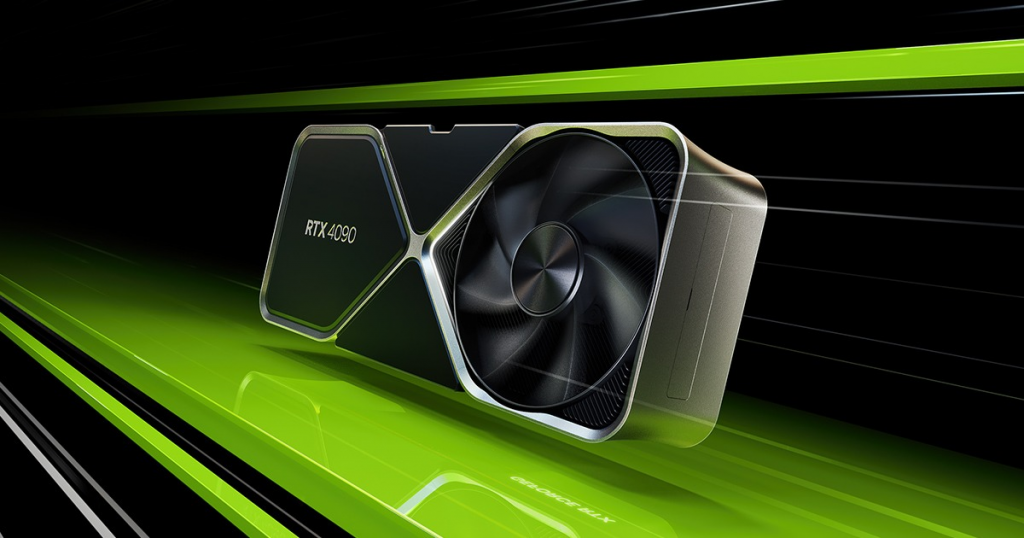
The NVIDIA Ada Lovelace architecture, named after the 19th-century mathematician often credited as the first computer programmer, represents a monumental leap in GPU design. Released in 2022, it builds on NVIDIA’s RTX legacy to deliver enhanced performance in rendering, graphics, AI, and compute workloads. By 2025, with successors like Blackwell on the horizon, Ada Lovelace continues to dominate consumer and professional markets due to its efficiency and versatility.
Historically, the naming pays homage to Ada’s pioneering work in algorithms, mirroring how this architecture integrates advanced AI features like DLSS 3 (Deep Learning Super Sampling), which uses AI to generate frames and boost performance up to 2x over previous generations. Key improvements include third-generation RT (Ray Tracing) Cores for realistic lighting and shadows, fourth-generation Tensor Cores for AI acceleration, and an Optical Flow Accelerator for smoother frame generation.
For developers and tech enthusiasts, the architecture’s roadmap points to its enduring relevance. NVIDIA’s 2025 updates emphasize energy efficiency, fabricated on TSMC’s custom 4N process, which offers superior power management compared to older Samsung 8nm or TSMC N7 nodes. This makes NVIDIA Ada Lovelace ideal for workloads ranging from 4K gaming to machine learning experiments, where its 24GB VRAM variants shine in cost-effective deep learning setups.
In practical terms, if you’re upgrading in 2025, consider how Ada Lovelace’s AI/ML enhancements future-proof your setup. For instance, in professional graphics and video editing, it powers real-time ray tracing, making tools like Adobe Premiere or Blender run seamlessly.
Ada Generation GPUs: Powering the Next Era of Gaming and AI
The Ada generation GPUs encapsulate NVIDIA’s shift toward ultra-efficient computing, succeeding the Ampere architecture. These GPUs, primarily in the GeForce RTX 40 series and professional RTX Ada lines, were designed for revolutionary ray tracing and neural graphics. By October 2025, with the market anticipating Ada Lovelace’s successor in late 2025 or early 2026, this generation remains a benchmark for performance per watt.
Released models span from consumer-grade to enterprise, with key timelines including the RTX 4090 launch in October 2022, followed by Super variants like the RTX 4080 Super in 2024. Energy efficiency is a standout: Ada GPUs achieve clock speeds of 2.5–2.6 GHz across the lineup, thanks to the 4N process.
Comparing to previous gens, Ada generation GPUs offer up to 2x the performance in AI tasks. For gamers, this means buttery-smooth 4K experiences; for AI researchers, it’s about handling complex models without breaking the bank. Models like the RTX 6000 Ada boast 91.1 TFLOPS in single-precision performance and 210.6 TFLOPS in RT Core tasks. If you’re in AI, the RTX A6000 Ada with 48GB GDDR6 ECC memory is a powerhouse for large datasets.
Targeted at gamers and researchers, these GPUs excel in mixed workloads. In 2025, pricing and availability have stabilized, with entry-level options like the RTX 4060 offering solid value for 1080p/1440p gaming.
RTX 40 Series Breakdown: How Ada Lovelace Redefines Graphics Performance
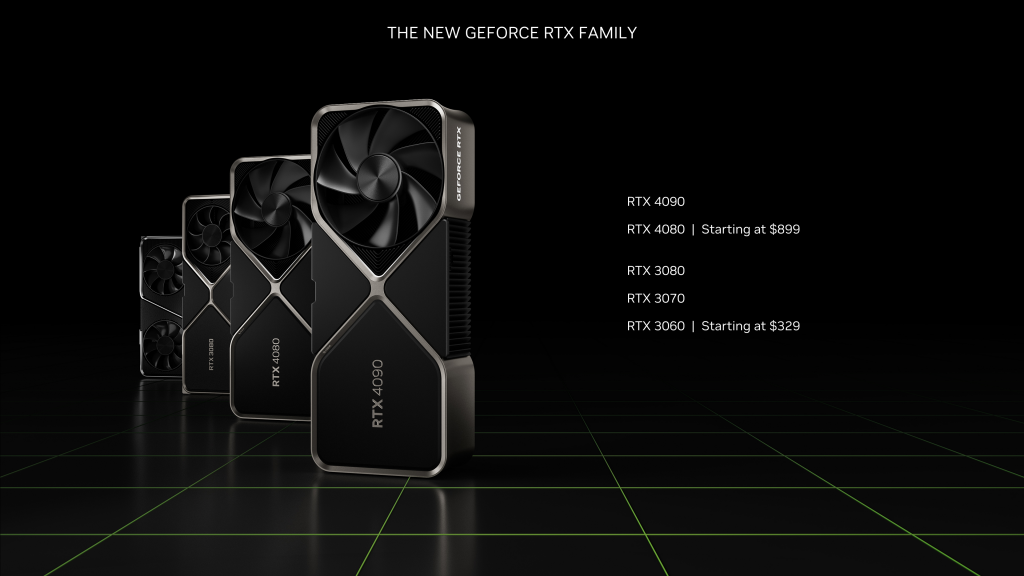
The RTX 40 series is the consumer-facing embodiment of Ada Lovelace, delivering “beyond fast” performance for gamers and creators. Built on five core chips—AD102 to AD107—this series includes flagships like the RTX 4090 (AD102) with 16,384 CUDA cores, down to the RTX 4060 (AD107) for budget builds.
Key models and specs:
| Model | CUDA Cores | Memory | Boost Clock | TDP | Price (2025 Est.) |
|---|---|---|---|---|---|
| RTX 4090 | 16,384 | 24GB GDDR6X | 2.52 GHz | 450W | $1,599+ |
| RTX 4080 Super | 10,240 | 16GB GDDR6X | 2.55 GHz | 320W | $999+ |
| RTX 4070 Ti Super | 8,448 | 16GB GDDR6X | 2.61 GHz | 285W | $799+ |
| RTX 4070 Super | 7,168 | 12GB GDDR6X | 2.48 GHz | 220W | $599+ |
| RTX 4060 Ti | 4,352 | 8/16GB GDDR6 | 2.54 GHz | 160W | $399+ |
Ray tracing advancements with third-gen RT Cores enable lifelike visuals in games like Cyberpunk 2077, while DLSS 3.0 ups frame rates dramatically. For consumers, the RTX 4080 with 9,728 CUDA cores and 76 RT cores is a sweet spot for 4K gaming. In 2025, availability is strong, with partners like MSI and ASUS offering overclocked variants hitting 2.625 GHz.
This series redefines value, especially with Super refreshes addressing initial criticisms on VRAM and pricing.
Deep Dive into Ada Architecture: Technical Innovations in NVIDIA GPUs
At its core, the Ada architecture is engineered for efficiency, featuring 128 CUDA Cores per Streaming Multiprocessor (SM), one third-gen RT Core, four fourth-gen Tensor Cores, and four Texture Units per SM. The 256 KB register file per SM enhances compute throughput, making it perfect for engineers analyzing complex simulations.
Technical highlights include:
- CUDA Cores: Up to 18,432 in top models for massive parallel processing.
- Tensor Cores: Fourth-gen for up to 1,400 Tensor TFLOPS in FP8 precision, accelerating AI inference.
- RT Cores: Third-gen for 2x faster ray-triangle intersection.
- Memory: GDDR6X with up to 1 TB/s bandwidth.
The architecture integrates seamlessly with CUDA for software development, supporting ecosystems like PyTorch for ML. For analysts, its AV1 encoding/decoding boosts video workflows.
In 2025, Ada’s process node ensures lower power draw—vital for sustainable computing—while maintaining leadership in professional tools.
Benchmarking NVIDIA GPU Performance: Gains in Gaming, Rendering, and Beyond
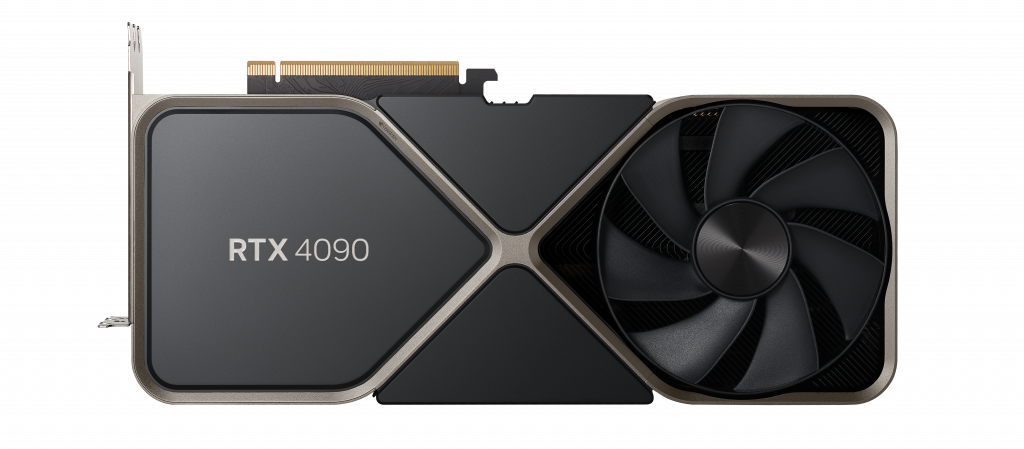
When it comes to NVIDIA GPU performance, the Ada lineup shines in 2025 benchmarks. Tom’s Hardware’s GPU hierarchy ranks the RTX 4090 at the top with scores exceeding 38,000 in PassMark G3D, outpacing the RTX 4080’s 34,000.
In gaming at 1440p, the RTX 4090 averages 194 FPS in Shadow of the Tomb Raider, a 44% uplift over the RTX 3090 Ti. For rendering, Arion benchmarks show the 4090 scoring 28,192, dwarfing older gens.
Versus AMD, NVIDIA leads in ray tracing, though AMD’s RX 7900 XTX competes in rasterization. Overclocking tips: Use MSI Afterburner for safe boosts up to 2.8 GHz, but monitor thermals—Ada’s vapor chamber coolers keep temps under 70°C.
In AI, the RTX 6000 Ada hits 65.3 TFLOPS in RT performance, ideal for GenAI. Generational comparisons show the RTX 5090 (rumored) could be 24% faster than the 4090, but Ada holds strong for now.
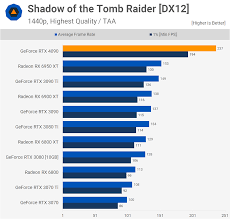
Benchmark chart for Shadow of the Tomb Raider at 1440p, demonstrating RTX 40 series performance
For content creators, expect 2x faster exports in DaVinci Resolve. Overall, Ada’s performance justifies its premium, especially in hybrid gaming/AI setups.
In conclusion, the NVIDIA Ada Lovelace ecosystem, through Ada generation GPUs and the RTX 40 series, sets the standard for 2025 computing. With unmatched Ada architecture innovations and stellar NVIDIA GPU performance, it’s a wise investment. For the latest prices, check NVIDIA’s site or retailers. If you’re building a rig, prioritize compatibility with PCIe 4.0 and sufficient PSU wattage. Stay tuned for Blackwell updates, but Ada remains king today.