6 Shocking GPU Stock Updates – Scarcity & Price Hikes in 2026
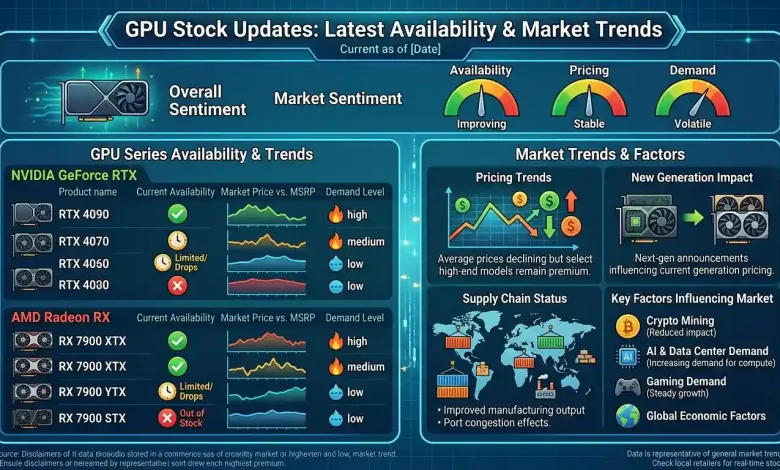
Table of Contents
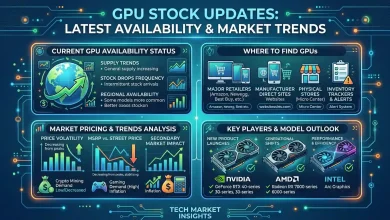
GPU Stock Updates have become a consistently discussed topic within the technology and gaming communities over the past few years. What began as a severe shortage driven by cryptocurrency mining booms and global supply chain disruptions during the pandemic has slowly transitioned into a more stable, albeit still dynamic, market. While the days of exorbitant scalper prices and empty shelves are largely behind us, understanding the current availability and underlying market trends remains crucial for both casual gamers and professional users looking to upgrade or build new systems. This article delves into the present state of GPU availability, the forces shaping its market, and what consumers can expect in the near future.
The Evolving Landscape of GPU Availability
The journey of GPU availability has been a tumultuous one. Beginning in late 2020 and peaking through 2021, the market for graphics cards was characterized by unprecedented demand far outstripping supply. Factors like the surge in cryptocurrency mining profitability, increased demand for gaming and remote work setups, and severe manufacturing bottlenecks converged to create a perfect storm, making it nearly impossible for consumers to purchase GPUs at their Manufacturer’s Suggested Retail Price (MSRP). Retailers often had no stock, and what little became available was quickly snapped up by bots or resellers.
As of mid-2026, the landscape has significantly improved. The crash in cryptocurrency values in 2022 led to a dramatic reduction in demand from miners, flooding the used market with graphics cards and alleviating pressure on new stock. Concurrently, supply chains have largely recovered, and major manufacturers like NVIDIA and AMD have ramped up production to meet more normalized demand levels. This recovery has led to better stock levels across most product tiers, from entry-level to high-end cards. However, localized fluctuations and specific high-demand models can still see temporary shortages or higher prices, underscoring the market’s continued sensitivity to various influencing factors.
Factors Influencing GPU Stock: Beyond the Pandemic
While the initial drivers of GPU shortages have subsided, several ongoing factors continue to influence the availability and pricing of graphics cards. Understanding these elements provides a clearer picture of the market’s current state and its potential trajectory.
- Semiconductor Manufacturing Capacity: The production of modern GPUs relies heavily on advanced semiconductor fabrication processes. Foundries like TSMC and Samsung are central to this, and their capacity directly impacts how many GPUs can be produced. While capacity has increased, the demand for these foundries extends beyond GPUs to a vast array of other electronics, meaning competition for wafer allocation remains fierce.
- New Product Launches: The introduction of new GPU generations (e.g., NVIDIA’s RTX 40-series, AMD’s RX 7000-series) often creates a temporary ripple effect. While new cards debut, older generations might see price adjustments or clearance sales, but initial stock of the latest flagship models can still be limited due to manufacturing ramp-up schedules and high early adopter demand.
- Global Economic Conditions: Inflation, interest rates, and consumer purchasing power play a significant role. A stronger economy generally correlates with higher consumer spending on discretionary items like gaming hardware, influencing demand. Conversely, economic downturns can lead to reduced sales and potentially oversupply, forcing price cuts.
- AI and Data Center Demand: A rapidly growing factor is the surging demand for GPUs in artificial intelligence (AI), machine learning (ML), and data center applications. High-performance GPUs, particularly from NVIDIA, are crucial for training large language models and other AI workloads. This enterprise demand can sometimes divert manufacturing capacity and components away from consumer-grade GPUs, especially for the very top-tier chips that share architectural similarities.
- Logistics and Supply Chain Resilience: Despite improvements, global logistics can still face disruptions, whether from geopolitical events, natural disasters, or labor issues. These can affect the timely transport of components and finished products, leading to localized stock variations.
Key Market Trends Shaping the GPU Industry
The GPU market is not static; it is constantly evolving with technological advancements, shifting consumer priorities, and competitive pressures. Several key trends are currently shaping the industry.
One prominent trend is the increasing focus on power efficiency and performance-per-watt. As GPUs become more powerful, their energy consumption also tends to rise, prompting manufacturers to innovate in architecture and fabrication processes to deliver strong performance without excessive power draw. This is crucial for both environmental reasons and for consumers managing electricity costs and system thermals. Another significant trend is the continuous push towards higher resolutions and refresh rates in gaming, driving demand for more powerful graphics cards that can deliver smooth experiences in 4K and beyond. Technologies like ray tracing and path tracing are also becoming more commonplace, requiring substantial GPU horsepower.
Furthermore, the competitive landscape between NVIDIA, AMD, and the emerging presence of Intel Arc is fostering innovation and, ideally, better value for consumers. NVIDIA continues to dominate the high-end market, especially with its AI-accelerating capabilities, while AMD often offers strong performance-per-dollar in various segments. Intel’s entry, though initially challenging, is maturing and provides another option in the mainstream market. The integration of advanced upscaling technologies like DLSS (NVIDIA) and FSR (AMD) has also become a standard feature, allowing more users to achieve higher frame rates even with less powerful hardware.
| GPU Series | Availability Trend (Q2 2026) | Average Price Trend (vs. MSRP) | Key Market Segment | Competitive Stance |
|---|---|---|---|---|
| NVIDIA RTX 40-Series (High-End) | Generally Good, occasional flagship fluctuations | Slightly above MSRP for high-demand models | Enthusiast Gaming, Professional AI/ML | Market leader, strong AI performance |
| NVIDIA RTX 40-Series (Mid-Range) | Excellent | Close to MSRP, some bundles available | High-Refresh 1440p Gaming | Strong performance, good feature set |
| AMD RX 7000-Series (High-End) | Good | Close to or slightly below MSRP | Enthusiast 4K Gaming | Strong rasterization, competitive pricing |
| AMD RX 7000-Series (Mid-Range) | Excellent | Below MSRP for many models | 1440p/1080p High-Refresh Gaming | Aggressive pricing, good value |
| Intel Arc A-Series | Excellent | Significantly below MSRP | Entry-Level/Budget Gaming, HTPCs | Improving drivers, strong for its price point |
| Previous Generations (RTX 30-series, RX 6000-series) | Limited new stock, strong used market | Well below original MSRP (used) | Budget-Conscious Gaming | Excellent value on the secondary market |
Current Availability by Manufacturer and Series
As of mid-2026, the market offers a diverse range of graphics cards with varying levels of availability and pricing, primarily from NVIDIA and AMD, with Intel making strides.
- NVIDIA RTX 40-Series: NVIDIA’s latest generation, including cards like the RTX 4090, RTX 4080 SUPER, RTX 4070 Ti SUPER, and RTX 4070 SUPER, generally enjoys good availability. The flagship RTX 4090, while readily available, occasionally sees minor price premiums due to its unparalleled performance and dual-use appeal (gaming and professional AI). Mid-range options like the RTX 4060 and RTX 4060 Ti are widely available at or often below their MSRP, making them accessible choices for 1080p and 1440p gaming. The consistent supply across this series reflects stabilized production and a more rationalized market demand compared to previous generations.
- AMD Radeon RX 7000-Series: AMD’s current generation, featuring cards like the RX 7900 XTX, RX 7900 XT, and the more recent RX 7800 XT and RX 7700 XT, also exhibits strong availability. AMD has been competitive, often positioning its cards to offer compelling rasterization performance for the price. Many RX 7000-series cards can be found at or below their MSRP, especially during promotional periods, appealing to gamers seeking high frame rates without NVIDIA’s premium for advanced ray tracing or AI features.
- Intel Arc A-Series: Intel’s discrete graphics cards, such as the Arc A770 and A750, have found their niche in the budget and entry-level segments. While they initially faced driver maturity challenges, consistent updates have significantly improved their performance and stability, making them viable options for 1080p gaming at attractive price points. Availability for Intel Arc cards is excellent, often with significant discounts below their launch MSRPs, providing strong value for consumers building budget-friendly systems.
- Previous Generations: New stock of NVIDIA’s RTX 30-series and AMD’s RX 6000-series is largely depleted, having been replaced by the newer generations. However, the secondary market (used GPUs) is robust, offering excellent value for these cards. Buyers can find compelling deals on cards like the RTX 3080 or RX 6800 XT, which still deliver strong performance for current games. Buyers should exercise caution and ensure thorough testing when purchasing used hardware. The Wikipedia page on graphics cards provides a good historical overview of these product lines and their evolution.
Navigating the Market: Tips for Buyers
With the GPU market settling into a new rhythm, prospective buyers have more options and less pressure than in previous years. However, smart shopping strategies can still help secure the best deals and avoid potential pitfalls.
- Research Your Needs: Before anything else, define your primary use case. Are you a competitive 1080p gamer, a 4K enthusiast, or a professional needing compute power for rendering or AI? Your budget and desired performance will dictate which tier of GPU you should target. Don’t overspend on a card that far exceeds your monitor’s capabilities or your typical gaming resolution.
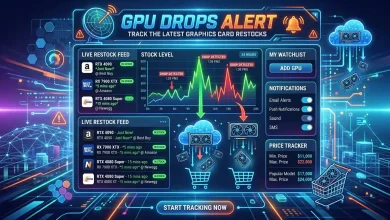
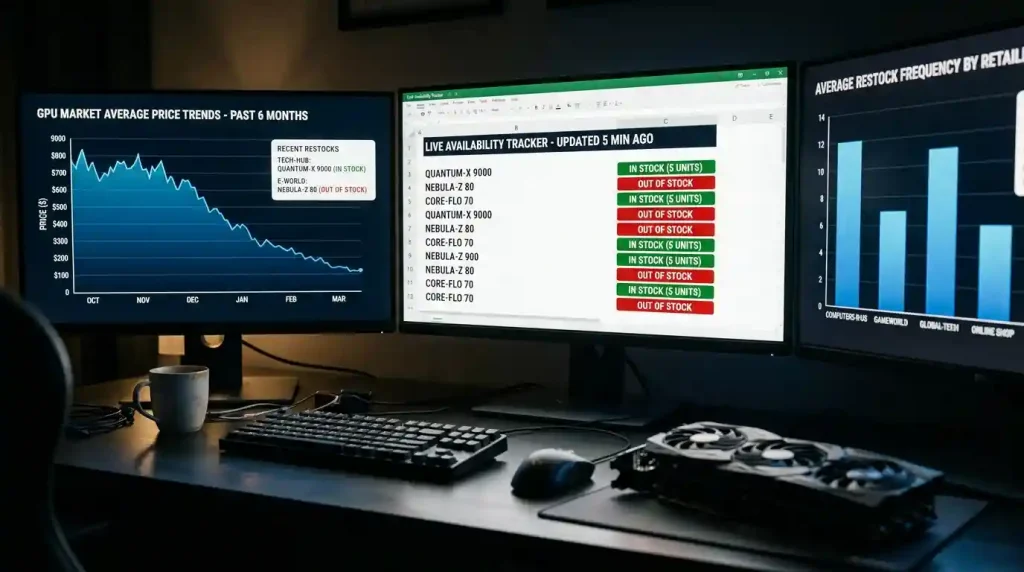
- Monitor Retailer Stock and Prices: Keep an eye on major online retailers (Amazon, Newegg, Best Buy, etc.) and local electronics stores. Price tracking websites and browser extensions can alert you to drops in price or restocking of desired models. Deals, especially bundles with games or other components, are becoming more common.
- Consider Refurbished or Used: For budget-conscious buyers, the refurbished market from reputable sellers or the used market (e.g., eBay, local marketplaces) can offer significant savings. As mentioned, the influx of cards from former crypto miners means there’s a lot of hardware available. Always buy from sellers with good reputations and inquire about warranty or return policies.
- Compare Performance and Value: Don’t just look at the raw price. Compare performance benchmarks across different cards in your target resolution and games. Factor in features like DLSS/FSR, ray tracing performance, VRAM capacity, and power consumption. Sometimes, a slightly older generation card at a steep discount offers better value than a new mid-range option. For instance, a well-priced used RTX 3070 might outperform a new RTX 4060 in certain scenarios.
- Beware of Scalpers (Though Less Prevalent): While the scalping epidemic has largely subsided, be cautious of dramatically inflated prices, especially for newly released or highly sought-after cards. Stick to official retailers or trusted secondary market platforms.
The Future of GPU Stock: What to Expect
Looking ahead, the GPU market is expected to maintain a healthier balance between supply and demand compared to the recent past. Several factors will likely shape its trajectory.
Firstly, continuous advancements in manufacturing processes will likely lead to more efficient and powerful GPUs. As chip fabrication improves, it becomes easier to produce more dies per wafer, potentially increasing overall supply over time. Secondly, competition is heating up. With Intel establishing its presence and AMD continually pushing its RDNA architecture, NVIDIA faces strong rivals, which historically drives innovation and more competitive pricing for consumers. This competitive environment could mean that future generations of GPUs offer better performance-per-dollar.
However, the elephant in the room remains the surging demand for AI and professional GPUs. While consumer gaming GPUs and high-end professional accelerators often use different designs or even different fabrication processes, the underlying demand for silicon and advanced packaging can still create indirect pressure on the entire semiconductor supply chain. If AI demand continues its exponential growth, it might influence the availability of the most cutting-edge consumer chips in the long run, as foundries prioritize higher-margin enterprise orders. Nevertheless, for the foreseeable future, especially for mainstream and mid-range gaming cards, stability is expected to be the norm. New product launches will continue to create brief periods of high demand, but these are unlikely to revert to the sustained shortages of previous years.
Conclusion
GPU Stock Updates have transitioned from a saga of scarcity to a story of stability, with the market largely normalizing as of mid-2026. The extreme shortages and inflated prices of the pandemic and crypto boom eras are mostly behind us, replaced by a more predictable supply chain and competitive landscape. Consumers now have a healthier array of choices from NVIDIA, AMD, and Intel, across various price points and performance tiers. While specific high-end cards might still see occasional demand surges, the overall trend points towards greater accessibility and more reasonable pricing. By understanding the underlying market dynamics and adopting smart purchasing strategies, buyers are well-positioned to find the perfect graphics card to meet their needs without undue stress or exorbitant costs. The future promises continued innovation and, hopefully, even better value as competition intensifies and manufacturing capabilities advance.