3060 GPU Review: Is RTX 3060 Still Worth Buying?
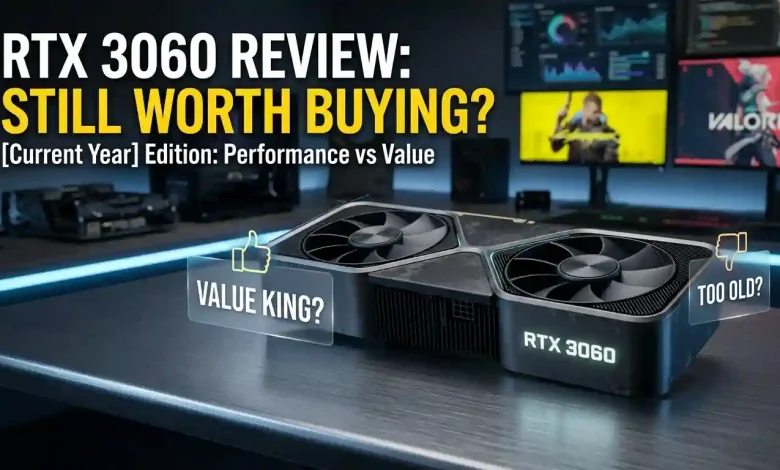
Table of Contents
The RTX 3060: A Legacy of Value and Its Resurgence
The NVIDIA GeForce 3060 GPU 0, specifically the 12GB variant, holds a unique position in the GPU market. When it debuted in January 2021 with an MSRP of $329, it filled a crucial void, offering a balance of performance and features that resonated with a broad audience. Its 12GB of GDDR6 VRAM, connected via a 192-bit memory interface, was particularly noteworthy at its price point, providing a distinct advantage over many contemporaries, which often came with less memory. This ample VRAM proved beneficial for handling high-resolution textures and multitasking, contributing to its enduring popularity.
What makes the RTX 3060’s continued discussion in 2026 so remarkable is the current state of the graphics card market. Demand for AI and data chips has significantly impacted the supply of newer GPU generations, creating a gap in the mainstream gaming segment. This scarcity, coupled with the high production costs of the latest 40-series and 50-series chips, has reportedly led NVIDIA to consider leveraging older manufacturing processes, like Samsung’s 8nm fabrication line used for the Ampere architecture, to reintroduce the RTX 3060 12GB. This strategic move would allow NVIDIA to supply the budget-conscious gaming market without competing for the advanced manufacturing resources allocated to its higher-margin products. As of June 2026, reports confirm that the RTX 3060 12GB is indeed being restocked and sold in certain regions, with some retailers listing it for around $347, slightly above its original MSRP. This re-emergence underscores its persistent value and NVIDIA’s recognition of a genuine market need for capable, affordable GPUs.
Core Specifications and Technological Foundations
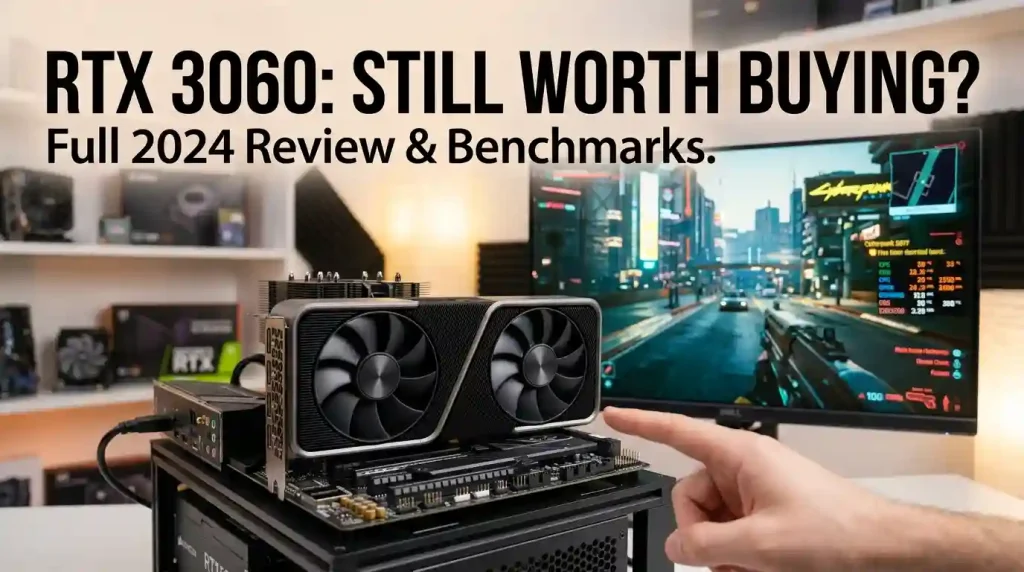
To properly evaluate the RTX 3060’s worth in 2026, it’s essential to revisit its technical foundation. The card is built on NVIDIA’s Ampere architecture, utilizing the GA106 graphics processor on an 8nm process. It features 3,584 CUDA cores, 112 Tensor Cores (3rd Gen), and 28 RT Cores (2nd Gen), alongside 48 ROPs and 112 texture mapping units. The base clock speed is 1.32 GHz, boosting up to 1.78 GHz.
The standout feature remains its 12GB of GDDR6 memory, operating on a 192-bit memory interface, delivering a memory bandwidth of 360 GB/s. This generous VRAM allocation, unusual for a card in its class, has proven to be a significant asset for longevity, especially as modern games become increasingly VRAM-intensive, particularly at higher texture settings. While an 8GB variant of the RTX 3060 also exists, the 12GB model is the focus of much of the discussion regarding its continued relevance. The card connects via a PCI-Express 4.0 x16 interface and has a Thermal Design Power (TDP) of 170W, with a recommended minimum PSU of 450W to 550W.
Performance in 2026: Gaming Benchmarks and Real-World Experience
Despite being several years old, the RTX 3060 12GB continues to offer a surprisingly competent gaming experience, especially at its target resolution of 1080p. In 2026, it still comfortably delivers 60+ frames per second (fps) at high settings in virtually all current titles. For more demanding AAA games like Cyberpunk 2077, Alan Wake 2, or upcoming titles like Black Myth: Wukong, it can handle them at 1080p with medium-to-high settings, maintaining comfortable frame rates.
Many modern benchmarks in mid-2026 show the RTX 3060 performing well in popular competitive esports titles, often achieving very high frame rates. For instance, in Fortnite (Performance Mode) it can exceed 280 FPS, Valorant (High Settings) over 350 FPS, and League of Legends (Ultra at 1440p) over 400 FPS. Even in more graphically intensive games, with some settings adjustments and the aid of DLSS, the card can provide a smooth experience. It’s generally considered a solid choice for a first PC build or an upgrade for those primarily gaming at 1080p. While it might show its age with the most demanding Unreal Engine 5 titles or when attempting ultra settings with heavy ray tracing, for standard rasterized gaming at 1080p, its performance remains strong.
Ray Tracing and DLSS: NVIDIA’s Enduring Advantages
One of the key differentiators for NVIDIA’s RTX series, including the 3060, is its support for ray tracing and DLSS (Deep Learning Super Sampling). The RTX 3060 is equipped with 2nd Gen RT Cores and 3rd Gen Tensor Cores, enabling hardware-accelerated ray tracing and AI-powered upscaling.
In 2026, ray tracing remains a demanding feature, and while the RTX 3060 can utilize it, pushing ultra ray tracing settings in titles like Cyberpunk 2077 will significantly impact frame rates. Users will often need to enable DLSS Quality or Performance modes to maintain playable frame rates with ray tracing active. However, selective ray tracing (e.g., reflections only) can still enhance visual fidelity without crippling performance. It’s important to note that the RTX 3060 supports DLSS 2, which is still highly effective for upscaling and boosting frames, but it does not support the newer DLSS 3 Frame Generation technology, which is exclusive to RTX 40-series and newer cards. Despite this, NVIDIA’s continuous software ecosystem improvements, including DLSS Super Resolution, Ray Reconstruction, and NVIDIA Reflex, mean that RTX 30-series owners are still receiving meaningful upgrades that improve image quality and latency in 2026. This ongoing software support adds significant value to the card’s longevity. For a deeper understanding of NVIDIA’s ray tracing technology and its evolution, Wikipedia provides an excellent overview.
Price, Value, and the Competitive Landscape
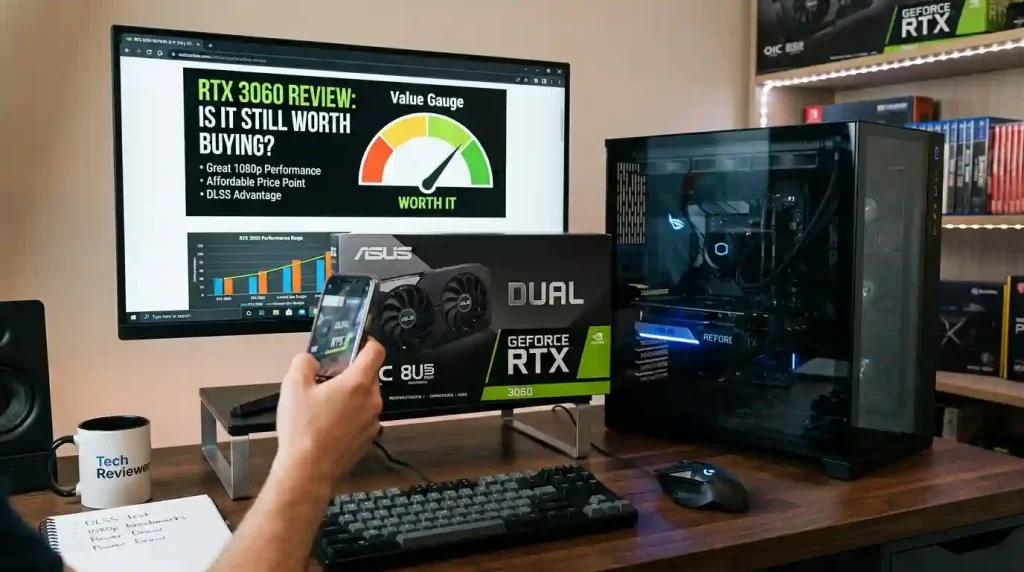
The question of whether the RTX 3060 is still worth buying in 2026 heavily hinges on its price-to-performance ratio in the current market. At launch, the RTX 3060 12GB was priced at $329. In June 2026, new retail prices for the 12GB variant are reportedly around $347 in some regions, reflecting a slight increase from MSRP, while the average price for a new RTX 3060 sits around $384 in the US. Used market prices are more competitive, typically ranging from $130-$250.
When comparing it to newer cards, the landscape is complex. The RTX 4060, for example, is roughly 20-25% faster in rasterization at 1080p and offers DLSS 3 Frame Generation, but often comes with only 8GB of VRAM and at a similar or slightly higher price point. AMD’s RX 7600 is about 10-15% faster in rasterized workloads but also typically has 8GB of VRAM. The RX 6600 XT, an older AMD competitor, can be around 11% faster in synthetic benchmarks but also more expensive than the RTX 3060.
The value proposition of the RTX 3060 often comes down to its 12GB of VRAM. While newer 8GB cards might offer slightly better raw rasterization performance, the extra VRAM on the 3060 provides a buffer for future games and higher texture settings, especially at 1440p where 8GB can start to become a bottleneck. For budget-conscious gamers prioritizing VRAM and solid 1080p performance without breaking the bank, particularly if a good deal can be found on the used market, the RTX 3060 presents a compelling option.
| GPU Model | VRAM (GB) | Memory Interface (bit) | Approx. New Price (USD, June 2026) | Key Features | 1080p Raster Performance (Relative to RTX 3060 12GB) |
|---|---|---|---|---|---|
| NVIDIA GeForce RTX 3060 (12GB) | 12 GDDR6 | 192 | $347 – $384 | DLSS 2, Ray Tracing (2nd Gen RT Cores), NVIDIA Reflex | Baseline (100%) |
| NVIDIA GeForce RTX 4060 (8GB) | 8 GDDR6 | 128 | ~$299 – $350 | DLSS 3 (Frame Generation), Ray Tracing (3rd Gen RT Cores), NVIDIA Reflex, Improved Efficiency | ~120-125% |
| AMD Radeon RX 7600 (8GB) | 8 GDDR6 | 128 | ~$199 – $250 | FSR, Ray Accelerators (2nd Gen), Improved Efficiency | ~110-115% |
| AMD Radeon RX 6600 XT (8GB) | 8 GDDR6 | 128 | ~$250 – $300 | FSR, Ray Accelerators | ~111% in synthetic benchmarks |
Future-Proofing and Longevity: The 12GB VRAM Advantage
The concept of “future-proofing” in PC hardware is always challenging, but the RTX 3060’s 12GB of VRAM gives it a notable edge in terms of longevity. While its raw processing power might lag behind newer generations, the ample VRAM is becoming increasingly crucial for modern game titles, especially at higher texture settings and resolutions beyond 1080p. Many newer AAA releases are already pushing past 8GB of VRAM at 1440p and higher, leading to stutters or texture pop-in on cards with less memory. The 3060’s 12GB frame buffer allows it to handle these demands more gracefully, potentially extending its viable lifespan for users who plan to upgrade to a 1440p monitor in the coming years.
For 1080p gaming, the 12GB VRAM ensures that the card won’t be immediately bottlenecked by memory in upcoming titles, allowing for higher texture settings than many 8GB competitors. While it won’t magically transform the 3060 into a top-tier performer, it mitigates a common limitation that can severely impact the gaming experience on less-equipped cards. This makes the 3060 12GB a “legitimately good 1080p card in 2026,” particularly for those who prioritize smooth, uncompromised texture quality over bleeding-edge ray tracing performance or the absolute highest frame rates achievable with DLSS 3 Frame Generation.
Conclusion
In conclusion, the NVIDIA GeForce RTX 3060 12GB, despite being an Ampere-generation card launched in 2021, remains a surprisingly relevant and viable option in mid-2026. Its enduring appeal is multifaceted: robust 1080p gaming performance with acceptable 1440p capabilities, the significant advantage of 12GB of VRAM for modern and future titles, and continued support for NVIDIA’s powerful DLSS 2 and other software enhancements.
While it lacks the latest advancements like DLSS 3 Frame Generation found in 40-series cards and its ray tracing performance requires compromises compared to newer GPUs, its overall value proposition, especially if acquired at a competitive price (new or used), is hard to ignore. For gamers on a budget, content creators needing ample VRAM, or those simply seeking a reliable 1080p workhorse that won’t immediately fall behind due to memory limitations, the RTX 3060 12GB still makes a compelling case. Its rumored and now observed re-release in 2026 highlights that even NVIDIA recognizes its continued role in filling a crucial market segment. Therefore, the RTX 3060 is indeed still worth buying in 2026 for the right user and at the right price, particularly for those prioritizing VRAM capacity and solid rasterized performance at 1080p and even some 1440p gaming.