GPU Deals Online: Best Graphics Card Discounts This Week – 7 Hot Offers for Gamers

Table of Contents
GPU Deals Online are more critical than ever for gamers, content creators, and professionals seeking to upgrade their systems without breaking the bank. The graphics card market in 2026 is a complex landscape, characterized by both innovation and significant pricing fluctuations. While demand for high-performance GPUs continues to soar, driven by advancements in AI, machine learning, and increasingly demanding gaming titles, consumers are keenly looking for opportunities to secure powerful hardware at a reasonable cost.
Recent reports indicate a challenging environment for GPU pricing. Experts suggest that GPU prices are on the rise across major product lines, with some models seeing increases of 5-23%. This surge is primarily attributed to several structural factors, including ongoing memory shortages (HBM, GDDR, DRAM), sustained high demand from AI data centers, and strategic pricing decisions by manufacturers. NVIDIA, for instance, is reportedly prioritizing higher-margin GPUs, which can lead to limited availability and higher prices for other models. Despite these challenges, diligent shoppers can still find worthwhile discounts, especially by understanding market dynamics and knowing where and when to look.
Understanding the Graphics Card Market in 2026
The global GPU market is experiencing substantial growth, projected to reach hundreds of billions of dollars by 2030 or 2031, with a Compound Annual Growth Rate (CAGR) exceeding 20%. This growth is largely fueled by the relentless demands of artificial intelligence and machine learning applications, the booming cloud gaming sector, virtual reality, and the ever-present need for high-performance computing in various industries. Major players like NVIDIA, AMD, and Intel are continuously innovating, pushing the boundaries of performance with new architectures, AI-driven enhancements, and more efficient designs.
However, this intense demand comes with significant supply-side pressures. Memory shortages, particularly for cutting-edge GDDR7, are a critical constraint on GPU production, leading to companies like NVIDIA slashing production for certain RTX 50 series models by 30-40% in the first half of 2026. Furthermore, bottlenecks in advanced chip packaging technologies and the high cost of raw materials contribute to elevated manufacturing expenses, which are ultimately passed on to consumers. Geopolitical tensions and trade policies also play a role, impacting tariffs and production costs. This creates a market where prices are trending upward, and lead times can extend significantly, sometimes up to 3-7 months for certain products. Consumers are increasingly price-sensitive, actively searching for “GPU price history,” indicating a strong desire to understand value in a volatile market.
Key Factors When Hunting for GPU Deals Online
Navigating the GPU market for the best deals requires a strategic approach. Several factors should influence your decision-making process to ensure you get the most value for your money:
- Performance vs. Price: Determine your actual needs. Do you require a top-tier card for 4K gaming and professional rendering, or is a mid-range card sufficient for 1080p/1440p gaming and everyday tasks? Overbuying performance you don’t need is a common pitfall.
- VRAM Capacity: With modern games and applications becoming increasingly demanding, sufficient VRAM (Video Random Access Memory) is crucial. Cards with 12GB or 16GB of VRAM are often considered more future-proof, especially for higher resolutions and demanding textures. Be aware that 16GB cards, in particular, may become rarer due to production cuts.
- Ray Tracing and Upscaling Technologies: NVIDIA’s RTX series excels in ray tracing and offers DLSS (Deep Learning Super Sampling) for AI-powered frame generation, boosting frame rates significantly. AMD offers its FidelityFX Super Resolution (FSR) technology, which provides similar upscaling benefits across a wide range of games and is compatible with various GPUs. Intel also has its XeSS equivalent. Consider which ecosystem’s features are more important to you.
- Power Consumption and Cooling: More powerful GPUs consume more power and generate more heat. Ensure your power supply (PSU) can handle the GPU’s demands and that your PC case has adequate airflow and cooling solutions to prevent thermal throttling.
- Motherboard Compatibility: Most modern graphics cards use a PCI Express (PCIe) x16 slot. While newer cards often support PCIe 5.0, they are generally backward compatible with PCIe 4.0 or even 3.0 slots, though performance might be slightly limited by the older interface.
- Brand and AIB Partner: While the core GPU chip comes from NVIDIA, AMD, or Intel, various Add-in-Board (AIB) partners (e.g., ASUS, Gigabyte, MSI, Zotac, Sapphire, PowerColor) manufacture the actual graphics cards. These partners offer custom cooling solutions, factory overclocks, and unique designs. Research reviews for specific models to ensure good build quality and effective cooling.
Top Graphics Card Brands and Their Current Offerings
The GPU market is dominated by NVIDIA and AMD, with Intel making strides with its Arc series. Each brand offers a range of cards catering to different performance tiers and budgets.
NVIDIA GeForce Deals
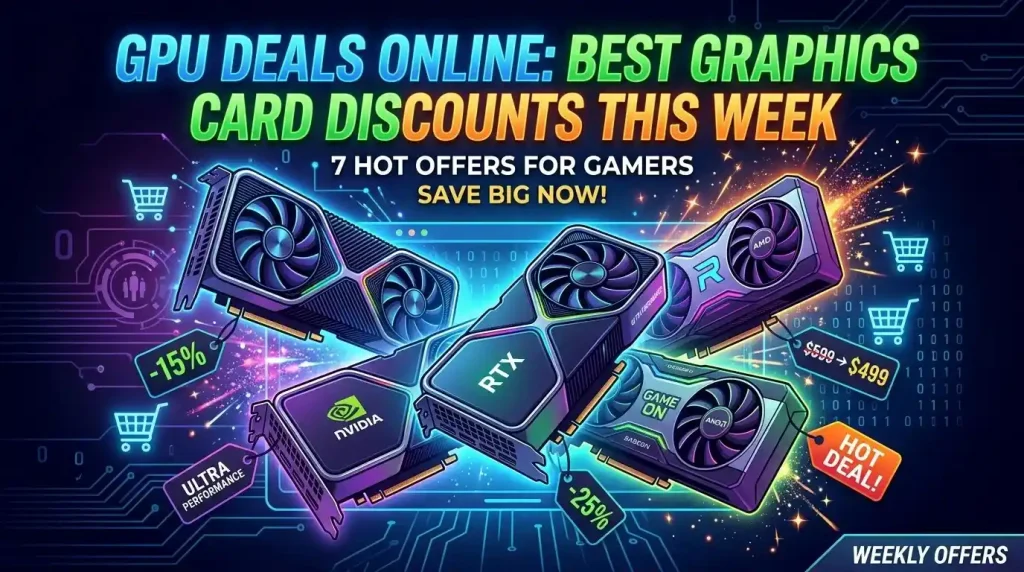
NVIDIA’s GeForce RTX series, particularly the 40-series (Ada Lovelace architecture) and the newer 50-series, remains a popular choice for gamers and creators. The RTX 4090 and 4080 Super are top-tier performers, offering exceptional ray tracing and DLSS 3 support. However, RTX 40-series GPUs are no longer being produced, making new stock scarce and prices potentially inflated, often pushing consumers towards second-hand or ex-mining hardware.
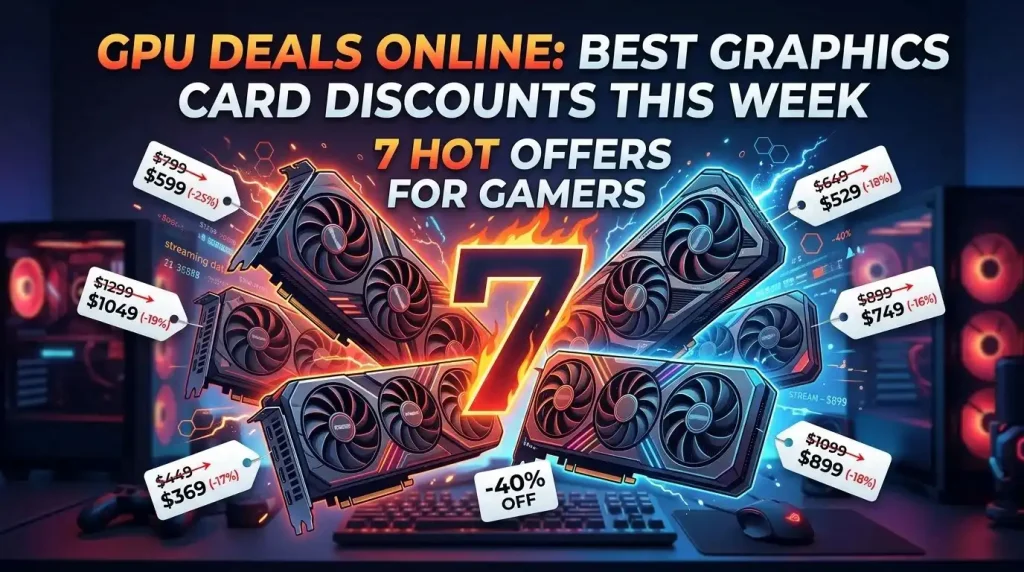
The newer RTX 50-series cards are highly sought after. For instance, the RTX 5070 and RTX 5060 Ti are strong contenders for 1440p gaming. Despite the demand, even these newer cards are experiencing price increases due to memory shortages impacting production, especially for models with higher VRAM capacities like the 16GB RTX 5060 Ti and RTX 5070 Ti. The RTX 5050 is a solid budget option for 1080p gaming. Shoppers can find deals on various RTX 40 and 50 series cards at retailers like Best Buy, Amazon, Newegg, and Walmart. For instance, recent deals have seen the RTX 5070 for around $599 and the RTX 5060 Ti 8GB for $380.
AMD Radeon Deals
AMD’s Radeon RX series, especially the 7000-series (RDNA 3 architecture) and the newer 9000-series, offers strong competition, often providing excellent raw computational performance, particularly for rasterization, and can be more value-oriented than NVIDIA’s offerings. The Radeon RX 9070 XT, for example, is highlighted as an “excellent AMD value pick” for high FPS 1440p and solid 4K gaming, sometimes outperforming comparable NVIDIA cards at a lower price. MSRP for the RX 9070 XT is around $599, though prices can vary. The RX 9060 XT is another reasonably affordable option, especially the 16GB version, making it a good choice for 1440p gaming.
The 7000-series GPUs, such as the RX 7900 XTX and RX 7800 XT, remain viable options for high refresh rate 1440p and even 4K gaming, offering a great blend of power and performance. The RX 7800 XT, with 16GB of VRAM, is often cited as offering the best value in its series. While AMD cards might not always lead in ray tracing performance compared to NVIDIA, they excel in raw computational power and offer FSR for upscaling. Retailers like Amazon, Best Buy, Newegg, and Micro Center carry a wide range of AMD Radeon cards.
Here’s a snapshot of some recent hypothetical deals, reflecting the typical pricing and market positioning you might encounter this week, based on current market reports:
| GPU Model | Original MSRP (approx.) | Potential Discounted Price (approx.) | Performance Tier | Key Features / Notes |
|---|---|---|---|---|
| NVIDIA GeForce RTX 5070 (12GB) | $549 – $599 | $599 – $635 | Mid-High Range (1440p/Entry 4K) | Strong for 1440p gaming, DLSS 4 support, good ray tracing. Affected by memory shortages. |
| AMD Radeon RX 9070 XT (16GB) | $599 – $699 | $629 – $700 | High-Mid Range (1440p/4K) | Excellent value for raw power, 16GB VRAM, competitive with RTX 5070 Ti at lower price. |
| NVIDIA GeForce RTX 5060 Ti (8GB) | $399 – $449 | $379 – $380 | Mid-Range (1080p/Entry 1440p) | Good budget NVIDIA option for 1080p high settings and esports. 16GB version potentially scarce. |
| AMD Radeon RX 9060 XT (16GB) | $419 – $449 | $419 – $459 | Mid-Range (1080p/1440p) | Balanced performance with ample VRAM for modern games, good value. |
| Intel Arc B580 (8GB) | $300 – $350 | $304 – $368 | Entry-Mid Range (1080p) | Emerging option, offers decent 1080p gaming, often at competitive prices. |
| NVIDIA GeForce RTX 4060 (8GB) | $299 – $329 | $299 – $498 | Entry-Mid Range (1080p) | Solid upgrade for older systems, good value for 1080p gaming. Prices can still vary. |
Where to Find the Best GPU Discounts
Finding the best GPU deals often involves knowing which retailers to monitor and taking advantage of various sales events. Major online electronics retailers are usually the first places to check:
- Amazon: A consistent source for a wide variety of GPUs from different manufacturers. Amazon often has daily deals and flash sales.
- Newegg: Specializes in computer hardware and is a go-to for many PC builders. Newegg regularly features shell shocker deals, combo discounts, and promotions on graphics cards.
- Best Buy: Offers a good selection and is often the exclusive retailer for NVIDIA’s Founders Edition cards in the US. Keep an eye on their weekly ads and clearance sections.
- Walmart: Surprisingly, Walmart can sometimes have competitive GPU deals, especially on pre-built systems that include desirable graphics cards.
- Micro Center: For those with a physical store nearby, Micro Center is known for competitive in-store deals and a wide selection of GPUs from both AMD and NVIDIA. They also have online offerings.
- Manufacturer Websites: Directly checking NVIDIA and AMD’s official websites can provide information on new releases, promotions, and where to buy from authorized retailers. For instance, AMD lists various partners in North America and Europe where their RX cards can be purchased.
- Other Retailers: Don’t forget to check out other electronics stores like B&H Photo, Adorama, and regional stores, as they might have unique discounts or bundles.
Beyond general retailers, community forums and deal aggregator websites can be invaluable. Sites like Reddit’s r/buildapcsales or specialized tech deal websites often highlight current discounts posted by other users, sometimes even before they are widely advertised. Subscribing to newsletters from your preferred retailers can also alert you to upcoming sales.
Tips for Maximizing Your Savings
Beyond knowing where to look, a few smart strategies can significantly increase your chances of snagging a great GPU deal.
Timing Your Purchase
Timing is crucial in the volatile GPU market. Historically, major shopping holidays like Black Friday, Cyber Monday, and Amazon Prime Day have yielded significant discounts. However, the market in 2026 is influenced by sustained AI demand and supply constraints, which may temper the depth of discounts even during these periods. Reports from late 2025 warned of price hikes coming in 2026 due to DRAM shortages and AI data center buildouts consuming memory supply. This suggests that “buy now” might sometimes be better than waiting, especially for specific models that are scarce.
New hardware releases can also trigger price drops on previous-generation cards. For example, the launch of new RTX 50-series or Radeon RX 9000-series cards might lead to retailers clearing out stock of older but still capable RTX 40-series or RX 7000-series models. Pay attention to product cycles and industry news to anticipate these opportunities.
Checking Refurbished and Used Options
Consider refurbished or open-box GPUs from reputable retailers. Many retailers offer certified refurbished products with warranties, providing a way to get high-end hardware at a lower price. For instance, Newegg lists refurbished ASUS Dual GeForce RTX 4060 Ti cards. Similarly, Best Buy offers “Excellent” condition refurbished options. When buying refurbished, always ensure it comes with a warranty from the seller.
The used market, found on platforms like eBay, Facebook Marketplace, or local classifieds, can offer even steeper discounts. However, this avenue comes with increased risk. If considering a used GPU, always:
- Request benchmark results or videos of the card running under load.
- Ask for detailed photos of the card, checking for any physical damage, corrosion, or signs of heavy cryptocurrency mining (though many ex-mining cards can still be perfectly fine if well-maintained).
- Meet in a public place if buying locally and test the card immediately if possible.
- Be wary of deals that seem too good to be true, as counterfeits or faulty units can exist.
While interest in renewed GPUs peaked in November 2025, suggesting a strong consumer interest in value, buyers should be mindful of potential issues like “weak airflow” or “noisy fans” reported in some renewed products. Thorough vetting is key.
Future Trends in GPU Pricing and Availability
The GPU market in 2026 is poised for continued evolution, with several trends likely to impact pricing and availability. The explosive growth of AI and machine learning continues to be the primary driver of demand for high-performance GPUs, particularly enterprise-grade cards. This sustained demand is creating a structural imbalance where consumer gaming GPUs are increasingly competing with data centers for shared manufacturing resources, notably High Bandwidth Memory (HBM) and advanced chip packaging. This is not a short-term disruption; current signals point to prolonged supply pressure and upward price trends into at least mid-2026.
NVIDIA’s strategic decision to prioritize higher-margin Blackwell GPUs and limit production of certain consumer-grade RTX 50-series cards due to GDDR7 memory shortages will likely keep prices high and availability constrained for some models, especially those with 16GB VRAM. AMD and Intel will continue to vie for market share, potentially offering competitive pricing on their current and upcoming generations to attract value-conscious consumers. The GPU rental market is also expanding, making high-performance computing more accessible through flexible pricing models, which could indirectly influence new hardware sales by providing an alternative for certain workloads.
Consumers should anticipate that while some deals will emerge, especially on older generations or during specific sales events, the overall trend for new, high-performance GPUs will likely be towards higher prices and potentially longer lead times. Remaining informed about market shifts and supply chain updates, such as those reported by Reuters, will be crucial for making timely and cost-effective purchasing decisions.
Conclusion
Finding the best graphics card deals online in 2026 requires patience, research, and a clear understanding of market dynamics. While the current landscape presents challenges with rising prices and supply constraints driven by the insatiable demand from AI and memory shortages, opportunities for savings still exist. By identifying your specific performance needs, monitoring key retailers and deal sites, and understanding the nuances of different brands and their offerings, you can navigate this complex market successfully. Whether you opt for a powerful NVIDIA RTX card with its leading ray tracing and DLSS capabilities or a value-driven AMD Radeon GPU offering strong rasterization performance, being an informed buyer is your best tool for securing a great deal this week and beyond.