6 Best GPU Drop Alerts – Never Miss a Restock Again
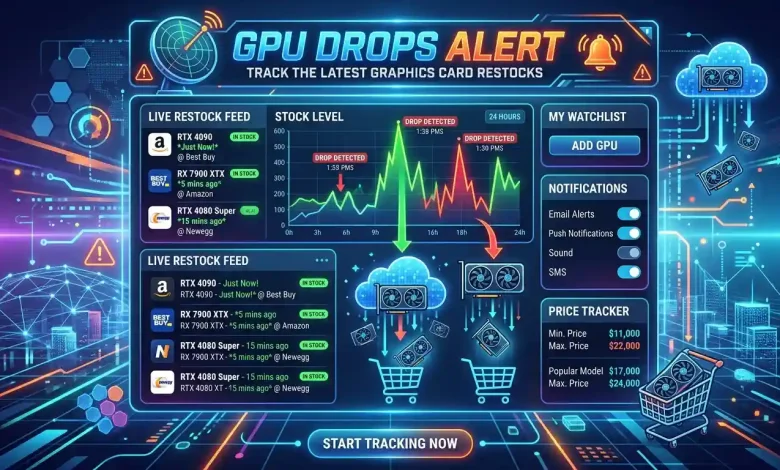
Table of Contents
GPU Drops Alert: The quest for a new graphics card has, for many years, been more akin to a treasure hunt than a straightforward purchase. From the crypto boom to the global chip shortage and now the insatiable demands of AI data centers, consumers have faced a tumultuous market where high-performance GPUs are often scarce, overpriced, or both. This comprehensive guide aims to equip you with the knowledge and strategies to track the latest graphics card restocks effectively, offering insights into the current market dynamics and best practices for securing your desired hardware.
Understanding the GPU Market Landscape
The Graphics Processing Unit (GPU) market has undergone significant transformations in recent years, evolving from a niche component for gaming enthusiasts into a critical piece of infrastructure for various high-performance computing applications, particularly artificial intelligence (AI) and machine learning (ML). The global GPU market size was valued at USD 78.60 billion in 2025 and is projected to grow to USD 642.74 billion by 2034, registering a Compound Annual Growth Rate (CAGR) of 26.10% over the forecast period. This explosive growth is largely driven by the gaming industry’s demand for immersive experiences and high-resolution graphics, which is projected to hold a nearly 45% market share in 2026, and the rapid adoption of GPUs in AI and ML tasks.
Currently, the market is characterized by significant price fluctuations, ongoing supply shortages, and rapid technological advancements, with new generations from Nvidia, AMD, and Intel pushing performance boundaries. Nvidia’s GeForce RTX 40 series, based on the Ada Lovelace architecture, launched in late 2022, with the RTX 4090 leading the charge. AMD followed suit with its Radeon RX 7000 series, based on the RDNA 3 architecture, released in December 2022. More recently, the NVIDIA GeForce RTX 50 series, including the RTX 5080 and RTX 5090, debuted in January 2025, with the RTX 5060 also expected in early 2025. However, despite these new releases, high-end GPUs often come with premium pricing and limited availability.
The Persistent Scarcity: Why Graphics Cards Remain Elusive
The persistent scarcity of graphics cards can be attributed to a confluence of factors, many of which stem from global supply chain challenges and evolving demand patterns. The initial global chip shortage between 2020 and 2023, exacerbated by the COVID-19 pandemic and a surge in cryptocurrency mining, significantly impacted the availability and pricing of GPUs. While the acute phase of this shortage has passed, new bottlenecks have emerged. By 2024 and extending into 2025, the focus of the chip crunch shifted from raw silicon wafer output to “back-end” processes like advanced packaging facilities, photomask shops, and substrate factories.
The most significant driver of current GPU scarcity and inflated prices, particularly for high-end models, is the unprecedented demand from AI data centers. Major cloud and AI companies, such as Google, Amazon, Meta, and Microsoft, are investing hundreds of billions in AI infrastructure, with GPUs being a primary hardware cost. These facilities require massive quantities of high-performance GPUs, advanced memory (HBM, DDR5, LPDDR5), and high-bandwidth interconnects, far exceeding global production capacity.
Moreover, a deepening memory shortage, particularly for High-Bandwidth Memory (HBM) and enterprise DDR5, is strangling GPU production. Leading memory manufacturers have prioritized higher-margin products for data centers, leaving consumer-grade DRAM and NAND stretched thin. This has a direct impact on the manufacturing cost of GPUs, with memory now making up over 80% of a GPU’s manufacturing cost, leading to reported price increases from both AMD and Nvidia in early 2026. Nvidia’s strategic shift to prioritize AI-optimized chips over legacy gaming products further exacerbates the situation for the consumer market, with RTX 50 series production reportedly scaled back.
Essential Tools and Strategies for Tracking GPU Restocks
In a market where graphics cards can disappear in moments, employing smart tracking strategies is paramount. Gone are the days of simply walking into a store and picking up the latest GPU. Now, success often hinges on speed, persistence, and leveraging technology.
Automated Stock Trackers and Discord Communities
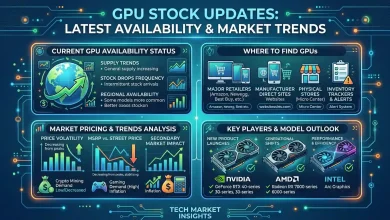
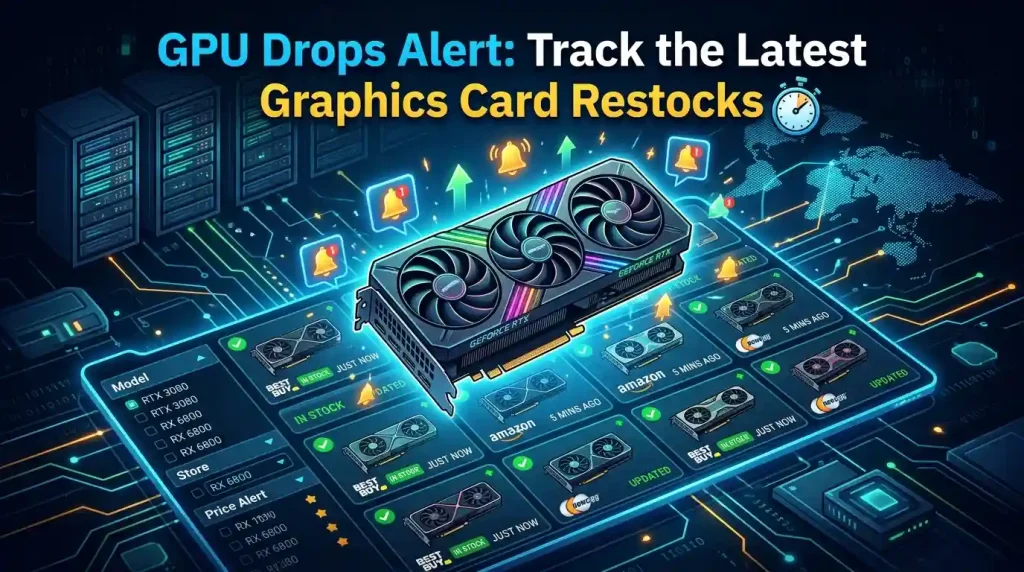
Automated stock trackers and Discord communities have become indispensable tools for many consumers hunting for GPUs. These services constantly monitor major retailers’ websites for stock changes and issue real-time alerts when a product becomes available. Popular Discord servers like “GPU Drops” and “CoreFinder” track GPUs, CPUs, and other tech deals across multiple regions, including the UK, Europe, North America, and Asia. CoreFinder, for instance, offers real-time alerts and a community where users can share tips and insights.
- Discord Servers: Joining dedicated Discord servers is highly recommended. Many communities, such as “GPU Drops,” offer channels specifically for restock notifications, often broken down by specific GPU models and retailers. These communities also foster discussions, allowing users to share successful purchasing strategies and alert others to impending drops.
- Dedicated Stock Tracker Websites/Apps: Services like Restockd App, NowInStock.net, and Visualping can monitor individual product pages at major retailers and notify you of stock availability or price changes. These tools are designed to do the constant refreshing for you, significantly increasing your chances of catching a fleeting restock.
- Social Media Alerts: Following dedicated restock accounts on platforms like Twitter (or X) can provide timely updates, as some accounts specialize in announcing GPU drops as they happen. While automated bots on these platforms can be quick, human-curated alerts often offer additional context or tips.
Manual Refreshing and Retailer-Specific Alerts
While automated tools are powerful, a multi-pronged approach that includes some manual effort and leveraging retailer-specific features can further improve your odds.
- Retailer Email/SMS Notifications: Many major retailers offer their own notification services for when specific products are back in stock. While these might not be as instantaneous as third-party trackers, they can still provide valuable alerts directly from the source.
- Newegg Shuffle: Newegg’s Shuffle program offers a unique opportunity to purchase GPUs. It’s essentially a lottery system where participants select desired products and enter for a chance to buy them at MSRP. Drops typically occur most weekdays, and while success isn’t guaranteed, it’s a way to avoid direct competition with bots in a real-time race.
- Manual Browser Refreshing (with caution): For highly anticipated drops or specific cards, some dedicated hunters resort to manually refreshing retailer product pages. This is highly demanding and less effective against bots but can sometimes pay off if you hit the refresh button at just the right moment. Ensure you’re logged into your retailer accounts and have payment information pre-saved to expedite checkout.
- Retailer Apps: Using a retailer’s dedicated app (e.g., Best Buy app) can sometimes provide quicker access or specific functionalities like local store availability checks.
Navigating the Purchase Process: Tips for Securing a Card
Once a GPU drop alert comes through, speed and preparation are crucial. Here’s how to maximize your chances of success:
- Create and Login to Accounts: Before any potential restock, ensure you have accounts created and are logged in for all major retailers you plan to monitor (e.g., Amazon, Best Buy, Newegg, Walmart, Micro Center).
- Save Payment and Shipping Information: Time is of the essence. Having your payment details and shipping address pre-saved in the retailer’s system will significantly cut down checkout time.
- Use Fast Internet and Devices: A stable and fast internet connection, along with a responsive computer or mobile device, can give you a crucial edge.
- Opt for Text Alerts: If a retailer offers a choice between email and text for verification codes or alerts, always choose text. Text messages typically arrive almost instantly, whereas emails can be delayed or caught in spam filters.
- Be Persistent with “Add to Cart”: During a restock, if a product initially shows “out of stock” after you click “Add to Cart,” keep trying. Retailers often release stock in waves, or items may become available again if other carts time out.
- Consider Pre-built PCs: While not ideal for everyone, system integrators often have more consistent access to GPUs. If you’re considering a full system upgrade, buying a pre-built gaming PC can be a more reliable way to acquire a new graphics card at a price closer to MSRP.
Avoiding Scams and Scalpers in the GPU Hunt
The high demand and limited supply have unfortunately created fertile ground for scams and rampant scalping. Scalpers use bots to buy up large quantities of in-demand GPUs, often at launch, and then resell them at exorbitant prices, creating artificial scarcity and inflating market prices. This practice makes it extremely difficult for genuine consumers to acquire these components at a reasonable cost. Even system integrators have reported being scalped by their distributors for the latest GPUs, leading to inflated prices for consumers.
To navigate this challenging landscape and avoid falling victim to predatory practices:
- Stick to Authorized Retailers: Always purchase from reputable, authorized retailers (e.g., Best Buy, Newegg, Amazon directly, Micro Center, official Nvidia/AMD stores). Be wary of third-party sellers on marketplaces offering cards significantly above MSRP, as these are often scalpers.
- Research Seller Reputation: If considering a purchase from an unfamiliar online seller, thoroughly research their reputation and read reviews. Look for red flags like newly created accounts, lack of detailed product descriptions, or pressure to buy quickly.
- Be Skeptical of “Too Good to Be True” Deals: If an offer for a new GPU seems suspiciously cheap in the current market, it likely is. Counterfeit GPUs, especially for older generations, exist.
- Understand MSRP vs. Market Price: While many GPUs are still selling above their Manufacturer’s Suggested Retail Price (MSRP), understand the difference. Current market conditions may necessitate paying a slight premium, but exorbitant markups are a sign of scalping. For instance, the RTX 5090 launched at $1,999, but has been seen selling for over $3,000 due to demand and scarcity.
- Avoid Direct Transactions with Unverified Individuals: Purchasing directly from individuals on social media or forums carries significant risk, as there’s little recourse if the product is faulty or never arrives.
The problem of scalping is so deeply rooted in the current e-commerce infrastructure that some argue retailers are complicit, benefiting from instant cash flow and increased traffic. Some suggestions for combating scalping include implementing purchase limits by address or card for online retailers, or even by card for physical retailers.
| Retailer | Typical Restock Patterns/Strategies | Tips for Success |
|---|---|---|
| Best Buy (US) | Known for online restock events, sometimes releasing cards in dribs and drabs. Historically, RTX 30-series restocks occurred once or twice a month, often near the beginning and middle of the month, typically on Thursdays from 11:00 AM EST to 12:30 PM EST. | Be signed into your account, auto-save payment info, opt for text codes during checkout for speed. Check availability at local stores via the app. |
| Newegg (US) | Famous for its “Newegg Shuffle,” a lottery system for in-demand components, running most weekdays from 10:00 AM PT/1:00 PM EST to 12:00 PM PT/3:00 PM EST. | Enter the Shuffle regularly. It’s a chance to buy at MSRP without battling bots in a direct race. Also, monitor general stock. |
| Amazon (Global) | Generally difficult to secure GPUs due to rapid sell-outs, often with single-card restocks disappearing before you can add to cart. | Use automated trackers. Be extremely quick if an alert comes through. Keep payment info ready. |
| AMD Shop (Official) | Historically, restocks occurred on Wednesday, Thursday, and Friday from 9:00 AM EST to 2:30 PM EST. | Direct purchases often offer Founders Edition or reference models. Monitor their official site closely during these windows. |
| Walmart (US) | Has seen recent major influxes of RTX 40-series cards with significant price reductions, positioning itself for value. | Monitor for deals and restocks, especially for previous-generation cards as new series launch. |
| Micro Center (US – In-store) | Known for occasional in-store drops. Success often relies on visiting early in the morning on restock days. | Visit physical stores in the morning, ask staff politely about restock days and limited stock. |
The Future of GPU Availability
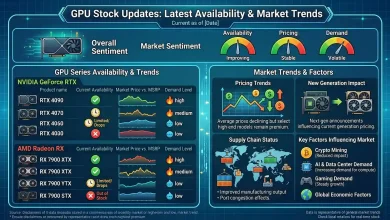
The outlook for GPU availability and pricing remains complex. While the market for most graphics cards has seen prices fall to some of the lowest points in the last year, often nearing or even below MSRP for many products as of March 2026, the highest end of the market still faces elevated prices, particularly for the RTX 5090. The primary factor influencing future availability is the “AI data center gold rush,” which continues to consume an enormous amount of silicon wafers, impacting not only GPUs but also flash memory, DDR5 RAM, and GDDR memory.
Industry forecasts indicate that GPU and memory shortages, especially HBM and advanced DDR5, are likely to persist through at least 2026, with some projections extending to 2028. New fabrication plants take years to come online, and memory and chip manufacturers are fully booked for the foreseeable future. Nvidia’s shift to prioritize AI accelerators has resulted in scaled-back production for the RTX 50 series gaming GPUs, further limiting consumer supply.
The global GPU market size is expected to reach USD 144.83 billion in 2026, with servers and data center accelerators leading revenue growth. This indicates a strong, structural demand that is not a short-term cycle. However, there might be a counterintuitive development later in 2026, where expiring A100 and H100 reservations could flood the secondary market as AI teams upgrade to newer B200 and GB300 processors, potentially pressuring prices downward for older high-end hardware.
For gamers and general consumers, this means that while mid-range GPUs might see more stable pricing, high-end cards are likely to remain expensive and difficult to acquire at MSRP. The rise of “GPU as a Service” (GPUaaS) is also notable, with this market predicted to grow significantly, offering an alternative for businesses and individuals who need computational power without owning physical hardware. This service-based approach could influence the demand for physical GPUs in the long term, particularly for professional applications. For a deeper understanding of the broader semiconductor industry challenges contributing to these trends, consult reports from authoritative sources like Reuters on the global chip shortage.
Conclusion
The journey to acquiring a new graphics card in today’s market is undeniably challenging, marked by fluctuating prices, persistent shortages driven by AI demand, and the ongoing battle against scalpers. However, by staying informed about market trends, leveraging automated stock trackers and community alerts, and being prepared to act quickly when restocks occur, consumers can significantly improve their chances. While the highest-end GPUs may remain elusive and expensive for the foreseeable future, patience and strategic planning can still lead to a successful purchase. As the market continues to evolve, adaptability and a keen eye on the latest GPU drops alert will be your best allies in navigating this complex landscape.