ASUS GPU Collection: 7 Amazing ROG & TUF Graphics Cards for Gamers
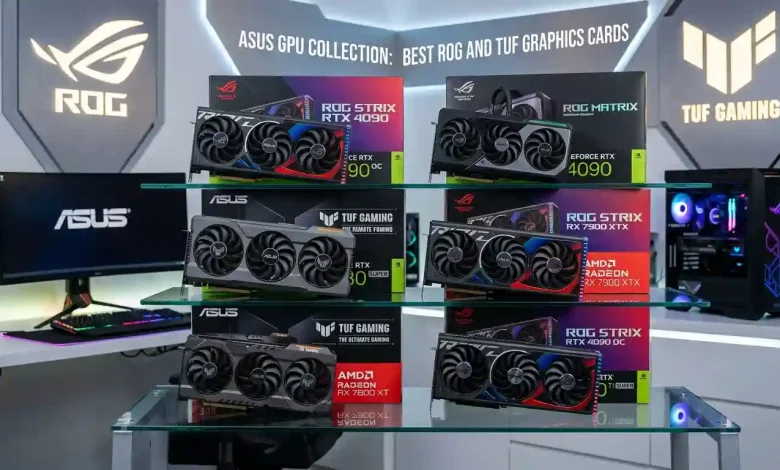
Table of Contents
ASUS GPU Collection stands as a testament to the company’s commitment to delivering high-performance graphics solutions for gamers, creators, and enthusiasts alike. For decades, ASUS has been a pivotal player in the graphics card market, continuously pushing the boundaries of innovation in terms of cooling, power delivery, and overall user experience. This comprehensive guide delves into two of ASUS’s most renowned GPU lines: the Republic of Gamers (ROG) and TUF Gaming series, highlighting their unique strengths, target audiences, and the best cards within their respective collections.
Introduction to ASUS GPUs: A Legacy of Innovation
ASUS, a global technology leader, has a rich history in the PC component industry, dating back to 1989 with its first motherboard. Over the years, the company expanded its portfolio to include graphics cards, laptops, and a myriad of peripherals, cementing its reputation for quality and performance. In 2006, ASUS established its Republic of Gamers (ROG) sub-brand, a division specifically dedicated to creating cutting-edge gaming gear for the most demanding users. This move marked a significant step, signaling ASUS’s intent to cater to the enthusiast market with premium products designed for extreme performance and overclocking.
Following the success of ROG, ASUS introduced The Ultimate Force (TUF) brand around 2010. TUF Gaming was conceived to offer reliable, durable, and performance-focused gaming products at a more accessible price point, focusing on military-grade durability and robust design. Both ROG and TUF Gaming series have since evolved significantly, incorporating advanced technologies and catering to diverse segments of the PC gaming and content creation community. Today, ASUS GPUs are a go-to choice for many PC builders, offering a wide variety that caters to different budgets and use cases.
The Republic of Gamers (ROG) Lineup: Uncompromising Performance
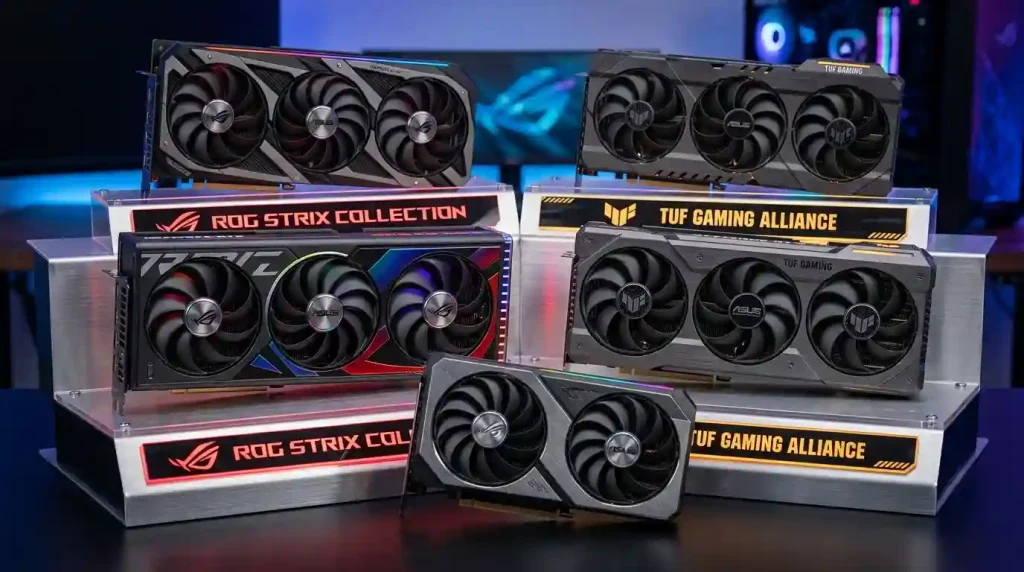
The ROG series represents the pinnacle of ASUS’s graphics card engineering. Designed for enthusiasts and competitive overclockers, ROG GPUs are synonymous with top-tier performance, advanced cooling, and premium aesthetics. The focus here is on maximizing clock speeds, maintaining stable temperatures, and providing a visually striking component that often becomes the centerpiece of a high-end build. ASUS ROG Strix is arguably the most recognizable within the ROG GPU family, often featuring oversized heatsinks, premium Axial-Tech fans, and robust power delivery systems.
ROG Strix: The Apex Predator
ROG Strix graphics cards are consistently among the best-performing add-in board (AIB) GPUs available. They are characterized by their aggressive designs, extensive RGB lighting (Aura Sync compatible), and superior cooling capabilities. For instance, the NVIDIA GeForce RTX 40 series, particularly models like the ROG Strix RTX 4090 BTF OC, showcase these characteristics with triple-fan shrouds designed for minimal thermals and impressive overclocked boost speeds. The “BTF” (Back-To-the-Future) variants even integrate power directly through the motherboard, minimizing visible cables for cleaner builds. Recent developments, such as the introduction of the RTX 50 series, confirm ASUS’s continued innovation with new heatsink designs across its ROG and TUF lines, ensuring that each generation brings fresh advancements. In 2025, the ROG Strix lineup, including models like the Strix SCAR 16/18 and Strix G16/G18, features NVIDIA GeForce RTX 50 Series Laptop GPUs, offering advanced cooling solutions like end-to-end vapor chambers and sandwiched heatsink designs.
ROG Matrix and Poseidon: The Enthusiast’s Dream
Beyond the Strix, ROG occasionally releases even more exclusive and high-performance variants like the Matrix and Poseidon series. These cards are often limited edition and push boundaries even further:
- ROG Matrix: The Matrix series is ASUS’s flagship offering, often featuring all-in-one (AIO) liquid cooling solutions directly integrated onto the card, allowing for extreme overclocking potential. The ROG Matrix GeForce RTX 5090, for example, is highlighted as ASUS’s “ultimate graphics card” with NVIDIA Blackwell architecture, DLSS 4, and unique features like memory defroster for extreme LN2 overclocking, drawing up to 800W via dual power input.
- ROG Poseidon: Poseidon cards are known for their hybrid cooling designs, incorporating both air and liquid cooling capabilities, allowing users to connect them to custom liquid cooling loops for even greater thermal performance. While not as frequently updated as Strix, these models offer unparalleled flexibility for custom PC builders.
The ROG Astral series is also emerging as a high-end replacement for the ROG Strix in the RTX 50 series for models like the RTX 5080 and 5090, indicating a continuous evolution of the ROG premium segment.
TUF Gaming: Durability Meets Performance
The TUF Gaming series (The Ultimate Force) stands as ASUS’s answer to gamers and builders who prioritize durability, reliability, and consistent performance without the premium price tag of the ROG lineup. TUF cards are built with “military-grade” components, undergo rigorous validation tests, and often feature robust designs that blend seamlessly into a wide array of PC builds. The aesthetic is typically more understated and industrial compared to the flashy RGB of ROG, making them appealing for users who prefer a less flamboyant look.
Key Features of TUF Gaming GPUs
TUF Gaming GPUs share many core technologies with their ROG counterparts but are tuned for longevity and value:
- Robust Cooling: TUF Gaming cards often employ triple-fan designs and substantial heatsinks to ensure efficient heat dissipation. While their fans may spin slower than ROG’s for quieter operation, they still maintain impressive cooling performance due to large heatsinks. They also feature 0dB fan modes for silent operation during light loads. For the RTX 50 series, TUF Gaming models like the RTX 5090 and RTX 5080 will feature vapor chamber-based cooling and phase-change thermal compound, enhancing cooling performance and longevity.
- Military-Grade Components: TUF Gaming GPUs are built with components that meet military standards, ensuring enhanced durability and resilience to various environmental factors. This includes protective PCB coatings and steel backplates.
- Auto-Extreme Technology: ASUS’s automated manufacturing process enhances reliability and reduces human error in soldering, contributing to the overall quality and lifespan of TUF cards.
- Understated Aesthetics: While some RGB is present, TUF Gaming cards generally feature a more industrial, monochromatic design with subtle LED accents, appealing to those who prefer a professional or minimalist build.
Models like the ASUS TUF Gaming GeForce RTX 5090 OC and TUF Gaming GeForce RTX 5080 OC Edition are examples of their commitment to high performance within the TUF philosophy.
ROG vs. TUF: A Head-to-Head Comparison
When comparing ROG and TUF Gaming graphics cards, it’s essential to understand that while both offer excellent performance, they cater to slightly different priorities and budgets. The core GPU (e.g., NVIDIA RTX 4080 or RTX 5090) remains the same, but the implementation by ASUS differentiates the two lines.
| Feature/Aspect | ASUS ROG Strix (and other ROG) | ASUS TUF Gaming |
|---|---|---|
| Target Audience | Enthusiasts, overclockers, competitive gamers, aesthetic-focused builders | Mainstream gamers, durability-focused users, value-conscious builders |
| Performance (Out-of-Box) | Highest factory overclocks, often featuring more robust power delivery (e.g., more 8-pin connectors) for greater overclocking headroom | Strong performance, often with slightly lower factory overclocks but capable of manual overclocking to near ROG levels |
| Cooling | Premium Axial-Tech fans, oversized heatsinks (3.1/3.2 slots), vapor chambers, advanced thermal compounds, tuned for maximum thermal dissipation and quiet operation under load | Robust Axial-Tech fans, large heatsinks, often 0dB fan mode, military-grade components, tuned for consistent, quiet operation and longevity |
| Aesthetics | Aggressive designs, extensive Aura Sync RGB lighting, premium materials, often a “showpiece” component | Industrial, understated design, minimal RGB accents, rugged build, blends into most systems |
| Power Delivery | More robust VRM components, higher power limits, sometimes more auxiliary power connectors for extreme stability during overclocking | Reliable power delivery with military-grade components, optimized for stability in extended gaming sessions |
| Price Point | Higher, representing the premium segment | More affordable, offering excellent value for performance and durability |
While ROG Strix cards generally offer marginally better out-of-the-box performance due to higher factory overclocks and superior cooling that allows for more sustained boost clocks, the performance difference in real-world gaming scenarios between a ROG Strix and a TUF Gaming card with the same GPU can often be minimal, sometimes just a few frames per second. The decision often comes down to budget, aesthetic preference, and the user’s intent to push overclocking limits. If extreme overclocking and flashy RGB are paramount, ROG is the clear choice. For those seeking reliability, consistent performance, and excellent value, TUF Gaming presents a compelling alternative.
ASUS’s Technological Innovations in GPU Design
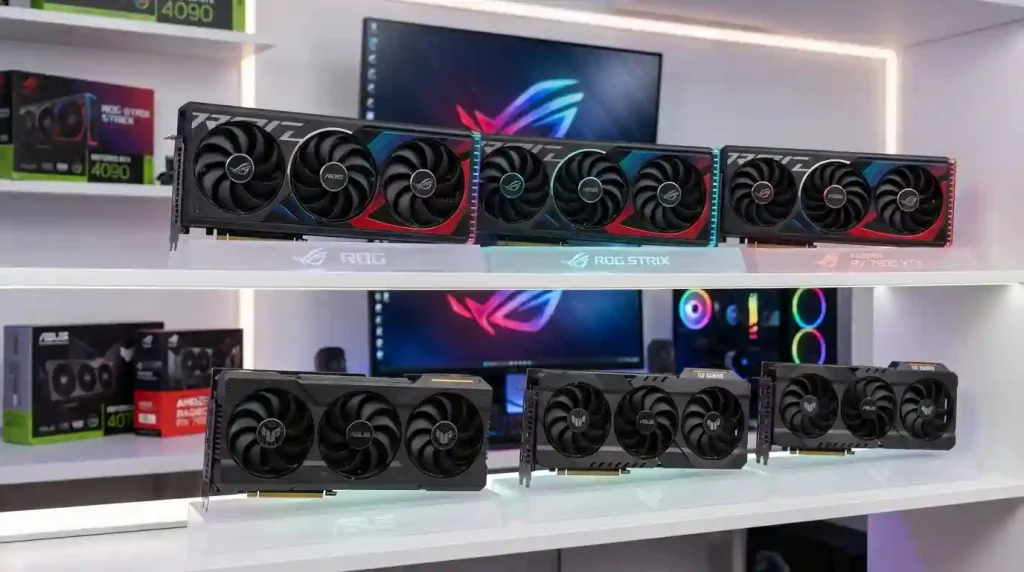
ASUS’s leadership in the GPU market is not merely about brand differentiation but also a result of continuous innovation across critical areas such as cooling, power delivery, and software integration. These advancements benefit both ROG and TUF series, albeit with different implementations tailored to each line’s philosophy.
Advanced Cooling Solutions
Effective thermal management is crucial for graphics card performance and longevity. ASUS has pioneered several cooling technologies:
- Axial-Tech Fans: These fans, featured across both ROG and TUF lines, are designed with a smaller fan hub that facilitates longer blades and a barrier ring that increases downward air pressure, enhancing cooling efficiency. Many ROG cards also use a reverse-spinning middle fan to reduce turbulence and further improve airflow.
- MaxContact Technology: This manufacturing process improves heat spreader contact with the GPU chip, resulting in enhanced thermal transfer.
- Vapor Chambers and Heat Pipes: High-end ROG cards, and increasingly TUF models in newer generations like the RTX 50 series, utilize vapor chambers to efficiently transfer heat away from the GPU and VRAM to the heatsink fins. This is complemented by an array of precisely engineered heat pipes. ASUS also offers extensive liquid cooling solutions for data centers and high-performance computing, demonstrating their expertise in advanced thermal management.
- 0dB Technology: Many ASUS GPUs incorporate 0dB fan technology, which allows the fans to stop spinning entirely when the GPU temperature is below a certain threshold, providing silent operation during light tasks like web browsing or video playback.
Robust Power Delivery and Components
ASUS GPUs are known for their high-quality power delivery systems, which are vital for stable performance, especially during overclocking. ROG cards, in particular, often feature more robust VRM (Voltage Regulator Module) designs with premium components, allowing for cleaner power delivery and lower temperatures under extreme loads.
- Super Alloy Power II: This technology incorporates premium alloy chokes, solid polymer capacitors, and highly efficient DrMOS power stages to enhance efficiency, reduce power loss, decrease buzzing noise under full load, and lower thermal temperatures.
- Innovative Power Connectors: ASUS is also exploring new ways to deliver power to GPUs. Their BTF platform, utilizing the GC-HPWR connector, integrates high-wattage connections to the rear of the graphics card and motherboard, reducing cable clutter and improving aesthetics. Furthermore, ASUS has teased a concept design that could deliver up to 250W directly from the PCIe slot itself, potentially eliminating external power cables for many mid-range GPUs in the future. This demonstrates their forward-thinking approach to power delivery challenges.
Software Ecosystem: GPU Tweak III and Aura Sync
Beyond hardware, ASUS provides a powerful software ecosystem to complement its GPUs:
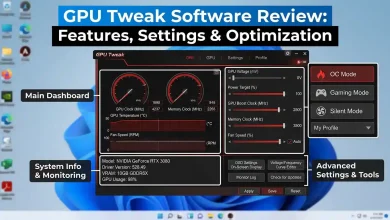
- GPU Tweak III: This intuitive software allows users to adjust critical GPU parameters such as clock speeds, voltage, and fan control for NVIDIA and AMD graphics cards. It offers one-click OC and Silent modes, a customizable on-screen display (OSD) for real-time monitoring, and a “Profile Connect” feature that allows users to assign different tuning profiles to individual games. GPU Tweak III also provides advanced monitoring information and supports third-party tools like ROG FurMark for stability testing.
- Aura Sync: This lighting control software allows users to synchronize RGB lighting effects across compatible ASUS components and peripherals, creating a cohesive and visually stunning PC build. ROG Strix cards are particularly well-integrated with Aura Sync, offering extensive customization options.
Choosing Your ASUS GPU: A Buyer’s Guide
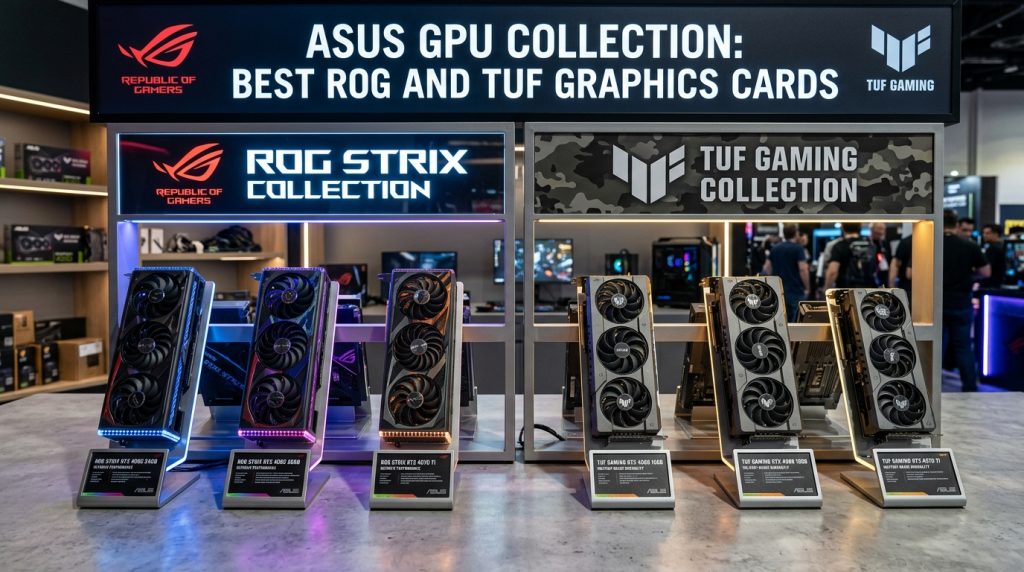
Selecting the ideal ASUS graphics card depends heavily on your specific needs, budget, and priorities. Here are key considerations when navigating the ROG and TUF Gaming collections:
- Performance Needs:
- For uncompromising performance, extreme overclocking, and pushing the absolute limits of your system, the ROG Strix or specialized ROG models like Matrix are the top choice. These are designed for gamers and enthusiasts who want the best possible frame rates at high resolutions and refresh rates, especially with demanding titles and ray tracing.
- For excellent gaming performance, reliable operation, and solid frame rates at 1440p or 4K, the TUF Gaming series offers incredible value. They are workhorses built to deliver consistent performance through extended play sessions without the premium price tag.
- Budget:
- ROG Strix cards sit at the higher end of the price spectrum due to their premium features, advanced cooling, and superior power delivery.
- TUF Gaming cards are more budget-friendly while still delivering strong performance and exceptional durability, making them a popular choice for cost-conscious builders.
- Aesthetics and Build Theme:
- If you desire a flashy build with extensive RGB lighting and a distinctive “gamer” aesthetic, ROG Strix cards are designed to be visually striking centerpieces.
- For a more understated, industrial, or professional look, TUF Gaming cards blend in well with minimal RGB, offering a rugged and clean appearance.
- Cooling and Acoustics:
- Both lines offer excellent cooling, but ROG Strix often focuses on maximizing cooling potential for overclocking and sustained high performance, which can sometimes come with slightly higher fan speeds under extreme load (though still generally quiet).
- TUF Gaming cards prioritize quiet operation and long-term thermal stability, often running quieter during typical gaming sessions due to fan tuning and efficient heatsink designs.
Ultimately, both ROG and TUF Gaming graphics cards represent ASUS’s commitment to quality and performance. The “best” card depends on how you weigh raw performance, durability, aesthetics, and price.
Conclusion
The ASUS GPU Collection, spearheaded by the Republic of Gamers (ROG) and TUF Gaming series, offers a diverse and compelling range of graphics cards tailored to meet the varied demands of the modern PC user. From the no-compromise, performance-driven ROG Strix, Matrix, and Astral lines designed for enthusiasts and extreme overclockers, to the robust and reliable TUF Gaming series that balances durability with strong performance at a more accessible price point, ASUS continues to innovate across the spectrum. With cutting-edge cooling technologies, advanced power delivery systems, and intuitive software like GPU Tweak III, ASUS ensures that its GPUs consistently deliver exceptional gaming and creative experiences. Whether you’re building an ultimate gaming rig or a dependable workhorse, understanding the distinct philosophies and features of the ROG and TUF collections will guide you to the perfect ASUS graphics card for your needs.