Best NVIDIA GPU Prices Today: RTX Market Trends and Top Deals 12
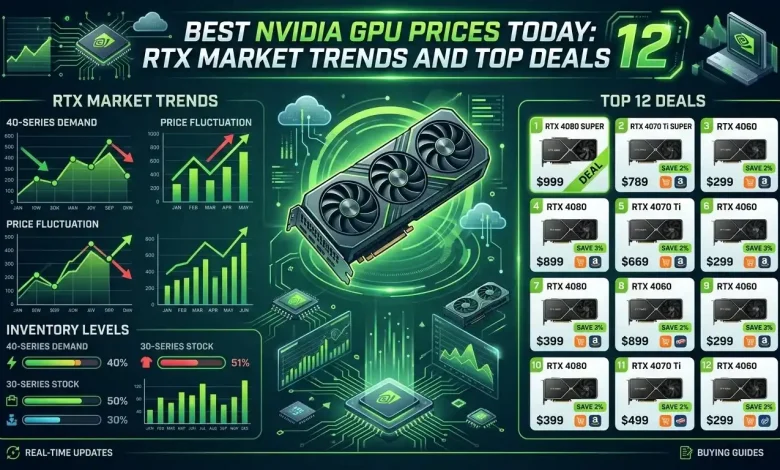
Table of Contents
NVIDIA GPU Prices Today reflect a dynamic and often challenging market for consumers and enthusiasts alike. As of mid-2026, the landscape is heavily influenced by a complex interplay of factors, with unprecedented demand from the artificial intelligence sector and persistent memory shortages significantly impacting the availability and cost of graphics cards, particularly within the popular RTX series. This comprehensive article delves into the current market trends for NVIDIA’s GeForce RTX GPUs, examining pricing shifts, identifying the primary drivers behind these changes, and offering practical advice on securing the best possible deals amidst ongoing volatility. From the well-established RTX 30 series to the current-generation RTX 40 series and the anticipated RTX 50 series, understanding these market forces is crucial for anyone looking to purchase an NVIDIA graphics card.
The Shifting Sands of NVIDIA GPU Pricing in Mid-2026
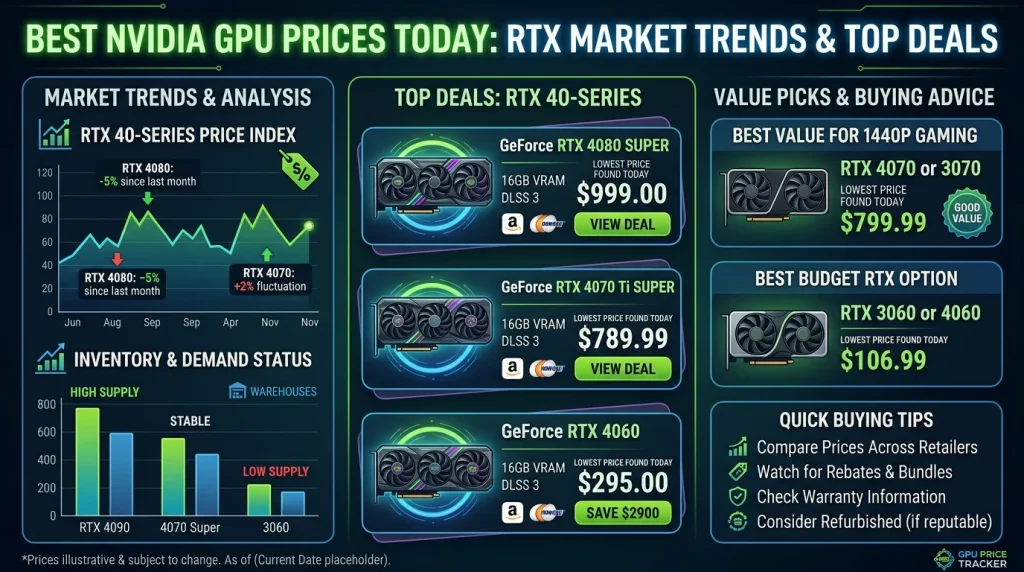
The global GPU market in 2026 is experiencing significant growth, driven predominantly by the escalating demand for high-performance computing across various industries, especially artificial intelligence. While supply chain disruptions that plagued the market in previous years have largely subsided, leading to more consistent production capacity, new pressures have emerged that are driving prices upward. The market is tightening rapidly due to a combination of supply constraints, strategic pricing shifts by manufacturers, and the insatiable, sustained demand from the AI sector.
Analysts report that GPU pricing is on the rise across all major product lines. For instance, NVIDIA’s Ada Lovelace architecture (RTX 40 series) has seen price increases of 5-10%, while even newer “Blackwell” generation professional GPUs are up by 15-23%. This upward trend is not a short-term disruption but points to prolonged supply pressure well into 2026. Consumers searching for NVIDIA RTX cards are finding that discounts are becoming shorter, rarer, and more seasonal, making strategic purchasing more critical than ever.
The overarching theme is a market characterized by high demand but often mixed sales, indicating a strong underlying consumer interest coupled with price sensitivity and potential issues with product availability or perceived quality. The evolving market also forecasts continued growth in GPU rental services, driven by expanded AI adoption, which further underscores the computational power GPUs provide to a broader user base.
Decoding RTX Series Pricing: Current Averages and Value Propositions
Understanding the current pricing for NVIDIA’s GeForce RTX series requires a look at both the current-generation RTX 40 series and the still-relevant RTX 30 series. The market for these cards is complex, with fluctuations driven by new stock, retailer-specific deals, and the robust second-hand market.
RTX 40 Series: Current Generation Performance at a Premium
The NVIDIA GeForce RTX 40 series, built on the Ada Lovelace architecture, continues to offer cutting-edge performance, particularly with features like real-time ray tracing and AI-enhanced graphics through DLSS 3. However, these advancements come at a premium. The flagship RTX 4090, which had an MSRP of $1599 at launch, is currently being sold on platforms like Amazon for approximately $2755. Used prices for the RTX 4090 also remain high, hovering around $2250 on platforms like eBay.
Other cards in the RTX 40 series, such as the RTX 4060, RTX 4070, and various SUPER and Ti SUPER variants (e.g., RTX 4070 SUPER, RTX 4070 Ti SUPER, RTX 4080 SUPER), are widely available across major retailers like Newegg, Best Buy, and Micro Center. While some deals can be found, particularly on mid-range options, the overall trend points to sustained or increasing prices, especially for higher-end models. For instance, a new RTX 5070 is currently priced at $599 at Walmart, while an RTX 5080 can be found for around $1,250 on Newegg. These figures indicate that the newer 50 series (which some retailers are already listing) are also subject to the elevated pricing environment.
RTX 30 Series: Legacy Performance and Second-Hand Value
Despite the introduction of the RTX 40 series, the RTX 30 series (Ampere architecture) remains a viable option for many users. However, even these older-generation cards have seen price adjustments. The RTX 3080, which launched with an MSRP of $699, is currently priced at around $899 on Amazon. While purchasing a new RTX 3080 at this price might be “disappointing” when compared to the performance of a similarly priced RTX 5070 Ti (which boasts 57.9% better 3DMark scores), the second-hand market presents a different story. Used RTX 3080s are significantly more affordable, often found around $299.97 on eBay, making them a cost-effective choice for budget-conscious buyers.
Other RTX 30 series cards, such as the RTX 3050, RTX 3060, and RTX 3060 Ti, also have varying prices and availability. Retailers like Newegg and Best Buy still list several RTX 3050 and RTX 3060 models, with prices ranging from around $200 to $400 for new cards. For those looking to maximize value, the second-hand market for the RTX 30 series can offer compelling deals, although vigilance regarding legitimacy is crucial. For instance, despite past price cuts, the RTX 3050 might not always represent the best value compared to alternatives like the RX 6600, especially for budget gamers.
Key Factors Fueling Current GPU Price Hikes
The current elevated state of NVIDIA GPU prices, particularly for RTX cards, is not a singular phenomenon but rather a confluence of several powerful market dynamics. These factors create a challenging environment for consumers and significantly influence purchasing decisions.
Memory Shortages: The Core Bottleneck
One of the most critical drivers behind rising GPU prices is the global shortage of high-bandwidth memory (HBM), GDDR, and DRAM. Memory chipmakers are experiencing a crunch as demand for AI infrastructure accelerates, leading manufacturers to prioritize HBM production at the expense of other memory products vital for consumer GPUs. This directly impacts consumer graphics cards, which depend heavily on video memory, and higher memory costs translate directly into higher GPU prices. In fact, industry sources indicate that VRAM now accounts for over 80% of the total bill of materials for some high-end GPUs, a stark increase that fundamentally alters pricing structures. This structural issue, rather than speculative demand, is a key difference in the current market cycle.
AI-Driven Demand: An Insatiable Appetite
The booming demand for artificial intelligence hardware is arguably the single largest force shaping the GPU market in 2026. Data centers and AI infrastructure are consuming vast volumes of GPUs, with enterprise demand outpacing supply. Companies like NVIDIA are heavily invested in the AI sector, with products like the Blackwell B200 and GB300, and upcoming Rubin platform, catering to this insatiable need. NVIDIA’s strong outlook is fueled by rising GPU demand, particularly for its AI accelerators and data center GPUs, a trend expected to continue for several years. This prioritization means that consumer-grade GPUs often take a backseat in production capacity. NVIDIA has even raised its ante in the AI PC market with RTX Spark, an initiative aimed at bringing AI processing to next-generation Windows PCs. This expanding focus on AI across all segments of computing inherently draws resources and attention away from solely gaming-focused GPUs.
Product Prioritization and Distribution Shifts
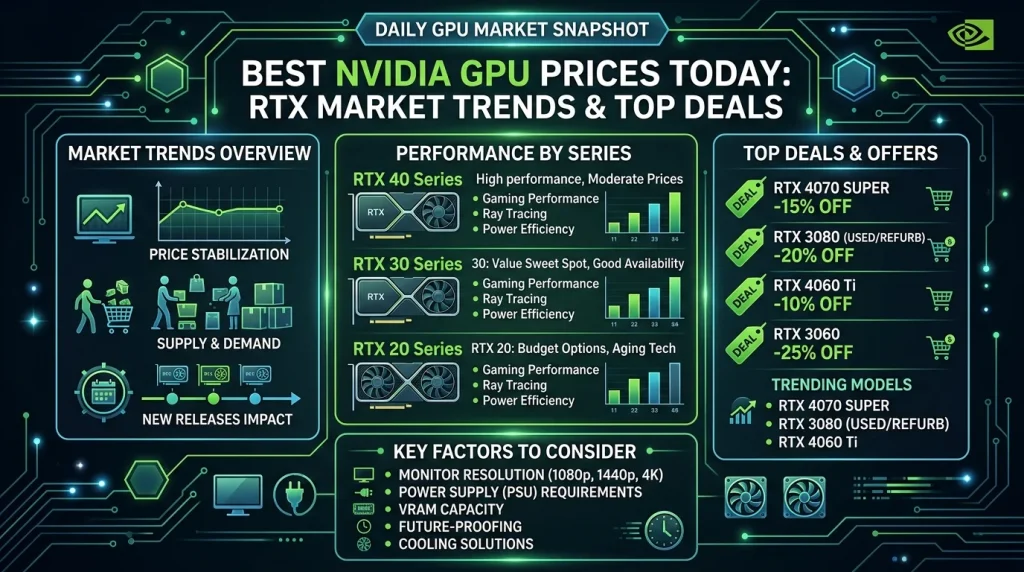
NVIDIA’s strategic decisions play a significant role in current pricing. The company is prioritizing higher-margin Blackwell GPUs for the AI market, which leads to lower-tier products, such as those in the RTX 4000 Ada series (like the RTX 4060, 4070, etc.), becoming more constrained in supply. There are reports that NVIDIA is even considering a 30% to 40% reduction in output for parts of its mid-range portfolio, including the RTX 5070 and RTX 5060 Ti, to further prioritize higher-margin products and AI accelerators. Furthermore, shifts in distribution, with reduced reliance on traditional distributors and more direct engagement with end customers, can also impact availability and pricing for the general consumer.
The culmination of these factors means that GPU prices are expected to remain volatile and generally higher than historical norms, with some analysts anticipating the current memory upswing to extend through 2027.
| NVIDIA RTX GPU Model | MSRP (at Launch, USD) | Approx. Current New Price (USD, June 2026) | Approx. Current Used Price (USD, June 2026) |
|---|---|---|---|
| RTX 3050 (6GB) | $249 (8GB) | $219.99 – $268.33 | N/A (often bundled) |
| RTX 3060 (12GB) | $329 | $350 – $450 (estimated) | $180 – $250 (estimated) |
| RTX 3080 (10GB) | $699 | $899 | $299.97 |
| RTX 3090 (24GB) | $1499 | $1095 – $1500 (estimated) | $500 – $800 (estimated) |
| RTX 4060 (8GB) | $299 | $300 – $350 (estimated) | $250 – $300 (estimated) |
| RTX 4070 (12GB) | $599 | $609.99 – $619.99 (refurbished options available) | $500 – $550 (estimated) |
| RTX 4080 SUPER (16GB) | $999 | $1000 – $1200 (estimated) | $850 – $950 (estimated) |
| RTX 4090 (24GB) | $1599 | $2755 | $2250 |
Navigating the Market: Strategies for Finding RTX Deals
Given the current market conditions, finding a good deal on an NVIDIA RTX GPU requires a proactive and informed approach. While prices are generally higher, opportunities still exist for savvy shoppers.
Where to Look: Retailers and Marketplaces
The primary battlegrounds for GPU deals remain online retailers and select physical stores. Major online platforms such as Amazon, Newegg, Best Buy, Micro Center, and Walmart frequently update their stock and promotions. These sites are essential for tracking the lowest prices and the best GPU deals for both current and previous generation NVIDIA cards. Best Buy, for instance, is often the exclusive retailer for Founders Edition cards in the US.
- Online Stores: Regularly check Amazon, Newegg, Best Buy, Micro Center, and Walmart for daily deals, flash sales, and new stock drops.
- Local Computer Shops: Don’t overlook smaller, independent computer shops. They might have competitive pricing or bundle deals, especially for older stock.
- Manufacturer Websites: Keep an eye on NVIDIA’s official GeForce website, as well as sites for AIB partners like ASUS, MSI, Gigabyte, and Zotac, for direct sales or exclusive offers.
Timing Your Purchase: Sales Events and Price Alerts
The timing of your purchase can significantly impact the price you pay. Seasonal sales events like Black Friday, Cyber Monday, and New Year sales are historically the best times to find significant NVIDIA GPU discount offers. Clearance sales, often occurring when new product lines are about to launch, can also yield substantial price drops on older models.
To stay ahead, it’s highly recommended to utilize price tracking tools and set up price alerts on various retailer websites or dedicated deal tracking sites. These tools can notify you instantly when a desired GPU drops to a target price, ensuring you don’t miss out on limited-time offers. Comparisons between different retailers are vital, as prices can vary widely. Always ensure you are checking prices against the current generation of GPUs to understand if you are truly getting a good deal. Additionally, consider exploring options for refurbished GPUs, as these can sometimes offer excellent value, provided they come with a warranty and from a reputable seller.
The Second-Hand Market: A Cost-Effective, Cautious Approach
For those on a tighter budget, the second-hand market, particularly platforms like eBay, can be a treasure trove for older generation GPUs. As seen with the RTX 3080, used prices can be considerably lower than new retail prices. However, this avenue requires caution. It’s crucial to be vigilant and verify sellers’ legitimacy, especially when dealing with older cards that may be difficult to find brand-new from first-party retailers. Thoroughly check product descriptions, seller reviews, and return policies. Buying directly from a trusted individual, if possible, can also mitigate risks.
The Looming Impact of Next-Generation RTX 50 Series
As the GPU market continues to evolve, the upcoming NVIDIA GeForce RTX 50 series, based on the Blackwell architecture, casts a significant shadow over current pricing and availability. NVIDIA has a clear roadmap to the Rubin platform, expected to launch in the second half of 2026, demonstrating its capacity for a rapid product release cadence. The RTX 50 series is poised to push the boundaries of performance, offering exceptional gaming and professional application experiences.
However, the introduction of the RTX 50 series is expected to occur within the same challenging market conditions currently affecting its predecessors. GPU prices face renewed upward pressure in 2026, primarily due to surging memory costs and AI demand distorting semiconductor supply chains. Industry reports suggest that NVIDIA, along with AMD, is preparing phased GPU price hikes starting in early 2026, driven by sharp increases in video memory costs. The impact of these increases is anticipated across the RTX 50 series, with some extreme forecasts suggesting the flagship GeForce RTX 5090 could reach prices as high as $5,000 later in 2026.
While the new series promises innovation, including the use of GDDR7 memory, its arrival may not immediately alleviate pricing pressures on the RTX 40 series. Instead, NVIDIA’s prioritization of higher-margin products and AI accelerators could lead to a reduction in output for parts of its mid-range RTX 50 series portfolio, further constraining supply for consumer gaming GPUs. This means that consumers hoping for significant price drops on current-generation cards upon the 50 series launch might be disappointed. Therefore, understanding the broader market forces, including the continued growth of the AI and data center sectors, remains paramount when planning a GPU purchase.
Is Now the Right Time to Invest in an NVIDIA RTX GPU?
The decision of whether to invest in an NVIDIA RTX GPU today is multifaceted, requiring careful consideration of current market trends, personal needs, and financial flexibility. The mid-2026 landscape is marked by sustained high prices, largely due to overwhelming demand from the AI industry and persistent memory shortages. NVIDIA itself is prioritizing high-margin AI chips, which naturally impacts the supply and pricing of consumer-focused RTX cards.
For enthusiasts and professionals who require the absolute latest in graphical performance for demanding tasks like 4K gaming, high-resolution content creation, or specific AI workloads on a local machine, purchasing a current-generation RTX 40 series card, or even anticipating the RTX 50 series, might be a necessity. However, be prepared for premium pricing, especially for top-tier models like the RTX 4090, which is significantly above its MSRP.
If your budget is a primary concern, and you’re seeking good performance without breaking the bank, the second-hand market for the RTX 30 series can offer compelling value, particularly for cards like the RTX 3080. Similarly, lower-end RTX 40 series cards, such as the RTX 4060, might present a more accessible entry point to the current generation’s features. However, it’s crucial to weigh the value against newer offerings; for instance, a new RTX 3080 at its current elevated price might not be the most cost-effective compared to future alternatives.
For a deeper dive into the technological advancements that define these powerful graphics processors, you can refer to the NVIDIA GeForce RTX series Wikipedia page, which provides comprehensive technical details and historical context.
Ultimately, the “right time” depends on your individual circumstances. If you can afford to wait, monitoring the market for seasonal sales or unexpected drops could prove beneficial. However, with forecasts suggesting continued price volatility and upward pressure through 2026 and potentially into 2027, significant widespread price decreases are not guaranteed. Therefore, evaluate your immediate needs, compare prices meticulously across various retailers and the used market, and make an informed decision based on the best available value for your specific requirements.
Conclusion
The NVIDIA GPU market in mid-2026 is a complex ecosystem, largely shaped by the immense and growing demand for AI computing, coupled with critical memory shortages. These factors have driven up prices across both the current RTX 40 series and the preceding RTX 30 series, with the anticipated RTX 50 series also expected to face similar pricing pressures. While the era of easily accessible, discounted GPUs seems to be on hold, informed consumers can still navigate this challenging landscape. Strategies such as diligent price tracking, leveraging seasonal sales, and carefully considering the second-hand market are essential for securing the best possible value. As NVIDIA continues its strategic shift towards prioritizing high-margin AI accelerators, consumers should remain pragmatic, balancing their performance needs with the prevailing market realities to make a smart and timely purchase.