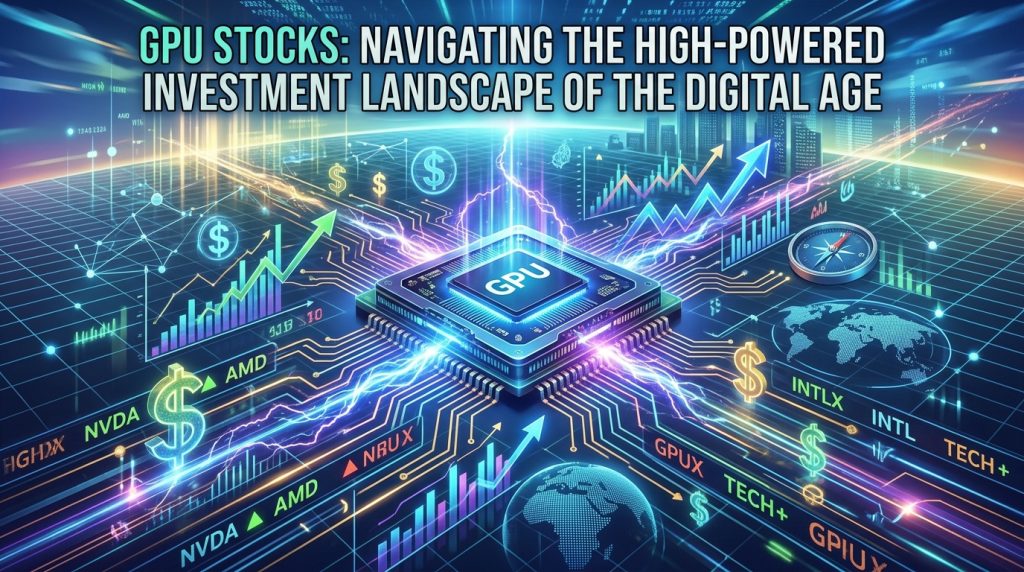
GPU Stocks: Navigating the High-Powered Investment Landscape of the Digital Age
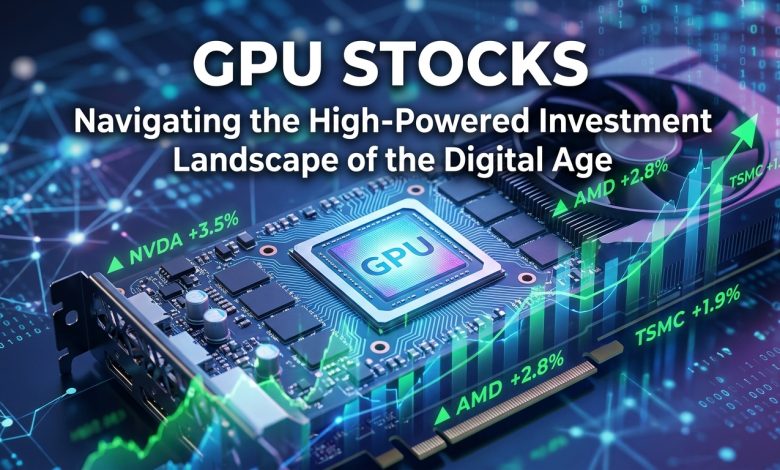
Table of Contents
GPU stocks represent a pivotal investment area in today’s rapidly evolving technological landscape, driven by an insatiable demand for processing power across various sectors. Once primarily associated with enhancing video game graphics, Graphics Processing Units (GPUs) have transcended their initial niche, becoming the indispensable backbone for artificial intelligence (AI), machine learning (ML), high-performance computing (HPC), and massive data centers. This paradigm shift has not only propelled the growth of established semiconductor giants but also created new avenues for innovation and investment in companies at the forefront of this computational revolution. The global GPU market is experiencing unprecedented expansion, with projections indicating a robust growth trajectory over the coming decade, making GPU stocks a compelling, albeit complex, segment for investors to analyze.
The Unprecedented Rise of GPU Stocks: An Introduction
The journey of GPUs from specialized graphics渲染chips to fundamental enablers of cutting-edge technology is a testament to their inherent processing capabilities. Originally designed to handle the computationally intensive task of rendering millions of pixels on a screen, GPUs excel at performing parallel calculations, a characteristic that makes them uniquely suited for the demands of modern AI models and data analytics. This capability allows them to process vast amounts of data simultaneously, a requirement for training complex neural networks and executing intricate algorithms at speed. As a result, the market for GPUs and the companies that produce them have seen explosive growth, attracting significant investor attention. The transformation is profound: what was once a component for enthusiast gamers is now the critical hardware fueling the global AI build-out, driving substantial revenue and market capitalization growth for leading GPU manufacturers.
The current market enthusiasm for GPU stocks is deeply intertwined with the ongoing artificial intelligence revolution. Companies across various industries, from technology giants to automotive manufacturers and healthcare providers, are heavily investing in AI infrastructure. This investment translates directly into a soaring demand for high-performance GPUs, cementing their status as a cornerstone technology for the digital economy. The market’s robust outlook, however, also brings with it a unique set of challenges and considerations for investors, including intense competition, supply chain complexities, and evolving technological paradigms.
Market Dynamics and Key Growth Drivers for GPUs
The GPU market is characterized by dynamic growth, propelled by several powerful macro trends. The overall Graphics Processing Unit (GPU) market size was valued at USD 144.83 billion in 2026 and is projected to reach USD 296.34 billion by 2031, expanding at a Compound Annual Growth Rate (CAGR) of 15.39% over the forecast period. Other estimates suggest an even more aggressive growth path, with the global graphic processing unit market size projected to grow from USD 100.55 billion in 2026 to USD 642.74 billion by 2034, registering a CAGR of 26.10%. This indicates a strong consensus among market analysts regarding the significant expansion of the GPU sector.
The AI and Machine Learning Imperative

The most significant driver for GPU demand is undeniably the rapid advancement and widespread adoption of artificial intelligence and machine learning. GPUs are essential for both the training and inference phases of AI models, enabling the processing of vast datasets required for tasks such as natural language processing, image recognition, and predictive analytics. In 2026, AI and machine learning are expected to hold the largest share, approximately 38.90%, of the global data center GPU market. Tech giants and cloud hyperscalers, including Microsoft, Amazon, Alphabet, and Meta, are projected to deploy over $700 billion in capital expenditures in 2026 alone, with a substantial portion of this spending allocated to purchasing new GPUs to advance their AI infrastructure. This massive investment underscores the critical role GPUs play as the foundational hardware powering the AI revolution.
The Expanding Data Center and Cloud Computing Landscape
Closely linked to the AI boom is the explosive growth of data centers and cloud computing. Cloud service providers are increasingly deploying massive GPU clusters to support AI-as-a-Service, advanced analytics, and high-performance computing applications, driving demand for accelerated computing infrastructure. The data center segment is expected to grow at a CAGR of 14-16% from 2026 to 2035 and is projected to exceed consumer GPU revenue by 2026. The global data center GPU market size, estimated at USD 14.48 billion in 2024, is projected to reach USD 190.10 billion by 2033, growing at a CAGR of 35.8% from 2025 to 2033. The expansion of cloud and hyperscale data centers is significantly expanding the market share for data center GPUs, as cloud providers race to build out their AI capabilities.
Gaming, Cryptocurrency, and Beyond
While AI and data centers are the primary growth engines, other sectors continue to contribute to GPU demand. The gaming industry, the traditional stronghold of GPUs, remains a significant segment. The global gaming GPU market size is projected to expand from USD 8.01 billion in 2026 to USD 59.72 billion by 2034, growing at a CAGR of 28.55%. The increasing popularity of esports tournaments, high-definition and virtual reality (VR) games, and the emergence of gamification are key factors driving this growth. NVIDIA, for instance, continues to offer powerful hardware for gaming, though its data center revenue surpassed its gaming revenue in 2023.
Cryptocurrency mining, while no longer the dominant force it once was due to shifts like Ethereum’s move to a “proof-of-stake” model, historically played a significant role in driving GPU demand and prices. Today, some data centers are leveraging GPU infrastructure for crypto mining during off-peak cycles, and the blockchain & cryptocurrency mining segment is projected to register a CAGR of 28.5% during 2026-2040, indicating a continued, albeit more specialized, role for GPUs in this area. Beyond these, GPUs are increasingly vital in fields such as 3D modeling and rendering, video editing, industrial automation, autonomous systems, and advanced applications in automotive, healthcare, and defense.
Leading Players in the GPU Market: A Competitive Overview
The GPU market is dominated by a few key players, with NVIDIA holding a commanding position, followed by strong competition from Advanced Micro Devices (AMD) and Intel. Other companies also contribute significantly to the broader GPU ecosystem, through chip design, manufacturing, and specialized solutions.
NVIDIA Corporation (NVDA): NVIDIA stands as the undisputed leader in the AI GPU market. As of 2025, NVIDIA commands approximately 80-90% of the AI accelerator market by revenue, with projections indicating a still dominant 75% share by 2026, even as competitors scale up. The company’s data center business, driven by its powerful AI-centric GPUs and the CUDA software platform, has become its largest revenue source, surpassing gaming revenue in 2023. NVIDIA’s most advanced processors are in high demand, leading to significant sales growth and margins. The company’s revenue rose 85% in the first quarter of its 2027 fiscal year, with adjusted net income surging by 139% to roughly $45.5 billion. In fiscal year 2026, NVIDIA’s revenue was $215.94 billion, an increase of 65.47% compared to the previous year. Its data center revenue reached $193.7 billion in fiscal year 2026, having scaled roughly 13 times since early 2023 due to generative AI. NVIDIA is considered the premier GPU stock for investors looking to tap into the demand for AI chips.
Advanced Micro Devices (AMD): AMD has successfully positioned itself as the primary market alternative to NVIDIA’s accelerator dominance, particularly for cost-sensitive enterprise deployments and scaled inference workloads. The company’s MI300 and MI350 series AI accelerators have achieved deep penetration across hyperscaler networks like Meta and OpenAI. AMD’s strength also lies in its high-performance CPUs and chiplet-based GPU architectures, which offer superior memory density, making them highly competitive for memory-bound inference algorithms. AMD is also a long-time player in the gaming GPU market, offering a range of powerful Radeon graphics cards.
Intel Corporation (INTC): While traditionally known for its CPUs, Intel is making significant strides in the GPU market. The company is investing tens of billions of dollars in building out its own foundry business to manufacture advanced chips, potentially serving NVIDIA and AMD in the future. Intel is also re-entering the discrete gaming GPU market with its Arc series, aiming to compete with established players and provide high-performance graphics for mainstream and entry-level gamers.
Arm Holdings (ARM): Arm Holdings primarily generates revenue by licensing architecture designs that other companies use to build their own chips. Its designs are crucial for many mobile and embedded GPUs.
Qualcomm (QCOM): Qualcomm is a top stock in the GPU category, particularly known for its Adreno GPUs found in mobile devices.
Other notable contributors to the GPU ecosystem include Broadcom (AVGO), which specializes in custom AI ASICs and high-speed networking fabrics, playing a key role in helping hyperscalers build proprietary infrastructure. Taiwan Semiconductor Manufacturing Company (TSMC) is a critical manufacturing partner for many GPU designers, including NVIDIA and AMD, and its capacity is entirely sold out through 2026. Micron Technology (MU) is essential for the production of next-generation High-Bandwidth Memory (HBM), which is critical for advanced AI GPUs.
| Company | Primary Focus/Strength | Market Dominance (AI Accelerators) | Key Contributions |
|---|---|---|---|
| NVIDIA (NVDA) | AI GPUs, Data Centers, Gaming | 75-80% market share (2026) | CUDA platform, Blackwell & Vera Rubin architectures |
| Advanced Micro Devices (AMD) | High-Performance CPUs, Alternative AI GPUs, Gaming | Primary alternative to NVIDIA | MI300/MI350 series, chiplet-based GPUs |
| Intel (INTC) | CPUs, Integrated Graphics, Foundry Services, Gaming | Emerging player in discrete GPUs | Arc series GPUs, contract chip manufacturing |
| Arm Holdings (ARM) | IP Licensing (architecture designs) | Ubiquitous in mobile/embedded | Foundational designs for various chips |
| Qualcomm (QCOM) | Mobile SoCs, Adreno GPUs | Leading in smartphone GPUs | Powering mobile graphics and AI |
| TSMC (TSM) | Semiconductor Manufacturing | Global foundry leader | Manufacturing partner for NVIDIA, AMD, etc. |
| Broadcom (AVGO) | Custom AI ASICs, Networking | 70% custom ASIC market | Co-designing proprietary AI infrastructure |
GPU Applications: Beyond the Gaming Console
The versatility of GPUs has led to their integration across a multitude of industries, extending far beyond their traditional role in gaming. This diversification of applications is a key factor driving the sustained demand for GPU stocks.
Artificial Intelligence and Machine Learning
As previously highlighted, AI and ML are the most dominant applications for GPUs. The parallel processing capabilities of GPUs make them exceptionally efficient for training large language models (LLMs), running complex simulations, and performing real-time inference in AI applications. From autonomous vehicles and robotics to advanced medical diagnostics and scientific research, GPUs are the computational engines enabling the next generation of intelligent systems. This demand is structural and not cyclical, making AI and ML the most capital-safe application segment for GPU market players.
Data Centers and Cloud Infrastructure
The rapid expansion of cloud services and hyperscale data centers is directly tied to GPU utilization. These data centers leverage GPUs to offer AI-as-a-Service, high-performance computing (HPC) resources, and advanced analytics capabilities to a global clientele. Companies like Amazon, Google, Meta, and Microsoft are heavily investing in GPU-powered infrastructure to support their vast cloud ecosystems and AI initiatives. This segment is experiencing phenomenal growth, with the data center GPU market projected to reach USD 190.10 billion by 2033.
Professional Visualization and Content Creation
GPUs are indispensable tools for professionals in creative industries. 3D modeling, rendering, animation, video editing, and visual effects all rely on the intensive graphical processing power of GPUs to create high-fidelity content efficiently. As demand for immersive digital experiences and advanced media production continues to grow, so does the need for powerful GPUs in professional workstations.
Automotive and Autonomous Systems
The automotive industry is undergoing a significant transformation with the advent of electric and autonomous vehicles. GPUs are crucial for processing sensor data, enabling real-time decision-making for self-driving cars, and powering advanced infotainment systems. The increasing production and sales of vehicles globally are expected to boost the demand for GPUs in this sector.
Healthcare and Scientific Research
In healthcare, GPUs accelerate complex simulations for drug discovery, medical imaging analysis, and personalized medicine. In scientific research, they power supercomputers for climate modeling, astrophysics, and other computationally intensive fields, pushing the boundaries of human knowledge. The demand for GPUs in these areas is growing due to the trend of real-time analysis and the rising need for high-computing applications.
The Evolving Role in Gaming
While overtaken by AI in terms of revenue growth for some major players, gaming remains a core application. The drive for more realistic graphics, higher frame rates, and immersive virtual reality (VR) experiences continues to fuel demand for advanced gaming GPUs. The gaming GPU market is experiencing significant growth due to the increasing popularity of esports and the demand for high-quality graphics. For further general information on Graphics Processing Units, you can consult Wikipedia’s detailed entry.
Investment Considerations and Emerging Risks
Investing in GPU stocks offers exposure to some of the most transformative technologies of our time, but it also comes with inherent risks and considerations. The robust demand outlook for AI GPUs is promising, yet many leading semiconductor companies with exposure to this space already trade at valuation levels that price in strong growth.
High Valuations and Volatility
The excitement surrounding AI has driven up the valuations of many GPU-related stocks. Companies like NVIDIA, for example, have seen their market capitalization soar, leading to high price-to-earnings ratios. While strong growth justifies some premium, investors must be prepared for potential periods of volatility or valuation rerating. The stock market is influenced by many factors beyond individual company performance, including economic indicators, geopolitical events, and investor sentiment.
Supply Chain Constraints and Geopolitical Factors
The global semiconductor supply chain is complex and highly concentrated, particularly in regions like Taiwan and China. This concentration, coupled with manufacturing bottlenecks and long production development cycles, can lead to supply constraints and impact the availability and pricing of GPUs. The ongoing geopolitical tensions and export controls on advanced semiconductor nodes, especially concerning China, pose significant risks. These restrictions can limit market access, raise landed costs, and slow direct purchases by mainstream enterprises, as seen with NVIDIA’s data center revenue in China remaining zero in guidance due to export restrictions.
Intensifying Competition and Technological Evolution
While NVIDIA currently dominates, competition is intensifying. AMD is aggressively developing its AI accelerators, and hyperscale cloud providers are increasingly developing their custom Application-Specific Integrated Circuits (ASICs) for specific AI workloads. While GPUs have become the standard for training and running AI models, ASICs can offer significant performance and efficiency gains for specific tasks. This evolving competitive landscape requires continuous innovation and significant R&D investment from GPU manufacturers. Moreover, the demand for High-Bandwidth Memory (HBM) is critical for advanced AI GPU construction, and shortages in HBM capacity are likely to continue, potentially impacting supply until well into 2027.
Regulatory Scrutiny and Ethical Considerations
The growing power and influence of major technology companies, including GPU manufacturers, are attracting increased regulatory scrutiny. Antitrust investigations and compliance with varying regional regulations can lead to operational constraints and necessitate changes in business strategies. Additionally, the ethical implications of advanced AI, powered by GPUs, could lead to unforeseen regulatory or public sentiment shifts impacting the market.
The Future Outlook for GPU Stocks: Innovation and Expansion
The future for GPU stocks appears bright, underpinned by continued innovation and the relentless march of AI and other demanding technologies. The industry has a robust demand outlook, driven by the AI revolution.
Continued AI Dominance and Infrastructure Build-Out
The global AI compute market has entered a massive structural transformation in mid-2026, driven by a projected $700 billion hyperscaler spending wave and an unprecedented transition from model training to operational inference. This means that the deployment of live, operational AI models now accounts for approximately two-thirds of all AI compute demand, ensuring sustained high demand for GPUs. The “buildout of AI factories, the largest infrastructure expansion in human history, is accelerating at extraordinary speed,” according to industry leaders. It is likely that capital expenditures connected to artificial intelligence will see another big jump in 2027.
Emergence of New Computing Paradigms
While GPUs are currently dominant, the long-term future could see the emergence of new computing paradigms. Quantum computing, for instance, is no longer just a theoretical concept, with major advancements being made by companies like Microsoft and Alphabet. While quantum AI stocks are still in their nascent stages, they represent a potential long-term challenge to traditional GPU infrastructure, and NVIDIA is already preparing for the quantum era. This highlights the need for GPU companies to continuously innovate and adapt to potential disruptive technologies.
GPUs as a New Asset Class
Interestingly, GPUs are rapidly evolving into a distinct asset class that investors can finance, collateralize, lease, and even treat as yield-generating infrastructure. Research indicates that technology-related assets, including GPUs, have overtaken traditional asset classes like real estate and private equity as the most widely held thematic area within alternative portfolios. This signifies a growing recognition of GPUs as valuable, revenue-generating physical hardware, opening up new investment pathways beyond traditional stock ownership. The rise of tokenized stocks and platforms that allow trading of stock futures using digital assets further integrate crypto-native capital into global equity markets, offering 24/7 fractional exposure to premier AI compute and GPU hardware leaders.
Conclusion
GPU stocks are at the epicenter of a technological revolution, fueled predominantly by the insatiable demand for artificial intelligence and the massive expansion of data centers. Leading players like NVIDIA, AMD, and Intel are strategically positioned to capitalize on these trends, with market forecasts pointing to significant growth in the coming years. While investment in this sector offers compelling opportunities, it also necessitates a keen awareness of associated risks, including high valuations, supply chain vulnerabilities, geopolitical pressures, and an increasingly competitive landscape. As GPUs continue to power innovation across an ever-expanding array of applications, from advanced gaming to the most complex AI models, they will remain a critical and dynamic segment of the global stock market. For investors, understanding these multifaceted dynamics, alongside continuous monitoring of technological advancements and market shifts, will be key to navigating the high-powered investment landscape of GPU stocks in the digital age.