6 Powerful Market Shifts That Changed GPU Prices in 2022
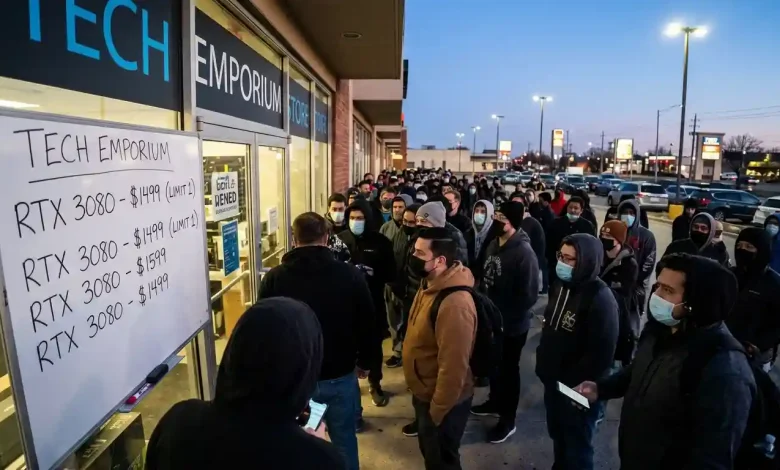
Table of Contents
GPU 2022 Market Trends marked a pivotal year for graphics cards, dramatically reshaping a landscape that had been characterized by unprecedented scarcity and inflated prices for the preceding two years. After enduring a period where finding a graphics card at its Manufacturer’s Suggested Retail Price (MSRP) was nearly impossible, 2022 brought a significant shift, transforming a seller’s market into a buyer’s paradise, at least for a substantial portion of the year. This transformation was driven by a confluence of factors, including the collapse of cryptocurrency mining profitability, improvements in global supply chains, and the highly anticipated arrival of next-generation hardware from industry giants like NVIDIA and AMD, alongside a new entrant in the discrete GPU space: Intel. The changes observed in 2022 were not merely incremental; they represented a fundamental rebalancing of supply and demand, setting new precedents for pricing, availability, and competitive dynamics within the graphics card industry.
Introduction: A Year of Volatility and Transformation
The GPU market entered 2022 still reeling from the effects of the global chip shortage and the insatiable demand from cryptocurrency miners. Prices for graphics cards had reached astronomical highs, often selling for well over double their MSRP, making PC building an expensive endeavor for gamers and professionals alike. However, as the year progressed, a series of seismic shifts began to unfold, leading to a dramatic market correction. This article delves into the critical events and trends of 2022 that fundamentally altered the trajectory of the graphics card market, analyzing what changed and the lasting implications for consumers and manufacturers.
The Cryptocurrency Crash and its Profound Impact
Perhaps the single most impactful event on the GPU market in 2022 was the significant downturn in the cryptocurrency market, particularly the Ethereum merge to Proof-of-Stake. Ethereum, being the most profitable cryptocurrency to mine with GPUs, had largely dictated the demand and pricing for high-end graphics cards. As mining profitability plummeted throughout the year, the immense demand from crypto miners evaporated almost overnight. This abrupt change created a massive surplus of graphics cards, which had previously been hoarded for mining operations. The effect was immediate and widespread, signaling the end of an era where miners were willing to pay exorbitant prices, thus relieving immense pressure on the market. This shift transitioned the market from temporary volatility to structural cost inflation, placing a new, higher baseline on GPU pricing.
Easing Supply Chains and Increased Availability
Beyond the crypto crash, 2022 also saw a gradual, yet significant, improvement in global supply chain logistics. The severe bottlenecks that plagued semiconductor manufacturing and distribution in 2020 and 2021 began to ease. Manufacturers like NVIDIA indicated as early as December 2021 that GPU supply would improve in the second half of 2022. This improvement was partly due to increased production capacities and more efficient allocation of resources by chip foundries. The combined effect of reduced mining demand and a more robust supply chain meant that, for the first time in years, graphics cards became more readily available on retail shelves. This increased availability directly contributed to the normalization of prices and offered consumers a wider selection of products without having to resort to scalpers.
The Great Price Correction: From Astronomical to Attainable
The easing of supply and the collapse of crypto demand led to a substantial price correction throughout 2022. Graphics card prices, which had seen premiums of 50% to 100% or more above MSRP, began a steady decline. By June 2022, prices for many NVIDIA RTX 30 series cards, particularly at the higher end, were selling below MSRP. For instance, the RTX 3090 Ti, which launched at $2,000, was found closer to $1,650, an 18% reduction. The RTX 3080 Ti also saw significant drops, selling for 17% under MSRP. Mid-range cards like the RTX 3080 and RTX 3070 also experienced notable price reductions, with the RTX 3080 falling from $1,100 to $770 and the RTX 3070 from $860 to $580 in just a few months.
AMD’s Radeon RX 6000 series also followed a similar trend, with many models nearing or reaching their MSRPs. The RX 5000 series, popular among miners, saw prices fall by a significant 24% month-on-month by June 2022, finally selling below MSRP in the used market. This price deflation provided immense relief to gamers and content creators who had patiently waited for prices to return to reasonable levels. The market correction continued throughout 2023 as manufacturers adjusted inventory and core input costs stabilized.
Next-Generation Launches: Ada Lovelace, RDNA 3, and Arc Alchemist
Adding to the market’s dynamism was the highly anticipated launch of next-generation GPUs from NVIDIA and AMD, and the exciting entry of Intel into the discrete GPU space.
- NVIDIA Ada Lovelace (RTX 40 Series): NVIDIA unveiled its GeForce RTX 40 series, based on the new Ada Lovelace architecture, on September 20, 2022, with the flagship RTX 4090 launching on October 12, 2022. The RTX 4090 promised a “quantum leap” in performance, offering up to 2x the performance of the RTX 3090 Ti at the same power consumption, and up to 4x faster in full ray-traced games with DLSS 3. This new series introduced third-generation RT Cores and fourth-generation Tensor Cores, alongside new technologies like Shader Execution Reordering (SER). The RTX 4080 followed in November 2022.
- AMD RDNA 3 (RX 7000 Series): AMD also announced its Radeon RX 7000 series, based on the RDNA 3 architecture, on November 3, 2022. The first cards, the RX 7900 XT and RX 7900 XTX, were released on December 13, 2022. These cards introduced a chiplet-based design, promising significant performance and power efficiency improvements over the RDNA 2 generation. AMD’s CEO, Dr. Lisa Su, had confirmed earlier in the year that the RDNA 3 GPUs were on track for a 2022 launch, along with Ryzen 7000 series CPUs.
- Intel Arc Alchemist: 2022 also marked Intel’s re-entry into the discrete GPU market after a 24-year absence with its Arc Alchemist series. Intel introduced its Arc 3, 5, and 7 mobile graphics cards in April 2022, with desktop variants like the Arc A750 and A770 launching later in the year. This was a significant development, introducing a third major player into the competitive GPU landscape. While Intel’s initial market share was modest (around 1% of the add-in board market by Q3 2025), its entry was seen as a long-term competitive advantage, especially on the mobile front, and offered consumers more choice. Intel Arc GPUs are designed to enhance gaming, assist with content creation, and supercharge edge workloads, featuring AI-enhanced graphics capabilities.
| Key GPU Market Trends in 2022 | Impact and Changes | Notable Examples/Figures |
|---|---|---|
| Cryptocurrency Crash | Dramatic decrease in mining profitability, leading to a flood of used GPUs and collapse of demand from miners. | Ethereum’s merge to Proof-of-Stake; RTX 3060s as low as $99 (used) in November 2022. |
| Easing Supply Chain Issues | Improved availability of new graphics cards in retail channels. | NVIDIA CFO Colette Kress’s statement in Dec 2021 predicting supply improvement in H2 2022. |
| Price Correction | Significant drop in GPU prices, with many models reaching or falling below MSRP. | RTX 3080 down from $1,100 to $770; RTX 3070 from $860 to $580. Radeon RX 5000 series prices fell 24% month-on-month. |
| Next-Gen Launches (NVIDIA) | Introduction of NVIDIA’s Ada Lovelace architecture (RTX 40 series). | RTX 4090 launched Oct 2022 (starting $1,599), RTX 4080 in Nov 2022. |
| Next-Gen Launches (AMD) | Introduction of AMD’s RDNA 3 architecture (RX 7000 series). | RX 7900 XT and RX 7900 XTX launched Dec 2022. |
| Intel’s Entry | Intel re-entered the discrete GPU market with Arc Alchemist. | Intel Arc 3, 5, and 7 mobile GPUs launched April 2022; desktop A750/A770 later. |
| Flooding of Used Market | The secondary market became saturated with pre-owned GPUs, especially from ex-miners. | Warning to consumers about ex-mining cards; RTX 20 series cards well below MSRP used. |
The Flooding of the Used GPU Market
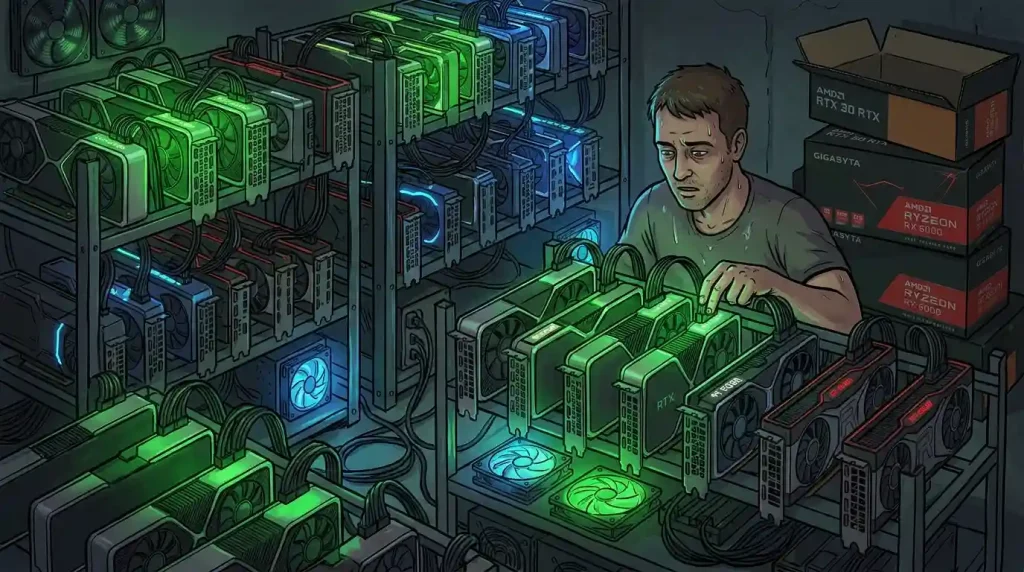
The cryptocurrency crash had a profound and immediate effect on the used GPU market. As mining operations became unprofitable, miners began liquidating their hardware, leading to a massive influx of pre-owned graphics cards onto platforms like eBay. This surge in supply, combined with declining demand, drastically pushed down prices for used GPUs. By June 2022, prices for NVIDIA’s RTX 20 series cards were well below their original MSRPs, with an average 28% under MSRP by May 2022. The GeForce GTX 16 series also saw significant price drops, falling by 16% on average.
While this created a buyer’s market for those seeking older models, it also came with caveats. Consumers were advised to be cautious, as many of these cards had been run at 100% utilization for extended periods in mining rigs, potentially affecting their longevity. Despite this, the sheer volume of affordable used GPUs provided a viable option for many who had been priced out of the market. Interestingly, by November 2022, there were reports that the supply of dirt-cheap pre-mined GPUs was “fizzling out,” with some used Ampere series prices increasing by up to 200% in a short span, possibly due to scalpers buying them in bulk.
Intel’s Grand Entry into Discrete GPUs
One of the most significant developments in the GPU market in 2022 was Intel’s long-awaited re-entry into the discrete graphics card segment with its Arc Alchemist series. After a 24-year absence, Intel introduced its Arc 3, 5, and 7 mobile graphics cards in April 2022. These were followed by the launch of desktop Arc GPUs, such as the A750 and A770, later in the year. Intel’s entry brought a new competitive dynamic to a market historically dominated by NVIDIA and AMD. The Arc GPUs were designed to support modern features like XeSS (Intel’s AI-driven super sampling technology), DirectX12 Ultimate, and hardware-based ray tracing, aiming to cater to both gamers and creators.
While Intel’s initial market share was modest, its presence was crucial for fostering greater competition and innovation in the long term. Forbes noted that Intel’s offering of a complete GPU, CPU, and I/O ecosystem could become a competitive advantage, especially in the mobile sector. The entry of a third major player promised more choices and potentially better value for consumers in future generations of graphics cards.
Conclusion: A Reset and a Glimpse into the Future
The year 2022 represented a dramatic turning point for the GPU market, fundamentally altering the landscape that had emerged during the pandemic and cryptocurrency boom. The collapse of crypto mining profitability, coupled with improvements in the global supply chain, led to a much-needed price correction and increased availability of graphics cards. This period of deflation provided immense relief to consumers, allowing many to finally upgrade their systems at reasonable prices.
Simultaneously, the market witnessed the exciting arrival of next-generation architectures from NVIDIA (Ada Lovelace) and AMD (RDNA 3), pushing the boundaries of performance and efficiency. Even more noteworthy was Intel’s re-entry with its Arc Alchemist series, introducing a third formidable player into the discrete GPU arena and promising a more competitive future.
The events of 2022 effectively reset the GPU market, bringing it back to a semblance of normalcy after years of unprecedented volatility. While future trends will undoubtedly be influenced by emerging technologies like AI and sustained demand from the gaming and professional sectors, the year served as a powerful reminder of how quickly market dynamics can shift. For those who weathered the storm, 2022 was the year when graphics cards, once elusive and overpriced, finally returned to reach. The global GPU market was valued at 40 billion U.S. dollars in 2022 and is projected to reach 400 billion U.S. dollars by 2032, with a compound annual growth rate of 25% from 2023 to 2032. This growth is driven by increasing demand for gaming, AI, and data centers.
For further insights into the broader technological shifts impacting the semiconductor industry and its supply chains, particularly in relation to AI accelerators and their profound influence on manufacturing and pricing, an excellent resource is available on Reuters’ coverage of semiconductor companies. This external link provides a deeper dive into the ongoing evolution of supply dynamics and the strategic moves of key players like NVIDIA in response to rising demand for advanced chip technology.