7 Shocking Reasons GPU Prices Spiked in 2026 – The Expensive Reality
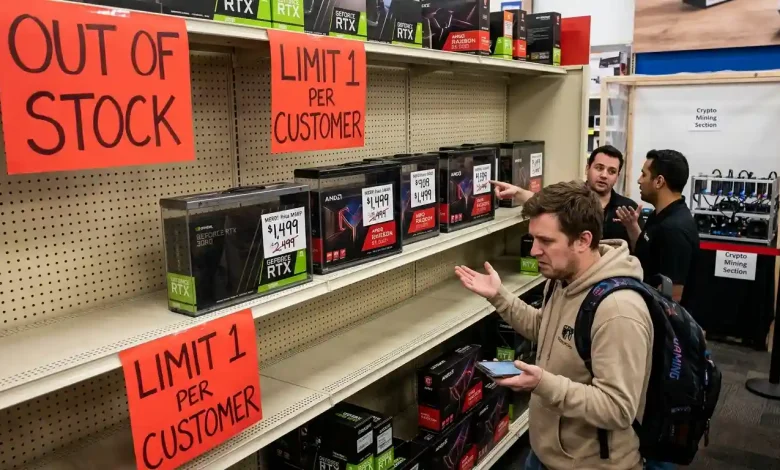
Table of Contents
GPU prices in 2022 were a significant point of contention and frustration for PC builders, gamers, and enthusiasts worldwide, continuing a trend of soaring costs that began in late 2020 and persisted well into the subsequent year. The graphics card market, a cornerstone of high-performance computing and visual fidelity, found itself in an unprecedented state of disarray, with many popular models selling for well above their manufacturer’s suggested retail price (MSRP) and often being difficult to acquire at all. This dramatic escalation in cost and scarcity was not attributable to a single factor but rather a perfect storm of interwoven economic, technological, and societal forces that converged to reshape the industry. Understanding why graphics cards became so expensive in 2022 requires a deep dive into the complex interplay of global supply chain issues, burgeoning demand from multiple sectors, and the speculative nature of certain markets.
The Unprecedented Surge in GPU Prices
The year 2022 started with graphics card prices still at exorbitant levels, a carryover from the intense demand and limited supply of 2020 and 2021. For many consumers, the dream of upgrading their gaming rig or building a new high-performance PC remained out of reach. While there was a gradual improvement in availability and some price drops later in the year, particularly in the latter half, the overall landscape remained challenging for much of 2022. Early in the year, both NVIDIA’s RTX 3000 series and AMD’s RX 6000 series cards were still selling significantly above MSRP. For instance, in January 2022, NVIDIA’s RTX 3000 series cards were reportedly sitting at 89% above MSRP, while AMD’s RX 6000 series were around 85% above MSRP. This reflected a market where retailers and resellers commanded premiums due to the persistent imbalance between supply and demand. Even into March 2022, Newegg listings showed Radeon RX 6000 series GPUs at 38% higher than MSRP and GeForce RTX 30 series at 50% higher than MSRP. The average selling price of graphics cards effectively doubled between 2020 and 2023, showcasing the magnitude of the price hikes.
This period of elevated prices marked a significant departure from historical trends, where new generations of graphics cards typically offered improved performance at comparable or slightly adjusted price points. Instead, consumers faced a market where even older generation cards or mid-range options were priced at levels previously associated with high-end models. The underlying causes were multifaceted, ranging from intricate manufacturing challenges to shifts in global economic activity and new forms of digital demand.
The Global Semiconductor Shortage: A Critical Bottleneck
At the heart of the GPU price crisis in 2022 was the pervasive global semiconductor shortage. Semiconductors, or “chips,” are the foundational components for nearly all modern electronic devices, including graphics cards. The shortage, which began in 2020 and extended through 2022 and beyond, severely constrained the production capacity of GPU manufacturers like NVIDIA and AMD.
Several factors contributed to this shortage:
- COVID-19 Pandemic Disruptions: The onset of the COVID-19 pandemic in early 2020 led to immediate disruptions in global manufacturing and shipping networks. Factories faced shutdowns, reduced workforces due to social distancing measures, and logistical bottlenecks, all of which slowed down the production of chips.
- Increased Demand for Electronics: Paradoxically, the pandemic also triggered an unforeseen surge in demand for consumer electronics. With widespread work-from-home mandates and remote learning, millions of people globally needed new or upgraded PCs, laptops, webcams, and other devices. This sudden shift in consumer behavior placed immense pressure on chip manufacturers, who were already struggling with production.
- Supply Chain Fragility: The semiconductor industry relies on a highly complex and globalized supply chain. Disruptions at any point—from raw material extraction to fabrication, assembly, and testing—could have cascading effects. The shortage exposed the vulnerabilities of this intricate system, with lead times for chip supply extending significantly. For instance, by April 2021, lead times for some semiconductors had extended to 22.2 weeks, up from 12.2 weeks in February 2020.
- Geopolitical Tensions and Natural Disasters: Geopolitical rivalries, particularly between China and North America, also played a role, with both regions becoming more focused on near-shore chip production. Additionally, natural disasters, such as droughts in Taiwan (a major semiconductor manufacturing hub) and winter storms in Texas, further hampered production by affecting essential resources like ultrapure water and electricity.
The cumulative effect was that foundries like TSMC, which manufactures chips for NVIDIA and AMD, operated at full capacity but still couldn’t meet the overwhelming demand. This fundamental imbalance directly translated into fewer GPUs being available and, consequently, higher prices.
Explosive Demand from Gaming and Remote Work
While the chip shortage restricted supply, demand simultaneously soared, creating a perfect storm for price inflation. The gaming industry, in particular, experienced a boom during the pandemic. With more people spending time at home, video gaming became a primary form of entertainment and social connection. This led to a massive increase in demand for high-performance gaming PCs and, by extension, powerful graphics cards.
Furthermore, the widespread adoption of remote work and online education contributed significantly. Many individuals and families found themselves needing to upgrade or acquire new computing equipment to facilitate their professional and educational activities. Graphics cards, essential for many professional applications like video editing, graphic design, and 3D rendering, became highly sought after by content creators and professionals adapting to the new work environment. This broad-based surge in consumer electronics demand from diverse user groups exacerbated the scarcity of GPUs designed for high-performance tasks.
Manufacturers like NVIDIA and AMD were caught between a rock and a hard place: their primary manufacturing partners were struggling to produce enough chips, while the market clamored for more products. This created a scenario where traditional gaming channels found their stock quickly depleted, pushing consumers towards alternative, often more expensive, purchasing avenues.
The Cryptocurrency Mining Boom: A Voracious Appetite
Perhaps one of the most significant and often contentious drivers of GPU prices in 2022 was the fervent cryptocurrency mining boom. Cryptocurrencies like Ethereum, which until September 2022 relied on a “Proof-of-Work” (PoW) consensus mechanism, could be profitably mined using consumer-grade graphics cards. As the value of cryptocurrencies, particularly Ethereum, skyrocketed in 2021 and early 2022, the incentive for individuals and large-scale mining operations to acquire GPUs for mining became immense.
Miners viewed GPUs as “money printers” and were willing to pay significantly above MSRP to secure cards, as the potential returns from mining outweighed the inflated hardware costs. Reports indicated that cryptocurrency miners purchased a substantial portion of all GPUs produced. For example, some analysts estimated that 25% of all GPUs shipped in the first half of 2021 went to cryptocurrency miners. This created a direct competition between gamers/enthusiasts and miners, with the latter often having deeper pockets and a higher willingness to pay premiums. The demand from crypto miners maintained throughout the release of new GPU series, extending the shortage.
The correlation between Ethereum prices and GPU prices was evident, with studies showing that a 1% increase in Ethereum’s price could correlate with a 0.19% to 0.22% increase in the secondary market price of specific NVIDIA RTX cards like the 3060 Ti and 3080. Large mining organizations would buy vast quantities of powerful video cards, driving up prices across the board. This phenomenon created a highly speculative market, where the intrinsic value of a GPU for gaming was overshadowed by its potential profitability as a mining tool.
| GPU Model | MSRP (USD) | Estimated Retail Price (June 2022) | Price Inflation (June 2022 vs. MSRP) | Estimated Retail Price (September 2022) | Price Change (June to Sept 2022) |
|---|---|---|---|---|---|
| NVIDIA GeForce RTX 3080 (10GB) | $699 | ~$770-1100 | ~10-57% above MSRP | ~$739 | Significant Decrease |
| NVIDIA GeForce RTX 3070 Ti | $599 | ~$630 | ~5% above MSRP | ~$511 | -19% |
| NVIDIA GeForce RTX 3090 Ti | $1999 | ~$1650 | ~18% below MSRP | ~$999-$1099 | -33% to -40% |
| AMD Radeon RX 6800 XT | $649 | Overpriced by ~27% | ~27% above MSRP | N/A | N/A |
| AMD Radeon RX 6600 | $329 | N/A | N/A | N/A | N/A |
Supply Chain Disruptions and Logistical Challenges
Beyond the core chip shortage, broader supply chain disruptions and logistical challenges further compounded the issue of high GPU prices in 2022. The electronics industry, in general, faced significant volatility throughout the year due to a confluence of factors including new waves of COVID-19 lockdowns, the conflict in Ukraine, rising inflation, and natural disasters.
- Manufacturing Interruptions: Lockdowns in key manufacturing regions, particularly in Asia, led to factory closures or reduced operational capacities, directly impacting the production of various electronic components, including those critical for GPUs.
- Increased Material and Freight Costs: The cost of raw materials required for semiconductor manufacturing increased, as did global freight and logistics expenses. These elevated input costs were inevitably passed on to consumers in the form of higher retail prices for finished products like graphics cards. Supply chain concerns were highlighted in 60% of earnings calls across all industries in 2022, up from 47% in 2021, indicating the pervasive nature of these challenges.
- Port Congestion and Shipping Delays: International shipping routes experienced significant congestion and delays, leading to longer lead times for components and finished products to reach their intended markets. This created artificial scarcity, as products might exist but were stuck in transit, unable to replenish retail shelves quickly enough.
- Geopolitical Tensions: The ongoing U.S.-China trade tensions and concerns about restricted access to semiconductor technology led companies to stockpile chips, further straining available supply.
These challenges meant that even if manufacturers could produce more GPUs, getting them to market efficiently and affordably remained a significant hurdle, contributing to the elevated prices seen throughout 2022. The industry was forced to adapt its sourcing strategies and diversify suppliers to build greater resilience against future disruptions.
The Impact of Scalpers and the Reseller Market
The severe imbalance between supply and demand created fertile ground for scalpers and resellers, who significantly exacerbated the GPU price problem. When new graphics cards became available, they were often quickly bought up by automated bots employed by scalpers. These individuals or groups would then resell the cards on secondary markets like eBay, typically at heavily inflated prices, sometimes two to three times their MSRP.
This parasitic ecosystem made it nearly impossible for average consumers to purchase GPUs at their intended retail price. The presence of a highly profitable secondary market not only drained available stock but also set an unofficial, much higher “market value” for graphics cards, influencing general price expectations. While scalpers don’t inherently decrease market prices, their existence highlights a gap where retail prices are below market value, and their completed sales can provide data to manufacturers about what consumers are willing to pay. In March 2022, for example, eBay GPU prices showed average drops of 10-13% for RTX 30 and RX 6000 series cards, indicating that even the secondary market was seeing some correction, but prices remained inflated.
The frustration among consumers was palpable, as many felt exploited by these practices. Retailers struggled to implement effective measures to combat bot activity, and the cycle of limited stock, high demand, and inflated reseller prices continued to define the GPU market for much of 2022. This phenomenon underscored the urgent need for manufacturers and retailers to address the underlying supply issues and implement fairer distribution models. For more context on the broader impact of chip shortages, one can refer to the Wikipedia article on the 2020–2023 global chip shortage.
Market Correction and a Glimmer of Hope in Late 2022
While the first half of 2022 remained challenging, the latter part of the year brought some welcome relief to the beleaguered GPU market. Several key developments converged to ease prices and improve availability:
- Ethereum’s “Merge”: The most significant factor was the “Ethereum Merge” in September 2022. Ethereum transitioned from a Proof-of-Work to a Proof-of-Stake consensus mechanism, which dramatically reduced the energy and computational power required to process transactions, effectively rendering GPU mining for Ethereum unprofitable. This eliminated a massive source of demand for GPUs overnight. Millions of GPUs that had been used for mining, estimated to be around 20 million, became obsolete for this purpose, leading many miners to offload their cards onto the second-hand market.
- Improved Semiconductor Supply: Although the chip shortage was still ongoing, there were signs of gradual improvement in semiconductor manufacturing capacity. Companies were investing in new fabrication plants, and some industry leaders predicted the shortage would begin to recede in the second half of 2022. The passage of acts like the CHIPS for America Act in the US, with significant allocations for semiconductor R&D and manufacturing, also signaled a long-term commitment to bolstering supply.
- Anticipation of New Generations: The impending launch of NVIDIA’s RTX 40 series and AMD’s RX 7000 series towards the end of 2022 also contributed to price drops for existing generations. Consumers and retailers began to anticipate new hardware, leading to reduced demand for the RTX 30 and RX 6000 series cards, and incentivizing retailers to clear stock.
- Cryptocurrency Market Downturn: Beyond the Merge, a broader downturn in the cryptocurrency market in 2022 further reduced the profitability of mining other coins and dampened speculative demand for hardware.
These factors collectively led to a noticeable decline in GPU prices. By September 2022, average declines of 6.9% were observed across current-generation GPUs, with some high-end cards seeing even larger drops. For example, the RTX 3090 Ti’s price plummeted from its initial MSRP to significantly lower figures by year-end. While prices for lower-end and mid-range cards still showed some inflation, the overall trend was positive, indicating a shift towards a more buyer-friendly market.
Conclusion: Lessons from a Turbulent Year
The year 2022 stands as a stark reminder of the intricate and often volatile dynamics governing the technology market. GPU prices, once a relatively predictable component of PC building, became a symbol of global supply chain vulnerabilities and the disruptive power of emerging technologies like cryptocurrency. The convergence of a severe global semiconductor shortage, unprecedented demand from both traditional gaming and professional remote work sectors, and the insatiable appetite of cryptocurrency miners created an environment where graphics cards became prohibitively expensive and scarce. The opportunistic actions of scalpers further compounded this frustration, creating artificial barriers for genuine consumers.
However, the latter half of 2022 also offered a glimpse of market correction, largely driven by the Ethereum Merge and a broader stabilization of supply chains, demonstrating how quickly market conditions can shift with technological evolution and economic adjustments. The experience highlighted the critical need for greater resilience in manufacturing, diversified supply chains, and a more balanced approach to managing demand surges. While GPU prices began to normalize towards the end of 2022 and into 2023, the lessons learned from this turbulent period continue to influence industry strategies, from semiconductor investment policies to retail distribution models, in an effort to prevent a repeat of the graphics card crisis. Consumers can now look forward to a more stable and accessible GPU market, though the memory of those exorbitant prices will likely linger for years to come.