GPU for PC: The Ultimate Guide to Graphics Cards in 2026
Table of Contents
GPU for PC, or Graphics Processing Unit, stands as the pulsating heart of any modern computer, especially for tasks that demand intensive visual processing, from high-fidelity gaming to complex professional applications. In 2026, the landscape of GPU technology is more dynamic and crucial than ever before, driven by an insatiable demand for immersive experiences and the exponential growth of artificial intelligence (AI) and machine learning (ML). The evolution of these powerful components has transformed them from mere display adapters into sophisticated parallel processors capable of handling billions of calculations per second, fundamentally reshaping how we interact with our digital world. This comprehensive guide will delve into every aspect of GPUs for PCs, providing insights into their functionality, architectural advancements, market trends, and practical advice to help you make informed decisions in this rapidly advancing technological era.
GPU for PC:Introduction to GPUs for PC
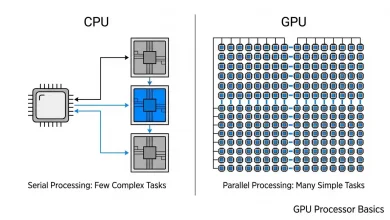
A Graphics Processing Unit (GPU) is a specialized electronic circuit designed to rapidly manipulate and alter memory to accelerate the creation of images in a frame buffer intended for output to a display device. Initially developed to render 3D graphics in real-time for video games, GPUs have transcended their original purpose. Today, their parallel processing capabilities make them indispensable for a vast array of computational workloads beyond graphics, including scientific simulations, cryptocurrency mining, and, most notably, artificial intelligence. The demand for GPUs has surged, with the global GPU market experiencing significant growth, projected to reach an impressive $320.809 billion by 2033,GPU for PC: demonstrating a Compound Annual Growth Rate (CAGR) of 25.6% from 2025 to 2033. This expansion is fueled by the increasing need for high-performance computing across diverse industries, from healthcare to finance and manufacturing. Understanding the core function and growing importance of a GPU is the first step in appreciating its impact on your PC’s overall performance.
Why a GPU is Essential for Your PC
For many PC users, particularly gamers and creative professionals, a robust GPU is not merely an optional upgrade but a fundamental requirement. Modern games, with their intricate textures, realistic lighting, and expansive open worlds, demand immense graphical horsepower to render smoothly at high resolutions and frame rates. Technologies like real-time ray tracing, which accurately simulates light interactions, have transformed visual fidelity in gaming, offering immersive experiences previously unattainable. These advancements are only possible with powerful GPUs. Beyond gaming, the importance of GPUs extends deeply into professional workflows. Video editing software, for example, heavily leverages GPU acceleration for tasks such as color grading, effects rendering, noise reduction, and hardware-accelerated decoding of high-resolution footage, including 4K and 8K. Similarly, 3D rendering, computer-aided design (CAD), scientific simulations, and machine learning model training rely almost entirely on the parallel processing prowess of GPUs to significantly reduce processing times. Even for everyday computing, a dedicated GPU can offload graphical tasks from the CPU, leading to a snappier and more responsive user experience, particularly when dealing with multiple high-resolution displays or complex visual applications.
Key Components and Specifications of a GPU
To truly understand a GPU, it’s essential to familiarize yourself with its core components and the specifications that dictate its performance. These elements work in concert to deliver the visual and computational power users expect.
- Graphics Core/Streaming Multiprocessors: This is the central processing unit of the GPU, comprising thousands of smaller processing cores (CUDA Cores for NVIDIA, Stream Processors for AMD). These cores handle the massive number of parallel computations required for graphics rendering and complex algorithms.
- VRAM (Video Random Access Memory): Dedicated high-speed memory on the GPU (e.g., GDDR6, GDDR6X, HBM). VRAM stores data that the GPU needs immediate access to,GPU for PC: such as textures, frame buffers, and complex models. The amount and speed of VRAM are critical for higher resolutions and demanding applications. In 2026, High-Bandwidth Memory (HBM) is emerging as a critical component, with the HBM market projected to grow significantly.
- Memory Interface (Bus Width): This refers to the width of the data pathway between the GPU core and the VRAM, measured in bits (e.g., 256-bit, 384-bit). A wider bus allows more data to be transferred simultaneously, directly impacting memory bandwidth and overall performance. A wider memory bus and higher bandwidth enable faster data transfer, crucial for real-time data processing like machine learning and high-fidelity graphics rendering.
- Clock Speed: Measured in MHz or GHz, this indicates how fast the GPU’s processing cores operate. Higher clock speeds generally translate to faster performance, but raw clock speed is only one factor.
- TDP (Thermal Design Power): Measured in watts, TDP represents the maximum amount of heat generated by the GPU that the cooling system is designed to dissipate. A higher TDP often indicates a more powerful card but also requires a more robust power supply and cooling solution.
- Ray Tracing Cores/Tensor Cores: Modern GPUs include specialized hardware for advanced rendering techniques. NVIDIA’s Tensor Cores accelerate AI workloads and improve performance with features like DLSS, while dedicated Ray Tracing Cores handle the complex calculations for realistic lighting and reflections. AMD also has improved ray tracing capabilities in its RDNA 4 architecture.
- PCI Express (PCIe) Interface: This is the connection interface between the GPU and the motherboard. Current generations use PCIe 4.0 or PCIe 5.0, offering increasingly higher bandwidth for data transfer.
Understanding GPU Generations and Architectures
The GPU market is characterized by rapid innovation, with manufacturers continually releasing new generations based on improved architectures. Each new generation typically brings advancements in performance, power efficiency, and new features. For instance, NVIDIA’s recent generations include Ampere (RTX 30 series) and Ada Lovelace (RTX 40 series), with the Blackwell architecture (RTX 50 series) being prominent in 2026, GPU for PC:introducing features like DLSS 4. AMD’s corresponding architectures include RDNA 2 (RX 6000 series) and RDNA 3 (RX 7000 series), with the RDNA 4 (RX 9000 series) lineup being highly competitive in 2026. Intel, a newer player in the discrete GPU market, has its Arc series, with Battlemage/Xe2 architecture aiming to challenge the mid-range segment in 2026.
These architectural shifts often involve:
- Die Shrinks: Moving to smaller manufacturing process nodes (e.g., from 7nm to 5nm) allows for more transistors in a smaller area, leading to greater efficiency and performance.
- Core Design Improvements: Enhancements to the individual processing cores, making them more efficient at executing instructions.
- Memory Technology Upgrades: Transitioning to faster VRAM standards (e.g., GDDR6X, HBM3, HBM4) to increase memory bandwidth.
- New Feature Sets: Introduction of specialized hardware for new technologies, such as improved ray tracing cores or advanced AI acceleration units.
Understanding these generational leaps helps users assess the performance and value proposition of different GPUs. For instance, a newer mid-range GPU might outperform an older high-end model due to architectural efficiencies and newer feature sets.
Choosing the Right GPU for Your Needs
Selecting the ideal GPU for your PC depends heavily on your primary use case and budget. The market offers a vast spectrum of cards, each tailored for different demands.
Gaming
For gamers, the choice often boils down to achieving desired frame rates and visual settings at a specific resolution. In 2026, NVIDIA’s RTX 50 series (Blackwell architecture) leads in performance and AI capabilities, while AMD’s Radeon RX 9000 series (RDNA 4) offers strong value, especially for rasterization gaming. For 4K gaming, NVIDIA typically still rules, while AMD is the value king for 1440p, and Intel is becoming a viable option for 1080p. Features like NVIDIA’s DLSS (Deep Learning Super Sampling) 4.5 and AMD’s FSR (FidelityFX Super Resolution) 4 are critical, using AI-based upscaling and frame generation to boost perceived performance and smooth frame rates. When looking for a gaming GPU, consider your monitor’s resolution and refresh rate, the types of games you play, and whether ray tracing is a priority for you.
Professional Work (Video Editing, 3D Rendering, AI/ML)
Professional users require GPUs with ample VRAM, high computational power, and robust driver support. For video editing in 2026, NVIDIA’s RTX 5090 is highly recommended for 8K and high-end production, while the RTX 5080 suits most 4K workflows. AMD’s RX 9000 series, particularly the RX 9070 XT, also offers strong performance, often providing more VRAM for the price, which is beneficial for color grading and large projects.
| Use Case | Recommended GPU Tier (2026) | Key Considerations | Approximate VRAM |
|---|---|---|---|
| High-End Gaming (4K/High Refresh Rate) | NVIDIA RTX 5090/5080, AMD RX 9090 XT | Raw power, Ray Tracing, AI upscaling (DLSS/FSR), VRAM capacity | 16GB – 32GB+ |
| Mid-Range Gaming (1440p/High Refresh Rate) | NVIDIA RTX 5070 Ti/5070, AMD RX 9070 XT/9070, Intel Arc B770 | Price-to-performance, Rasterization, VRAM for modern games | 12GB – 16GB |
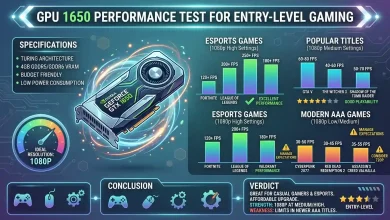
| Entry-Level Gaming (1080p) | NVIDIA RTX 5060, AMD RX 9060 XT, Intel Arc B580 | Affordability, basic modern game performance, efficiency | 8GB – 12GB |
| Professional Video Editing (4K+) | NVIDIA RTX 5090/5080, AMD RX 9090 XT/9080 XT | High VRAM, CUDA cores (NVIDIA) or Stream Processors (AMD), software optimization | 24GB – 32GB+ |
| 3D Rendering/CAD | NVIDIA RTX 5090 (Professional/Workstation series), AMD RX 9090 XT (Professional series) | Massive VRAM, Double Precision Floating Point (for some apps), specialized drivers | 32GB+ |
| AI/Machine Learning Development | NVIDIA RTX 5090 (or specialized datacenter GPUs like Blackwell B200), AMD Instinct MI455X | Large HBM, Tensor Cores (NVIDIA), high compute throughput, ecosystem support | 48GB+ (HBM) |
For AI and machine learning, NVIDIA continues to be a leader due to its established CUDA ecosystem and Tensor Cores, with new architectures like Blackwell B200 series being key players for efficiency and performance in AI workloads. AMD is also making strides with its Instinct GPUs, such as the MI455X, integrating with its Helios AI architecture.
Everyday Use
For general productivity, web browsing, and casual media consumption, an integrated GPU (iGPU) found in most modern CPUs is often sufficient. However, if you work with multiple high-resolution monitors, perform light photo editing, or occasionally dabble in older games, a budget-friendly discrete GPU can offer a noticeable improvement in smoothness and responsiveness. When building a new PC, it’s always wise to consider the long-term usage and potential upgrade paths. You can find more comprehensive advice on selecting components in a dedicated PC Building Guide.
Top GPU Manufacturers: NVIDIA vs. AMD vs. Intel
The discrete GPU market is primarily dominated by two long-standing giants, NVIDIA and AMD, with Intel rapidly gaining ground. Each offers distinct strengths and ecosystems.
NVIDIA
NVIDIA has historically held the largest market share in discrete GPUs, especially at the high end, and their 2026 strategy focuses heavily on AI and efficiency. Their GeForce RTX series, built on the Blackwell architecture, offers cutting-edge performance, superior ray tracing capabilities, and advanced AI features like DLSS 4. NVIDIA’s Tensor Cores are specifically designed to accelerate AI workloads, making their GPUs a preferred choice for professional AI development and applications like video editing that leverage AI. NVIDIA also boasts a mature driver ecosystem and strong day-one game optimization due to its dominant market share.
AMD
AMD, with its Radeon RX series based on the RDNA architecture (RDNA 4 in 2026), is a strong contender, particularly in the mid-range and for rasterization performance. AMD often provides excellent value, delivering competitive frames per dollar in many games and frequently offering more VRAM at similar price points, which can be a significant advantage for certain workloads. Their FSR (FidelityFX Super Resolution) technology provides an open-source alternative to DLSS for upscaling and frame generation. AMD is also making significant advances in the data center and AI space with its Instinct GPUs and Helios architecture, positioning itself as a viable alternative for many professional workloads.
Intel
Intel has re-entered the discrete GPU market with its Arc series, featuring architectures like Battlemage/Xe2. In 2026, Intel is actively disrupting the budget and mid-range segments, offering competitive options, especially for 1080p gaming and certain inference workloads. Intel is focusing on improving driver maturity and providing stable performance, making its GPUs increasingly viable for mainstream users. The competitive landscape is intensifying, with all three GPU giants disrupting the market simultaneously.
Installation and Setup of Your New GPU
Installing a new GPU can seem daunting, but it’s a straightforward process that can significantly upgrade your PC’s capabilities. Here’s a general step-by-step guide:
- Prepare Your PC: First, ensure your PC is completely powered down and unplugged from the wall. It’s also good practice to hold the power button for 10-15 seconds after unplugging to discharge any residual power. Remove the side panel of your PC case.
- Remove Old GPU (if applicable): If you’re replacing an existing GPU, unplug any power cables connected to it. Then, locate the screw(s) holding the GPU to the case and remove them. Finally, press down on the small release latch or “whale tail” at the end of the PCIe slot on the motherboard to unlock the GPU, and carefully pull the card straight out.
- Install New GPU: Unwrap your new GPU. Align the graphics card with the top PCIe x16 slot on your motherboard (usually the longest slot). Gently push the card vertically down into the slot until it’s firmly seated and the retention clip on the PCIe slot engages. You should hear a click.
- Secure the GPU: Reinstall the screws that hold the GPU to the PC case. If your GPU came with a support brace, install it now to prevent sag.
- Connect Power Cables: Your new GPU will require power from your power supply unit (PSU). Connect the appropriate PCIe power cables (6-pin, 8-pin, or 12-pin, depending on your card) from your PSU to the GPU. Ensure all connections are secure. An inadequate power supply is a common issue, so verify your PSU meets the manufacturer’s recommended wattage and has enough PCI-E power connectors.
- Close Up and Power On: Reattach your PC’s side panel. Plug your PC back into the wall, turn on your PSU (if it has a switch), and power on your computer.
- Install Drivers: Once your PC boots into Windows (or your operating system), you’ll need to install the latest drivers for your new GPU. Visit the manufacturer’s website (NVIDIA, AMD, or Intel) to download the most up-to-date drivers. For NVIDIA GPUs, you can use GeForce Experience. For AMD, use AMD Radeon Software. Keeping your graphics card drivers current is fundamental for optimal gaming performance and includes game-specific optimizations and bug fixes.
A comprehensive guide for optimizing CPU performance can further enhance your system’s overall speed alongside your new GPU.
Optimizing Your GPU Performance
Even with a powerful GPU, proper optimization can unlock additional performance and ensure a smooth experience.
- Keep Drivers Updated: As mentioned, regularly updating your GPU drivers is paramount. Manufacturers frequently release new drivers with performance enhancements, bug fixes, and optimizations for the latest games and applications. You should periodically check directly on the vendor’s website.
- Adjust In-Game Settings: For gaming, tweak settings like resolution, texture quality, anti-aliasing, and shadow quality. Finding the right balance between visuals and performance is key.
- Utilize AI Upscaling and Frame Generation: Technologies such as NVIDIA’s DLSS, AMD’s FSR, and Intel’s XeSS use AI algorithms to render games at a lower internal resolution and then upscale them to a higher resolution, often with frame generation, significantly boosting frame rates without a noticeable loss in visual quality. Enabling these on supporting graphics cards can allow the GPU to handle extra tasks.
- Optimize Graphics Card Control Panel Settings: Both NVIDIA and AMD provide control panels (NVIDIA Control Panel, AMD Radeon Software) that allow you to fine-tune global and per-application settings. Options like “Maximum Pre-rendered Frames,” “Power Management Mode,” and “Texture Filtering Quality” can impact performance.
- Enable Game Mode in Windows: Windows includes built-in features like Game Mode, which prioritizes system resources for games, suspends background processes, and helps maintain consistent frame rates.
- Monitor Temperatures: Keep an eye on your GPU’s temperature, especially during heavy workloads. Overheating can lead to performance throttling and reduce the lifespan of your card. Ensure good airflow in your PC case.
- Consider Overclocking (Advanced): For experienced users, carefully overclocking your GPU (increasing its clock speed and/or memory speed beyond factory settings) can yield additional performance. However, this generates more heat and requires careful monitoring and often improved cooling.
These methods, from simple driver updates to more advanced tweaks, can help you get the most out of your GPU and ensure a smoother, more enjoyable computing experience.
Future Trends in GPU Technology
The GPU market in 2026 is dynamic, characterized by robust growth and evolving hardware landscapes. As computational demands continue to soar, the future of GPU technology is poised for transformative advancements.
- AI-Specific Hardware: The biggest trend is the increasing emphasis on AI-specific hardware within GPUs. Future GPUs are expected to feature dedicated AI cores optimized for deep learning, enabling faster and more efficient neural network training and inference. This includes innovations like dedicated inference accelerators and GPUs with multiple Tensor Cores or similar architectures. The “GPU” itself is evolving into a disaggregated collection of specialized compute engines, including Tensor compute arrays, vector engines, and specialized inference accelerators.
- Heterogeneous Computing: The shift towards heterogeneous computing models is accelerating, where future GPUs will feature more processing cores on a single chip, allowing for more efficient task allocation. This is crucial for high-performance computing and autonomous systems.
- High-Bandwidth Memory (HBM): HBM is becoming the “hottest AI chip trend” for 2026, as both GPUs and ASICs (Application-Specific Integrated Circuits) rely heavily on it for fast data transfer and efficiency in AI workloads. The HBM market is projected for significant growth.
- Energy Efficiency and Dynamic Power Management: Future GPUs will likely incorporate AI-based energy controllers to optimize power efficiency by predicting workloads and adjusting power usage. This ensures high performance with reduced power consumption.
- Modular Design: The trend towards modular GPU design is gaining traction, facilitating easier upgrades and extending hardware lifecycles.
- Competition from ASICs: While GPUs, particularly from NVIDIA, have dominated the AI chip market, ASICs are emerging as a significant competitor, with hyperscalers increasingly ordering custom AI processors due to their superior power efficiency for specific tasks. This signals a structural shift in the market, with AI demand being long-term and sustained.
These trends indicate a future where GPUs will not only continue to drive advancements in gaming and graphics but will also be at the forefront of AI, scientific analysis, and real-time data processing, becoming even more integral to the computing landscape. For deeper insights into AI advancements, you can refer to authoritative sources such as Artificial Intelligence on Wikipedia.
Conclusion
The GPU for PC has solidified its position as one of the most vital components in any modern computer, evolving far beyond its original role to become a powerhouse for gaming, professional productivity, and the burgeoning field of artificial intelligence. In 2026, we observe a market driven by relentless innovation, where NVIDIA, AMD, and Intel fiercely compete to deliver ever-more powerful and efficient graphics cards. From the stunning visual fidelity offered by real-time ray tracing and AI-powered upscaling to the foundational role GPUs play in accelerating complex AI and machine learning workloads, their impact on our digital lives is profound and ever-expanding. Choosing the right GPU involves a careful consideration of your specific needs, budget, and an understanding of the intricate specifications and generational advancements. Furthermore, proper installation and ongoing optimization are crucial to harnessing the full potential of these sophisticated pieces of hardware. As we look to the future, the trends towards AI-specific hardware, heterogeneous computing, and increased energy efficiency promise even more groundbreaking developments, ensuring that the GPU will remain at the very core of computing innovation for years to come. The GPU market is characterized by robust growth and evolving hardware landscapes, and staying informed is key to navigating its complexities.