GPU: The Unsung Hero of Modern Computing
Table of Contents
GPU, or Graphics Processing Unit, stands as a cornerstone of modern computing, quietly powering everything from immersive gaming experiences to groundbreaking scientific research and the latest advancements in artificial intelligence. While traditionally associated with rendering visuals, its remarkable ability to perform vast numbers of calculations simultaneously has transformed it into an indispensable tool across a multitude of data-intensive and computationally demanding tasks. Designed initially to accelerate the creation of images and videos, the GPU’s unique architecture, characterized by thousands of smaller, specialized cores, allows it to process multiple pieces of data concurrently, a stark contrast to the sequential processing strength of a Central Processing Unit (CPU). This parallel processing capability is what grants GPUs their significant advantage, enabling rapid computation that would otherwise take traditional CPUs considerably longer, if not prove entirely unfeasible.
What is a GPU? Defining its Core Purpose
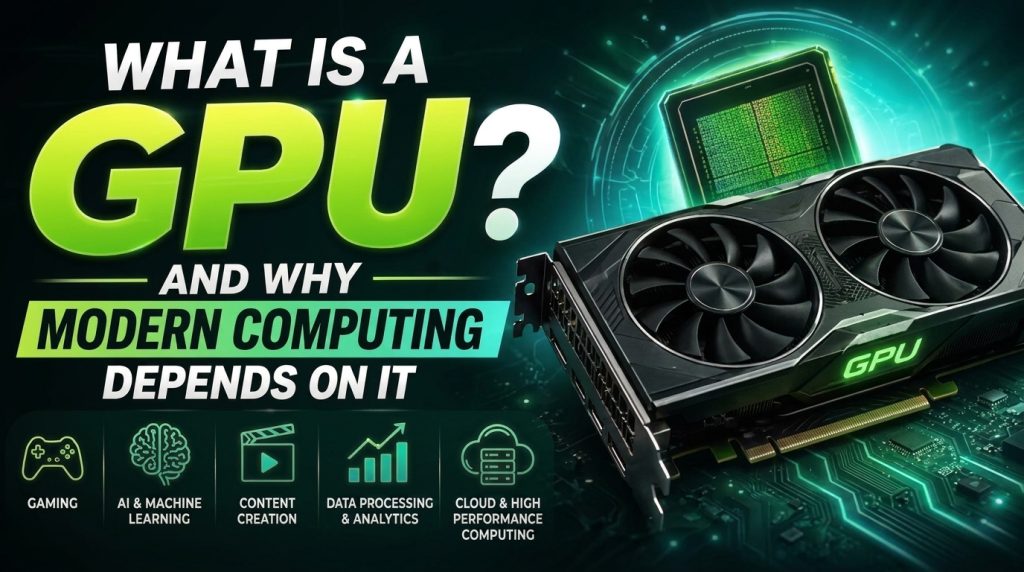
A Graphics Processing Unit (GPU) is a specialized electronic circuit specifically engineered for rapid mathematical calculations, primarily focused on accelerating computer graphics and image processing. At its heart, a GPU is built upon a silicon wafer, a thin slice of purified silicon, where billions of microscopic transistors are etched. Unlike a CPU, which is optimized for sequential execution of complex tasks, a GPU boasts a massively parallel architecture. It comprises hundreds, or even thousands, of smaller processing cores designed to execute thousands of tasks concurrently. This fundamental design allows GPUs to break down complex computational problems into numerous smaller, independent steps and distribute these steps across its many cores, completing them in parallel.
The primary purpose of a GPU has evolved significantly. While its origins are rooted in offloading graphics rendering tasks from the CPU, its parallel processing prowess has made it invaluable for a much wider range of applications. For instance, tasks like graphics rendering, machine learning, and video editing all involve applying similar mathematical operations to large datasets. The GPU’s design inherently increases its processing efficiency for these compute-intensive tasks by performing the same operation on multiple data values in parallel. This makes it particularly effective for “embarrassingly parallel” problems, where tasks can be easily divided and processed independently without significant interdependencies.
The Remarkable Evolution of GPUs: From Pixels to Parallel Powerhouses
The journey of the GPU is a testament to relentless innovation in computing. Its origins can be traced back to the early 1980s, where initial graphics processors were rudimentary compared to today’s sophisticated devices. These early components served to offload simple rendering tasks, like drawing basic shapes, filling colors, and handling simple animations, from the CPU, primarily in arcade systems and early home computers. The late 1980s saw the emergence of companies like Silicon Graphics Inc. (SGI), which pioneered the concept of the graphics pipeline and introduced OpenGL in 1989, standardizing how hardware features were made available to software developers.
A significant milestone arrived in the mid-1990s with the introduction of 2D accelerators, which sped up common graphical user interface operations. However, the true modern GPU, as we understand it today, began to take shape in the late 1990s. In 1999, NVIDIA coined the term “GPU” with the launch of its GeForce 256. This card, along with ATI’s Radeon 7500, was among the first to implement the entire graphics pipeline, including transform and lighting calculations, in hardware. This marked a pivotal shift, moving beyond fixed-function pipelines to more programmable and flexible architectures, ultimately adding 3D functionality that revolutionized video gaming and professional visualization.
The 21st century witnessed an explosion in GPU capabilities, driven by the increasing demand for realistic 3D graphics and high-definition video. Manufacturers continually added more processing cores, increased memory bandwidth, and introduced specialized units for complex operations. The most profound transformation, however, came with the realization that the GPU’s parallel processing architecture was not just ideal for graphics but also for general-purpose computation. This led to the development of General-Purpose computing on Graphics Processing Units (GPGPU), spearheaded by NVIDIA’s CUDA platform, which allowed developers to leverage the GPU’s immense power for non-graphical applications. This era saw GPUs become critical for scientific simulations, cryptocurrency mining, and, most significantly, artificial intelligence and machine learning.
How GPUs Work: A Deep Dive into Parallel Processing Architecture
The operational brilliance of a GPU lies in its parallel processing architecture, a design fundamentally different from that of a Central Processing Unit (CPU). While a CPU typically consists of a few powerful cores optimized for sequential task execution, a GPU integrates hundreds or thousands of smaller, more specialized processing units. These units, known as CUDA cores (for NVIDIA GPUs) or stream processors (for AMD GPUs), are the heart of a GPU’s ability to handle massive workloads concurrently.
Imagine a task that can be broken down into thousands, or even millions, of smaller, independent steps. A CPU would typically process these steps one after another, albeit very quickly. In contrast, a GPU can distribute these steps across its many cores, allowing them to be computed simultaneously. This multi-processing capability dramatically accelerates tasks where the same operation needs to be performed repeatedly across different data points. For example, in image rendering, each pixel on a screen might require similar calculations for color, shading, and texture. A GPU can process these calculations for multiple pixels at once, leading to much faster image generation.
This parallel execution is managed through a complex hierarchy of threads, warps (or wavefronts), and streaming multiprocessors. A single GPU thread represents a small execution unit responsible for processing a tiny piece of work. Millions of these threads can run concurrently. To maintain order and efficiency, modern GPUs organize these cores and threads into groups called streaming multiprocessors, which manage and schedule the execution of these parallel tasks. The GPU also has its own high-speed memory, known as Video RAM (VRAM), which allows it to access and manipulate graphical data very quickly without needing to constantly communicate with the system’s main RAM. This dedicated memory is crucial for handling large textures and complex scenes efficiently.
Types of GPUs: Integrated vs. Dedicated Graphics
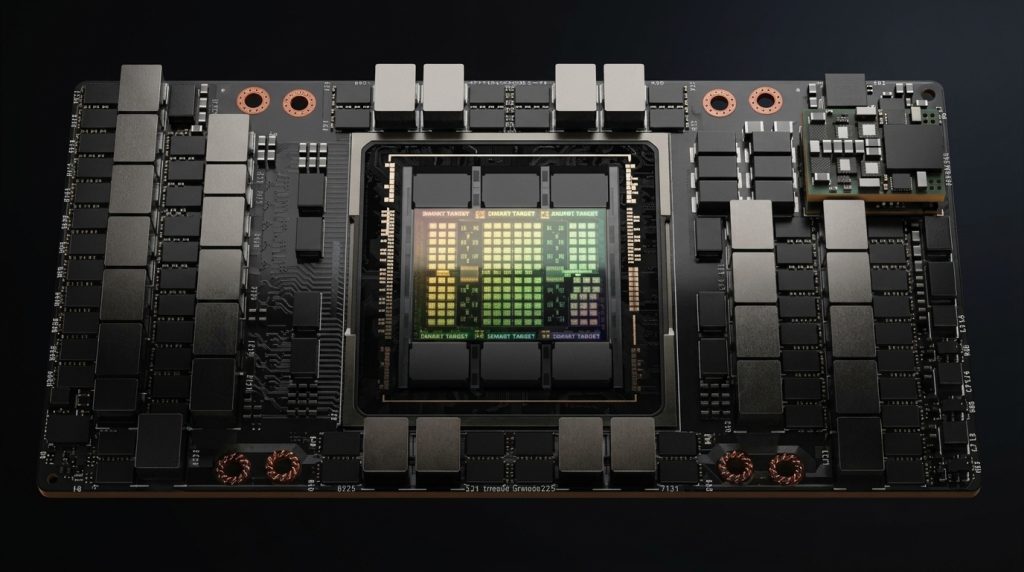
When discussing GPUs, it’s essential to understand the two primary types available in computing devices: integrated GPUs and dedicated (or discrete) GPUs. Each type serves different needs and comes with its own set of advantages and limitations.
Integrated GPUs
Integrated Graphics Processing Units (iGPUs) are built directly into the computer’s central processing unit (CPU) or the motherboard as part of a System on a Chip (SoC). This means they share system resources, including the main system memory (RAM), with the CPU.
- Advantages:
- Cost-Effectiveness: Integrated GPUs are generally less expensive, contributing to lower overall system costs.
- Power Efficiency: They consume less power and generate less heat, which translates to longer battery life in laptops and smaller, more lightweight device designs.
- Compactness: Their integration into the CPU or motherboard allows for thinner and lighter devices, making them ideal for laptops, ultrabooks, and entry-level desktop PCs.
- Disadvantages:
- Lower Performance: Integrated GPUs are typically not as powerful as dedicated GPUs. They are sufficient for basic computing tasks such as web browsing, word processing, light video editing, working with photos, and casual gaming. However, they struggle with demanding tasks like intense gaming, professional video editing, or complex 3D rendering.
- Shared Memory: Sharing system RAM with the CPU can lead to a slight reduction in overall system performance, as the GPU competes for memory bandwidth.
Dedicated (Discrete) GPUs
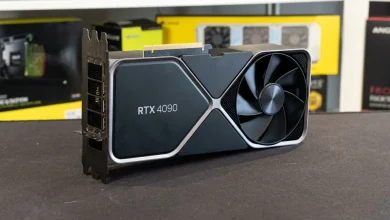
Dedicated GPUs are separate, independent hardware components, often found on their own add-in board (graphics card) that slots into a motherboard’s expansion slot (like a PCIe slot). They come with their own dedicated memory (VRAM) and a more robust power delivery system, giving them immediate access to more advanced resources.
- Advantages:
- Superior Performance: Dedicated GPUs are significantly more powerful, offering higher processing power and memory. This makes them the go-to choice for heavy processing tasks such as high-end gaming, intensive photo and video editing, professional design work, 3D rendering, and complex scientific simulations. They provide smoother gameplay, faster frame rates, and better graphics quality.
- Dedicated Memory: Having their own VRAM ensures that graphics operations do not compete for system memory with the CPU, leading to optimized performance.
- Advanced Features: They support the latest graphics technologies, including real-time ray tracing and upscaling technologies like DLSS (NVIDIA) or FSR (AMD), which enhance visual immersion and performance.
- Upgradeability: In desktop PCs, dedicated graphics cards can often be easily upgraded, allowing users to enhance their system’s graphical performance without replacing the entire computer.
- Disadvantages:
- Higher Cost: Dedicated GPUs are generally more expensive, contributing to a higher overall system price. High-end graphics cards can easily run into four figures.
- Higher Power Consumption and Heat: They consume more power and generate a significant amount of heat, requiring robust cooling solutions. This can lead to shorter battery life in laptops.
- Larger Form Factor: Discrete GPUs are physically larger, which can limit their use in compact systems.
The choice between an integrated and a dedicated GPU largely depends on the user’s specific needs, intended use, and budget. While integrated graphics have improved considerably and can handle most everyday tasks, dedicated GPUs remain indispensable for high-performance computing.
| Feature | Integrated GPU | Dedicated GPU |
|---|---|---|
| Location | Built into CPU or motherboard | Separate add-in card or chip on motherboard |
| Memory | Shares system RAM with CPU | Dedicated Video RAM (VRAM) |
| Performance | Lower, suitable for basic tasks and light gaming | Higher, essential for demanding tasks, high-end gaming, AI |
| Power Consumption | Lower, more power-efficient | Higher, consumes more power |
| Heat Generation | Lower | Higher, requires robust cooling |
| Cost | Lower system cost | Higher system cost |
| Size | Smaller, enables thin and light devices | Larger, takes up more space |
| Upgradeability | Generally not upgradeable | Often upgradeable (in desktops) |
Beyond Gaming: GPUs in AI, Machine Learning, and Scientific Computing
While GPUs first gained prominence in accelerating graphics for gaming, their role has expanded dramatically, making them essential workhorses for fields far beyond entertainment. Today, GPUs are recognized as fundamental components for artificial intelligence (AI), machine learning (ML), and various forms of scientific computing.
Artificial Intelligence and Machine Learning
The rise of AI, particularly deep learning, has been intrinsically linked to the parallel processing capabilities of GPUs. Training complex AI models, such as large language models and neural networks, involves performing millions of matrix multiplications and vector operations. These operations are foundational to how AI algorithms learn from vast datasets. GPUs excel at these tasks because they can execute a massive number of these calculations simultaneously across their numerous cores, drastically reducing the time required for model training. For instance, a neural network training process that might take days or weeks on a CPU could be completed in hours with a GPU.
Beyond training, GPUs also play a critical role in the inference phase of AI, where trained models are used to make predictions on new data, often in real-time. Their ability to rapidly execute complex calculations enables AI-powered applications, from self-driving cars making split-second decisions to chatbots providing instant responses, to function efficiently. NVIDIA’s introduction of Tensor Cores in its Volta architecture specifically targeted these deep learning computations, accelerating matrix calculations and further solidifying GPUs’ position as indispensable AI hardware.
Scientific Computing and High-Performance Computing (HPC)
In scientific research, GPUs are revolutionizing high-performance computing (HPC) by accelerating complex simulations and data analysis. Fields such as molecular dynamics, weather forecasting, climate modeling, astrophysics, and drug discovery benefit immensely from the GPU’s ability to process large datasets and perform intensive mathematical operations in parallel.
- Drug Discovery: GPUs are used to simulate molecular interactions, helping researchers understand how potential drugs might bind to proteins and accelerate the discovery of new medicines.
- Weather and Climate Modeling: Running highly detailed climate models requires immense computational power to simulate atmospheric and oceanic processes. GPUs significantly speed up these simulations, leading to more accurate predictions.
- Financial Modeling: In finance, GPUs accelerate complex algorithms for real-time fraud detection, risk analysis, and algorithmic trading, processing vast amounts of market data quickly.
The adoption of GPU-accelerated computing frameworks like CUDA has made it easier for researchers and developers to harness this raw processing power for general-purpose mathematical calculations, leading to dramatic speedups across various scientific and technical tasks. The scalability of GPUs across cloud platforms and HPC clusters has further democratized access to advanced computational capabilities, fostering innovation that was once computationally prohibitive.
The importance of GPUs in these diverse fields highlights their versatility and their profound impact on technological advancement. As computational demands continue to grow, particularly with the proliferation of AI, the GPU’s role as a fundamental accelerator will only become more pronounced. For further insights into the broad applications of GPUs, one can refer to resources like Wikipedia’s extensive overview of GPU applications.
Key Components and Specifications of a GPU
Understanding the core components and specifications of a GPU is crucial to appreciating its performance capabilities and choosing the right unit for specific tasks. These elements collectively determine how effectively a GPU can process graphics and perform general-purpose computations.
- GPU Core (Die): This is the brain of the graphics card, containing the actual processing units. The GPU core itself is a complex integrated circuit. It includes:
- CUDA Cores/Stream Processors: These are the thousands of smaller, specialized processing units responsible for parallel execution. NVIDIA GPUs refer to them as CUDA Cores, while AMD GPUs use the term Stream Processors. The sheer number of these cores directly impacts a GPU’s ability to handle intensive workloads efficiently.
- Tensor Cores: Introduced by NVIDIA, these are specialized cores designed to accelerate matrix operations, which are fundamental to deep learning and AI workloads. They enable mixed-precision computations, enhancing throughput without compromising accuracy.
- Ray Tracing Cores (RT Cores): Dedicated hardware units in modern GPUs designed to accelerate ray tracing, a rendering technique that simulates the physical behavior of light to produce highly realistic lighting, reflections, and shadows in real-time.
- Video RAM (VRAM): This is dedicated high-speed memory exclusively used by the GPU to store graphical data, such as textures, frame buffers, and shader programs. Key VRAM specifications include:
- Capacity: Measured in gigabytes (GB), higher capacity VRAM allows the GPU to handle larger textures, higher resolutions, and more complex scenes without performance bottlenecks.
- Type: Modern GPUs typically use GDDR (Graphics Double Data Rate) memory, with current generations including GDDR6, GDDR6X, and HBM (High Bandwidth Memory). HBM is often found in high-performance computing GPUs due to its extreme bandwidth.
- Memory Bus Width: Measured in bits (e.g., 128-bit, 256-bit, 384-bit), this indicates the width of the data pathway between the GPU and its VRAM. A wider bus allows more data to be transferred simultaneously, contributing to higher memory bandwidth.
- Memory Clock Speed: Measured in MHz or GHz, this refers to the speed at which the VRAM operates. Combined with bus width, it determines the total memory bandwidth, which is crucial for high-resolution gaming and data-intensive applications.
- Clock Speed: The clock speed of the GPU core, measured in MHz or GHz, indicates how many cycles the GPU performs per second. Higher clock speeds generally translate to better performance, though real-world performance is also heavily influenced by architecture and core count.
- Thermal Design Power (TDP): Measured in watts, TDP represents the maximum heat generated by the GPU under typical workloads that the cooling system is designed to dissipate. Higher TDP usually indicates a more powerful card but also requires more robust cooling and power delivery.
- Bus Interface: This specifies how the graphics card connects to the motherboard. The most common interface today is PCI Express (PCIe), with newer generations like PCIe 4.0 and PCIe 5.0 offering increased bandwidth between the GPU and the CPU.
These specifications are interconnected, and a balanced design across all components is essential for optimal GPU performance. For instance, a GPU with a high core count but insufficient VRAM or a narrow memory bus might be bottlenecked, unable to fully utilize its processing power.
The Future of GPU Technology: Trends and Innovations
The trajectory of GPU technology points towards even more powerful, efficient, and specialized hardware, continuing its pivotal role in the future of computing. Several key trends and innovations are expected to shape the next generation of GPUs.
AI-Specific Hardware and Heterogeneous Architectures
One of the most significant trends is the increasing emphasis on AI-specific hardware. While GPUs are already powerful AI accelerators, future generations will feature even more dedicated inference accelerators and specialized cores, like enhanced Tensor Cores, to handle increasingly complex AI models more efficiently. This focus on AI-specific components will optimize performance in both training and inference tasks, enabling breakthroughs in areas like image recognition, natural language processing, and autonomous driving.
The shift towards heterogeneous computing models is also accelerating. Future GPUs are expected to feature more processing cores on a single chip and will be more tightly integrated with other processing units, such as CPUs and specialized AI accelerators. This blended architecture will allow for more efficient allocation of tasks, crucial for high-performance computing and autonomous systems that demand flexible, adaptable hardware for diverse workloads.
Energy Efficiency and Advanced Cooling Solutions
As GPU computational power continues to soar, so does the concern for energy consumption and heat generation. Future GPUs will likely incorporate AI-based energy controllers to optimize power efficiency. These systems will use AI algorithms to predict the computational footprint of a workload and dynamically adjust power usage, maintaining high performance while reducing consumption. Innovations in dynamic power management, combined with advanced cooling solutions, will be critical for sustaining the performance gains in future generations, especially in data centers where GPU clusters are becoming increasingly prevalent.
Ray Tracing and Enhanced Visuals
Ray tracing technology will continue to evolve, offering even more realistic lighting, reflections, and shadows in real-time graphics. This will further enhance visual immersion in gaming and professional visualization applications. Advancements in upscaling technologies like DLSS and FSR will also continue to play a crucial role, allowing higher resolutions and frame rates with improved visual fidelity.
Ubiquitous Integration and Edge Computing
GPUs are expected to become ubiquitous in a wider range of smart devices, from smartphones to smart appliances. This integration will enhance not only graphics capabilities but also the overall intelligence of these devices by processing the vast amounts of data generated by IoT devices at the edge. Edge AI deployment, where AI processing occurs closer to the data source rather than in centralized cloud servers, is a growing area where specialized GPUs will be crucial.
The future of GPU technology promises groundbreaking developments that will redefine computing across various aspects of daily life and global infrastructure. The continuous evolution, driven by increasing computational demands and the needs of AI, ensures that GPUs will remain at the forefront of technological innovation.
Conclusion
The GPU has transcended its original purpose as a mere graphics accelerator to become an indispensable component of modern computing. Its unique parallel processing architecture, characterized by thousands of specialized cores, enables it to tackle complex computational problems with unparalleled speed and efficiency. From rendering breathtaking visuals in the latest video games to powering the advanced algorithms of artificial intelligence and machine learning, and from accelerating scientific simulations to facilitating real-time data analysis, the GPU’s impact is pervasive and profound.
The continuous evolution of GPU technology, marked by the ongoing refinement of core architectures, the development of AI-specific hardware, and a relentless pursuit of energy efficiency, signals a future where GPUs will only become more integrated and essential across all facets of technology. Whether in dedicated graphics cards pushing the boundaries of visual fidelity or in integrated solutions making everyday devices smarter, the GPU remains a pivotal force driving innovation, making previously impossible computational feats a reality, and shaping the digital world we inhabit.